

Medical Device CDMO Blog & Insights
Expert articles, technical insights, and innovations in precision medical device manufacturing.
Latest Medical Device Manufacturing Articles
2026 Best Neuromodulation Medical Devices for Global Buyers
Table of Contents
- Neurological Disease Burden: 3.4B People in 2021 (WHO, 2024)
- Device Taxonomy: DBS, SCS, VNS, PNS, and TMS by Clinical Target
- Evidence Benchmark: ≥50% Pain Relief as the SCS Response Threshold
- Regulatory Due Diligence: FDA, EU MDR, ISO 13485, and IEC 60601
- Global Buyer Matrix: Indications, Safety, Reimbursement, and 2026 Supply
- FAQS
- Conclusion
- Related Posts
Choosing the right Neuromodulation Medical Devices in 2026 requires more than comparing prices or promotional claims. Global buyers must examine clinical evidence, device usability, regulatory status, cybersecurity, service coverage, and long-term operating costs. A stimulator may look advanced on a specification sheet, yet perform poorly without skilled programming and dependable technical support. That practical gap is easy to underestimate.
Professor Alim-Louis Benabid, a pioneer of deep brain stimulation, described DBS as “a reversible, adjustable, and nondestructive treatment.” His observation remains relevant when buyers assess flexibility, patient safety, and treatment management. However, no single device suits every hospital, clinician, or patient group. That is an uncomfortable truth.
This guide reviews the 2026 market through a buyer-focused lens. It considers implantable systems, external stimulators, accessories, software, and follow-up requirements. Attention is also given to evidence quality, transparent manufacturer information, training pathways, and regional compliance expectations. These details matter in real purchasing decisions. A device can be clinically promising but commercially unsuitable for a smaller hospital. Another may offer strong support but limited compatibility with existing workflows.
The selection process should therefore remain careful and questioning. Claims need verification. Data should be compared. Local expertise matters. Buyers should consult qualified clinicians, biomedical engineers, procurement teams, and regulatory professionals before making decisions. This overview cannot replace that process. It can, however, provide a clearer starting point for evaluating Neuromodulation Medical Devices across global healthcare settings.
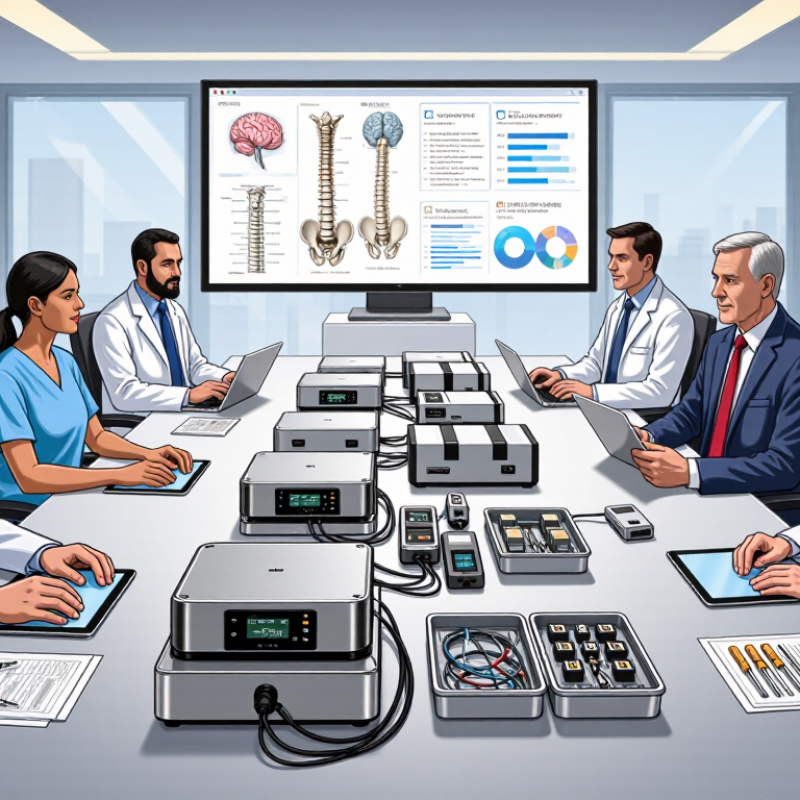
Neurological Disease Burden: 3.4B People in 2021 (WHO, 2024)
Neurological Disease Burden: 3.4B People in 2021
The World Health Organization reported that neurological conditions affected about 3.4 billion people in 2021. This figure changes how hospitals should assess neuromodulation devices. These systems may support patients with movement disorders, chronic pain, epilepsy, or treatment-resistant conditions. However, no device suits every patient.
Global buyers should examine clinical evidence, patient selection criteria, and long-term safety data. Spinal cord stimulation, deep brain stimulation, vagus nerve stimulation, and peripheral nerve stimulation require different surgical skills and follow-up plans. A reliable supplier should provide transparent technical documents, training materials, maintenance procedures, and adverse-event reporting channels. Regulatory clearance in one market does not guarantee acceptance elsewhere.
A device may appear affordable but create higher costs through difficult programming, limited technical support, or unavailable replacement parts. Buyers should ask how clinicians will monitor outcomes, manage battery changes, and respond to complications. Local infrastructure matters too, especially where specialist services are scarce. From practical procurement experience, implementation often fails because teams focus on hardware before planning patient care pathways. That assumption deserves scrutiny. Neuromodulation can expand treatment options, but evidence remains uneven across indications and populations. Independent clinical review, ethical oversight, and realistic outcome targets should guide every purchasing decision.
Device Taxonomy: DBS, SCS, VNS, PNS, and TMS by Clinical Target
For global buyers, neuromodulation devices should be classified by clinical target, not appearance. Deep brain stimulation targets specific brain circuits, mainly for movement disorders and selected neurological conditions. Spinal cord stimulation targets spinal pathways for chronic neuropathic pain. Vagus nerve stimulation influences broader neural networks and is used in selected epilepsy and mood-related pathways. Peripheral nerve stimulation acts closer to the painful nerve. Transcranial magnetic stimulation targets cortical regions without implanted electrodes.
Taxonomy is useful, but it is not perfectly clean. Patient selection, waveform, treatment duration, and clinical evidence can overlap. A 2024 MarketsandMarkets report estimated the global neuromodulation market at approximately USD 7.3 billion in 2024, with projected growth toward USD 12.3 billion by 2029. This growth does not make every device suitable. The International Neuromodulation Society stresses multidisciplinary assessment, follow-up, and outcome tracking. Buyers should examine peer-reviewed evidence, adverse-event reporting, MRI conditions, battery service, and clinician training.
Tips: Match the device to the target pathway. Check local registration and reimbursement rules. Request evidence for the exact indication, not a broader category. Compare trial outcomes, revision rates, and programming needs. Ask who supports patients after implantation. A low purchase price can hide training gaps and replacement costs. Clinical reality often differs from a sales forecast. That deserves careful review.
Evidence Benchmark: ≥50% Pain Relief as the SCS Response Threshold
2026 Best Neuromodulation Medical Devices for Global Buyers
A 50% reduction in pain remains a practical SCS response threshold.
The IMMPACT recommendations describe this level as substantial clinical improvement, not merely statistical change. For global buyers, this benchmark makes clinical claims easier to compare across trials, hospitals, and procurement documents. It also demands consistent baseline scoring, follow-up timing, and rescue-medication reporting.
The 2023 Cochrane review examined 15 studies involving more than 900 participants. It found that SCS may improve chronic pain, but the evidence certainty remained low. That warning matters. A device showing strong results in a small study may perform differently in routine clinics. Buyers should request responder rates at six and twelve months, not only average pain scores. They should also examine function, sleep, explant rates, adverse events, and patient-reported quality of life. Pain relief alone can look impressive, yet remain incomplete.
Tips: Ask for the exact percentage of patients achieving at least 50% relief. Confirm the pain scale used. Check whether results were measured after medication changes. Review evidence from populations resembling your patients. A useful tender question is simple: How many patients maintained this response?
The benchmark is valuable, but imperfect. Some patients gain mobility or sleep without reaching 50% relief. Others report early relief that fades. Procurement teams should therefore treat ≥50% pain relief as a core response marker, not the only definition of success.
Regulatory Due Diligence: FDA, EU MDR, ISO 13485, and IEC 60601
For global buyers, neuromodulation due diligence begins with the intended use, target population, and stimulation parameters.
A supplier’s regulatory claims should match the device’s software, electrodes, accessories, and clinical purpose. For the United States, confirm the FDA pathway, product classification, submission history, and applicable controls. Do not rely on a clearance number alone.
Review labeling, contraindications, adverse-event history, and change-control records. A device cleared for one indication may not support another. Ask for current evidence, not recycled presentation slides.
Under EU MDR, examine the classification rationale, technical documentation, clinical evaluation, post-market surveillance, and economic operator structure. Verify certificate scope, validity, and coverage for every configuration.
ISO 13485 certification should match the manufacturing site, not merely the legal seller. Audit samples should connect design inputs with risk controls, verification results, CAPA, and supplier monitoring.
IEC 60601 evidence must address electrical safety and electromagnetic compatibility for the final system. Particular standards may add further requirements for stimulation equipment. Request laboratory reports showing model numbers, software versions, test dates, and traceable methods.
Details matter.
One practical weakness remains common: buyers accept documents before checking consistency. A missing annex can matter more than a polished certificate.
This review is rarely perfect, and assumptions should be recorded, challenged, and corrected before purchase.
Global Buyer Matrix: Indications, Safety, Reimbursement, and 2026 Supply
For 2026 global buyers, a neuromodulation device matrix should begin with the intended indication. Pain, movement disorders, epilepsy, and urinary dysfunction require different evidence. Match each system with approved use, patient selection criteria, and clinical endpoints. A strong indication fit matters more than a long feature list.
Safety deserves practical review. Check implant materials, lead durability, programming safeguards, battery performance, and MRI conditions. Ask how complications are reported and managed. Training quality also affects outcomes. A device may appear safe in trials, yet local teams may lack implantation experience. That gap needs honest attention.
Reimbursement varies sharply by country, insurer, and indication. Confirm coding, coverage limits, replacement rules, and follow-up payment before purchasing. Supply planning should include regulatory status, forecasted demand, spare components, software access, and service response times through 2026. Keep critical inventory visible. A neat scorecard can mislead. Real procurement often exposes missing data, uncertain delivery forecasts, and uneven maintenance capacity. Buyers should request current documentation, independent clinical evidence, and written supply commitments. That is more reliable than promotional claims.
FAQS
About 3.4 billion people were affected worldwide. This scale makes careful device assessment essential.
These devices may support people with movement disorders, chronic pain, epilepsy, or treatment-resistant conditions. No device fits everyone.
Classify them by treatment target, not appearance. Brain, spinal, vagus, peripheral nerve, and cortical systems serve different clinical purposes.
Request evidence for the exact indication and patient group. Review outcomes, revision rates, adverse events, and programming requirements.
A supplier should provide technical documents, training, maintenance procedures, and adverse-event reporting channels. Ask who supports patients after implantation.
Difficult programming, limited support, and unavailable replacement parts can increase long-term costs. Cheap hardware is not always cheap care.
Review intended use, target population, stimulation parameters, labeling, contraindications, and product configuration. Confirm that documents match the final system.
Specialist shortages can delay programming, battery changes, and complication management. A strong device may still fail locally.
Teams may focus on hardware before planning patient pathways. That assumption deserves challenge.
Set realistic outcomes and track patients over time. The review may not be perfect, so record and correct uncertain assumptions.
Conclusion
Neuromodulation Medical Devices are becoming increasingly important as neurological disorders affect an estimated 3.4 billion people worldwide in 2021. This overview introduces the main device categories—deep brain stimulation (DBS), spinal cord stimulation (SCS), vagus nerve stimulation (VNS), peripheral nerve stimulation (PNS), and transcranial magnetic stimulation (TMS)—organized by their clinical targets and therapeutic applications. It also explains how buyers can compare technologies according to treatment purpose, patient selection, clinical outcomes, and risk management.
For pain-focused systems, achieving at least 50% pain relief is presented as a practical benchmark for evaluating SCS response. Global purchasers should also conduct careful regulatory due diligence, including review of FDA requirements, EU MDR compliance, ISO 13485 quality systems, and IEC 60601 safety standards. The 2026 buyer matrix combines indications, safety considerations, reimbursement conditions, procurement reliability, and expected supply availability, helping hospitals, distributors, and healthcare planners make informed decisions without relying solely on product claims or short-term market trends.

Blog Tags: