

Industry Insights & Articles
Medical Device CDMO Blog & Insights
Expert articles, technical insights, and innovations in precision medical device manufacturing.
Latest Medical Device Manufacturing Articles
Blog
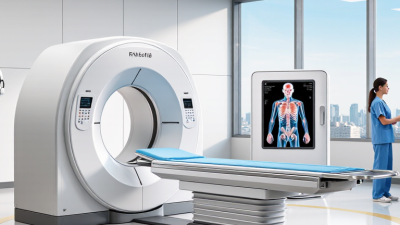
China Top Oncology Medical Device Manufacturers
China’s oncology medical device sector spans imaging systems, radiotherapy equipment, surgical platforms, and tools that support diagnosis and treatment planning. Its manufacturers differ in product focus, technical capabilities, service networks, and access to clinical evidence. A closer look matters. For hospitals and distributors, a polished specification sheet is only one part of the assessment. Reliability, workflow fit, training, and after-sales support can shape daily use in ways that brochures rarely show.
Physician and digital-medicine expert Dr. Eric Topol has observed, “The future of medicine is the consumer.” Applied to Oncology Medical Devices, this idea points toward clearer interfaces, better-informed patients, and care designed around real clinical needs. It is a useful lens, not a guarantee of performance. Buyers should examine how a device is evaluated, where it is intended to be used, and what evidence supports its stated capabilities. Details count: a stable image on a workstation, a treatment plan clinicians can review, or a service team that responds when equipment needs attention.
This overview introduces China’s leading oncology medical device manufacturers and the categories in which they compete. It also considers factors that help distinguish established strengths from marketing claims. Comparisons have limits. Product availability, technical specifications, and clinical suitability can vary by model and market, so readers should verify current information directly with manufacturers and qualified clinical teams. The landscape is moving quickly. Some questions remain open. That deserves attention, too.
Read more »
 By:Ethan
- November 16, 2026
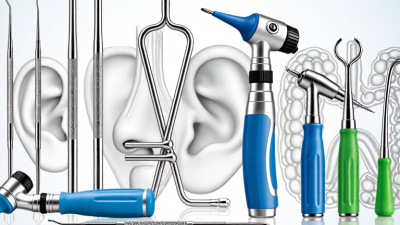
Top 10 ENT Surgical Instruments Manufacturers Worldwide
ENT surgery depends on instruments that offer control in confined spaces. A well-balanced nasal forceps, a clear-view laryngoscope, or a reliable suction tip can shape the surgeon’s handling of delicate tissue. Small details matter.
This guide introduces ten manufacturers active in the worldwide ENT surgical instruments market. It is designed to help clinicians, procurement teams, and researchers compare suppliers—not to declare one brand best for every operating room. Needs vary with procedure type, instrument design, sterilization workflow, service access, and local purchasing requirements. A set suited to routine ear procedures may not meet the demands of endoscopic sinus surgery.
The comparison considers publicly available information, including product range, specialty focus, manufacturing and quality commitments, and support for customers. These factors offer useful starting points, but they cannot replace hands-on evaluation or independent verification. Product catalogs may change, and availability can differ by country. That limitation deserves attention.
Readers will find manufacturers associated with instruments such as otologic picks, nasal specula, tonsil instruments, and laryngeal tools. Where information is available, the overview also notes practical distinctions that may matter during selection. A long catalog alone is not proof of better performance. Nor does a familiar name guarantee that every instrument suits a specific surgeon or facility. This overview aims to be clear about those trade-offs, while recognizing that public data may leave gaps. Use it as a research starting point, then confirm current specifications, service terms, and suitability directly with each manufacturer.
Read more »
 By:Olivia
- November 11, 2026

How to Find a Reliable Dental Implant Manufacturer?
Choosing a reliable dental implant manufacturer takes more than comparing prices or browsing polished product photos. In Dental Implants Manufacturing, trust is built through repeatable processes, clear material specifications, and records that let buyers trace each product back to its production lot. A brochure can look convincing. Production evidence matters more.
Look for documented quality controls, consistent machining and surface treatment, validated packaging, and clear instructions for storage and use. Ask how the manufacturer handles nonconforming products and whether it can provide relevant test reports. Specific answers are more useful than broad claims such as “premium quality.” A sample implant may appear flawless under bright light, yet buyers also need evidence of dimensional consistency and dependable batch controls. Details count.
A practical paraphrase of implant researcher Dr. Tord Berglundh’s published work is that healthy tissue conditions are essential to long-term implant outcomes. This is a paraphrase, not a verbatim quotation. It offers a useful reminder: manufacturing quality supports care, but cannot replace clinical judgment or patient-specific assessment. A dependable supplier should welcome careful questions, share verifiable documentation, and explain what its evidence does—and does not—show. Some details may remain difficult to compare across suppliers. That is worth acknowledging. This guide explores the checks that help dental professionals and procurement teams assess manufacturers with greater care, from production transparency to communication after delivery.
Read more »
By:Ethan
- November 6, 2026
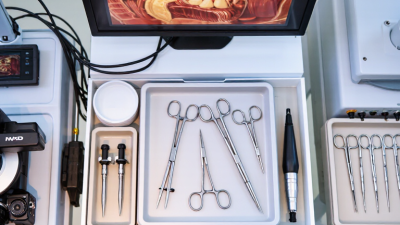
What Are the 2026 Top Endoscopic Surgery Instruments?
In 2026, the most important Endoscopic Surgery Instruments will be those that help clinical teams see clearly, work precisely, and maintain dependable workflows. The category includes more than scopes: surgeons also rely on cameras, light sources, monitors, access devices, graspers, scissors, and energy instruments. Small details matter. A stable image, comfortable handle, or reliable seal can shape the experience in the operating room.
Market reports show why this field continues to attract attention, though their estimates vary with market definitions. Grand View Research valued the global endoscopy devices market at approximately USD 28.3 billion in 2023 and projected continued growth through 2030. Its figures cover a broader device category, not surgical instruments alone. That distinction is easy to miss. It also means market growth should not be treated as proof that one product is clinically superior.
This overview will examine instrument types and the practical features that may distinguish leading options in 2026, including image quality, ergonomics, compatibility, and reprocessing needs. It will also consider how hospitals assess evidence, service support, and total cost—not just purchase price. Manufacturer specifications are useful, but they are not independent clinical evaluations. A “top” instrument depends on the procedure, team, and setting. There is no universal winner. Market data can frame the discussion, but current clinical guidance and local procurement criteria should inform real decisions.
Read more »
By:Ethan
- November 1, 2026

2026 Best Neuromodulation Medical Devices for Global Buyers
Choosing the right Neuromodulation Medical Devices in 2026 requires more than comparing prices or promotional claims. Global buyers must examine clinical evidence, device usability, regulatory status, cybersecurity, service coverage, and long-term operating costs. A stimulator may look advanced on a specification sheet, yet perform poorly without skilled programming and dependable technical support. That practical gap is easy to underestimate.
Professor Alim-Louis Benabid, a pioneer of deep brain stimulation, described DBS as “a reversible, adjustable, and nondestructive treatment.” His observation remains relevant when buyers assess flexibility, patient safety, and treatment management. However, no single device suits every hospital, clinician, or patient group. That is an uncomfortable truth.
This guide reviews the 2026 market through a buyer-focused lens. It considers implantable systems, external stimulators, accessories, software, and follow-up requirements. Attention is also given to evidence quality, transparent manufacturer information, training pathways, and regional compliance expectations. These details matter in real purchasing decisions. A device can be clinically promising but commercially unsuitable for a smaller hospital. Another may offer strong support but limited compatibility with existing workflows.
The selection process should therefore remain careful and questioning. Claims need verification. Data should be compared. Local expertise matters. Buyers should consult qualified clinicians, biomedical engineers, procurement teams, and regulatory professionals before making decisions. This overview cannot replace that process. It can, however, provide a clearer starting point for evaluating Neuromodulation Medical Devices across global healthcare settings.
Read more »
By:Olivia
- October 27, 2026
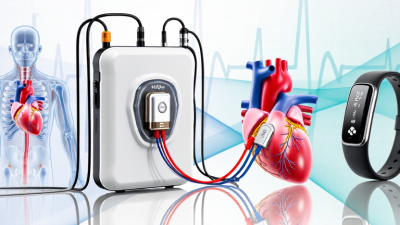
What Are the Top Cardiac Rhythm Management Devices?
When an irregular heartbeat causes dizziness, fatigue, or fainting, the right device can offer timely protection. Cardiac Rhythm Management Devices help monitor, pace, or correct abnormal electrical activity in the heart. However, “top” does not mean the same thing for every patient. A pacemaker may support a heart that beats too slowly. An implantable cardioverter-defibrillator can detect dangerous ventricular rhythms and deliver a shock when necessary. Cardiac resynchronization therapy devices may improve coordination between the heart’s ventricles. Wearable monitors and implantable loop recorders provide valuable rhythm information without immediately delivering treatment.
The best choice depends on the rhythm problem, symptoms, heart function, age, lifestyle, and overall health. It also depends on whether the patient needs short-term observation or long-term protection. Clinicians usually review electrocardiograms, imaging results, medical history, and current medicines before recommending a device. Device guidelines from respected cardiology organizations can support this process, but they cannot replace individual assessment. No single device is universally superior.
Small details matter. Battery life, lead placement, remote monitoring, MRI compatibility, and follow-up requirements can affect daily comfort and safety. A device may look advanced, yet offer limited value for a specific rhythm disorder. That is easy to overlook. This guide compares the leading Cardiac Rhythm Management Devices, explains their primary uses, and considers their practical advantages and limitations. The goal is not to promote one product, but to clarify informed conversations between patients and qualified healthcare professionals.
Read more »
By:Ethan
- October 22, 2026
What Is Medical Device Rapid Prototyping?
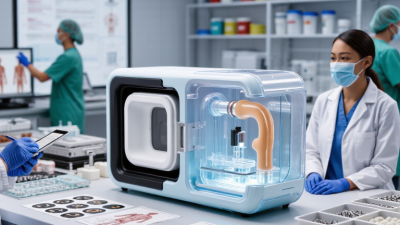
Medical Device Rapid Prototyping turns early clinical ideas into tangible, testable forms. Engineers may begin with a sketch, CAD model, or anatomical scan. The prototype could be a 3D-printed housing, a molded handle, or a transparent fluid pathway. That speed matters. Teams can assess grip, fit, assembly, and basic function before committing to expensive tooling. Clinicians also provide practical feedback from real use conditions. A device that looks efficient on a screen may feel awkward in a gloved hand. Small details often reveal major design risks.
The process requires more than fast fabrication. Experienced teams connect design decisions with intended use, user needs, and documented risk controls. Materials, sterilization methods, tolerances, and manufacturing limits must receive early attention. Quality specialists commonly align development records with established quality systems and risk-management practices, such as ISO 13485 and ISO 14971, where applicable. A prototype supports learning, but it does not automatically prove safety or performance. Verification and validation remain separate, essential activities. Prototypes can mislead. Their appearance may suggest readiness, even when durability, biocompatibility, or software behavior remains uncertain. That weakness deserves honest review. Effective prototyping therefore combines rapid iteration with disciplined documentation, expert judgment, and evidence-based testing. The best result is not merely a convincing model. It is a clearer path toward a reliable, manufacturable, and clinically appropriate medical device.
Read more »
 By:Evelyn
- October 17, 2026

10 Cleanroom Assembly and Packaging Tips for Global Buyers
Global buyers rarely evaluate a package by appearance alone. They examine particle control, material compatibility, traceability, sealing strength, and shipping resilience. Cleanroom Assembly and Packaging must therefore connect factory discipline with real-world handling.
ISO 14644-1:2015 defines airborne particle classification by concentration and particle size. EU GMP Annex 1 (2022) also expects a documented contamination control strategy. PDA Technical Report No. 13 remains a useful reference for environmental monitoring programs. These documents do not replace experience. They provide the framework for repeatable decisions.
Cleanroom microbiology expert Dr. Tim Sandle has emphasized that cleanrooms are controlled environments, not automatically sterile spaces. That distinction matters. A sealed tray can still fail through poor glove technique, weak heat seals, or careless labeling. Picture a double-bagged component leaving the room. Its outer surface may touch a cart, dock, or customs table before reaching the customer.
This guide presents ten practical tips for global buyers. It covers personnel flow, gowning, component preparation, packaging materials, seal verification, labeling, documentation, and transport testing. Each tip supports measurable risk reduction. Buyers should request particle data, bioburden results, seal-strength records, and lot-level traceability.
A perfect checklist does not exist. Supply chains change. Assumptions fail. That is why supplier audits, packaging trials, and corrective-action reviews remain necessary. The strongest programs combine standards with observed evidence, clear ownership, and honest communication when performance is imperfect.
Read more »
By:Ethan
- October 12, 2026
How to Source Additive Manufacturing Medical Components?
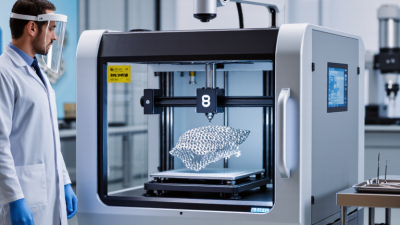
Sourcing Additive Manufacturing Medical Components requires more than finding a supplier with a modern printer. It demands evidence, disciplined communication, and a clear understanding of clinical risk. A supplier may produce a beautiful titanium lattice, yet still lack validated cleaning, sterilization, or batch traceability. That gap can become expensive.
Terry Wohlers, a widely recognized additive manufacturing industry expert, defines the technology this way: “Additive manufacturing is a process of joining materials to make objects from 3D model data, usually layer upon layer, as opposed to subtractive manufacturing methodologies.” His definition highlights an essential sourcing question: can the supplier repeatedly transform approved digital data into safe, consistent components?
This guide examines how to evaluate manufacturers, materials, equipment, and production controls. It considers ISO 13485 quality systems, biocompatibility evidence, powder or filament control, dimensional inspection, surface finishing, and sterilization compatibility. Ask for process-validation records, inspection methods, nonconformance data, and a transparent change-control procedure. Visit the facility when possible. Look closely at powder storage, operator training, calibration labels, and the path from printer to packaging.
Experience matters here.
However, no checklist guarantees success. A supplier may pass an audit and still struggle with a complex geometry or changing design file. Requirements can also differ between prototypes, surgical instruments, and implantable devices. That uncertainty deserves attention, not polished promises. Careful sourcing connects engineering performance with clinical purpose, regulatory expectations, and long-term supply reliability.
Read more »
By:Evelyn
- October 7, 2026
Why Choose Robotic Assisted Surgery Devices for Hospitals?
Hospitals are under pressure to improve surgical precision, shorten recovery, and manage rising clinical demand. Robotic Assisted Surgery Devices may support these goals through stable instruments, three-dimensional visualization, and controlled movement inside narrow operative fields. Their value, however, depends on more than advanced hardware. It depends on trained teams, suitable procedures, reliable maintenance, and measurable patient outcomes.
Industry adoption is no longer a small experiment. Intuitive’s 2024 Annual Report recorded more than 10,000 da Vinci systems installed worldwide and approximately 2.7 million procedures performed during the year. Grand View Research’s Surgical Robots Market Size, Share and Trends Analysis Report also projects strong market expansion through 2030. These figures show commercial momentum, not automatic clinical superiority. A hospital still needs evidence from its own operating rooms.
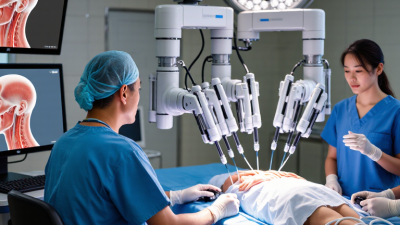
The practical picture is easy to imagine: a surgeon views a magnified anatomy display while assistants manage ports, instruments, and patient positioning. That workflow can improve dexterity in selected minimally invasive procedures. It can also introduce substantial purchase, service, training, and operating costs. The evidence is promising. It is not perfect. Published health technology assessments, including reports from the National Institute for Health and Care Excellence, repeatedly emphasize careful patient selection and economic evaluation. Therefore, hospitals should assess Robotic Assisted Surgery Devices through a balanced framework: clinical benefit, total ownership cost, staff competence, cybersecurity, utilization, and long-term outcomes. The best choice is not always the newest platform. It is the system that delivers dependable care within the hospital’s real capabilities.
Read more »
By:Evelyn
- October 2, 2026

2026 Best Minimally Invasive Surgical Devices for Hospitals
Minimally Invasive Surgical Devices are changing how hospitals plan operating rooms, train teams, and support patient recovery. In 2026, the category includes laparoscopic instruments, endoscopic systems, robotic platforms, energy devices, and image-guided tools. Their value depends on more than smaller incisions. Reliable visualization, precise control, consistent sterilization, and accessible maintenance all matter at the bedside and in the operating room.
Professor Alfred Cuschieri, a pioneer of minimally invasive surgery, has emphasized the importance of reducing surgical trauma while preserving effective treatment. The sentence here is a paraphrase, not a verified direct quotation: “Less invasive access must still support precise, safe surgery.” That distinction matters. Device comparisons should consider clinical evidence, staff training, workflow fit, service support, and total cost—not just technical features or product claims.
This guide examines device types hospitals may assess in 2026, alongside practical selection criteria and implementation concerns. A laparoscopic camera’s image quality can shape visibility; a robotic system’s footprint can affect room setup. Yet no device is right for every procedure or hospital. The evidence may be uneven, and newer technology does not automatically improve outcomes. That is the uncomfortable part. Hospital teams should weigh intended use, local expertise, and patient needs, then verify claims against current clinical evidence and manufacturer documentation.
Read more »
By:Olivia
- September 27, 2026

How to Choose the Right Drug Delivery Systems?
Choosing the right Drug Delivery Systems begins with the patient, not the technology. A tablet, injection, implant, or inhaled formulation must fit real treatment conditions. Can the patient use it correctly? Will the medicine remain stable during transport? Does the release profile match the disease’s biological rhythm? These questions shape safer and more reliable decisions.
Robert Langer, a leading drug-delivery researcher and MIT professor, said, “The future of medicine is in the delivery of drugs.” His observation remains practical. A promising compound can fail when it dissolves poorly, degrades quickly, or reaches healthy tissue unnecessarily. A well-designed system can improve absorption, extend release, reduce dosing frequency, and support adherence. Small details matter. Think of a prefilled syringe stored in a refrigerator, or a wearable device delivering a measured dose beside a patient’s bed.
The right choice requires evidence across development, manufacturing, and clinical use. Teams should examine pharmacokinetics, materials compatibility, sterility, scalability, device usability, and regulatory expectations. They should also compare total risk, not just laboratory performance. No single platform wins every time. That assumption fails. A sophisticated system may create new handling problems, higher costs, or unclear patient instructions. Sometimes, a simpler formulation is safer and more dependable.
This guide introduces a practical framework for evaluating Drug Delivery Systems. It considers scientific fit, patient experience, production realities, and quality controls. The process is not perfectly predictable. It demands testing, honest review, and willingness to revise early decisions. The strongest option is the one that performs consistently beyond the laboratory, where real patients, real schedules, and real constraints determine success.
Read more »
By:Ethan
- September 22, 2026