
Deep-Drawn & Fabricated Aluminum Cases
Lightweight, high-strength 5052/6061-T6 aluminum containment systems featuring custom perforation patterns, corner bumpers, and continuous stainless steel hinge pins. Ideal for heavy orthopedic sets.
An authoritative technical reference for medical device OEMs, procurement executives, and surgical supply chain leaders. Discover how precision DFM engineering, material selection (Anodized Aluminum vs. Radel® PPSU), sterilant penetration fluid dynamics, and automated CDMO manufacturing drive total cost optimization and operating room compliance.
In the highly regulated ecosystem of orthopedic surgery, spinal intervention, trauma care, and robotic-assisted procedures, Surgical Cases and Trays represent far more than protective storage containers. They are precision-engineered delivery systems designed to protect fragile micro-instruments, optimize Central Sterile Supply Department (CSSD) workflows, ensure rapid sterilant gas or steam penetration, and withstand hundreds of harsh autoclave cleaning cycles without structural degradation or graphic fading.
As Original Equipment Manufacturers (OEMs) launch increasingly complex surgical kits, procurement and engineering teams face multi-faceted design challenges. A sub-optimally designed surgical tray can lead to localized "wet packs" (retained moisture causing sterility failure), instrument migration during transport, excessive set weight exceeding hospital ergonomic limits (typically 25 lbs / 11.3 kg in healthcare standards), and prolonged surgical setup times in the operating room.
Paragon Medical leverages over a century of cumulative precision manufacturing expertise, operating 1.2 million square feet of specialized CDMO facilities across 8 global locations. By integrating Design for Manufacturability (DFM), advanced material selection, customized silicone holding brackets, automated graphics anodizing, and rigorous verification & validation (V&V) testing, we empower OEM partners to de-risk commercialization and maintain unbroken global supply chains.
Tailored medical containment architectures engineered for demanding clinical specialties, from deep-drawn aluminum graphic cases to ultra-durable Radel® PPSU polymer hybrid trays.
Lightweight, high-strength 5052/6061-T6 aluminum containment systems featuring custom perforation patterns, corner bumpers, and continuous stainless steel hinge pins. Ideal for heavy orthopedic sets.
Thermoformed and CNC-machined Polyphenylsulfone (PPSU) tray inserts offering optical clarity, extreme impact strength, and resistance to repeated steam autoclave (134°C) and STERRAD® hydrogen peroxide sterilization.
Combines structural aluminum outer frames with interchangeable thermoformed or molded Radel polymer insert caddies and customizable silicone holding brackets to accommodate modular implants and surgical drivers.
Ultra-precise cases built specifically for delicate robotic surgical end effectors, cannulated instruments, and fiber-optic scopes. Features soft-touch medical silicone holding grommets and flow-through steam paths.
| Material Type | Primary Advantages | Sterilization Compatibility | Weight Profile | Typical OEM Applications |
|---|---|---|---|---|
| Anodized Aluminum (5052 / 6061) | High strength-to-weight ratio, rapid thermal dissipation, cost-effective deep-drawing, full-color graphical anodizing. | Steam Autoclave, EtO Gas, Dry Heat | Lightweight to Medium | Total Joint Reconstruction, Spine Instrument Sets, Trauma Hardware Cases |
| Radel® PPSU (Polyphenylsulfone) | Exceptional impact resistance, transparent/translucent aesthetic options, zero corrosion, hydrophobic surface. | Steam Autoclave (>1,000 cycles), STERRAD®, V-PRO®, EtO | Ultra-Lightweight | Micro-Surgical Cassettes, Modular Dental & ENT Trays, Trial Implant Caddies |
| Passivated Stainless Steel (304 / 316L) | Maximum structural stiffness, extreme scratch/abrasion resistance, compatible with aggressive chemical enzymatic washers. | All Standard Sterilization Modalities | Heavy | Heavy-Duty Bone Grafting Kits, Forceps Trays, Base Sterilization Containers |
| Hybrid (Aluminum Frame + PPSU Insert) | Optimized balance of structural rigidity and inner component isolation, customizable modular layouts. | Steam Autoclave, STERRAD®, EtO | Optimized Balanced | Robotic Instrument Kits, Multi-Tier Orthopedic Surgical Containers |
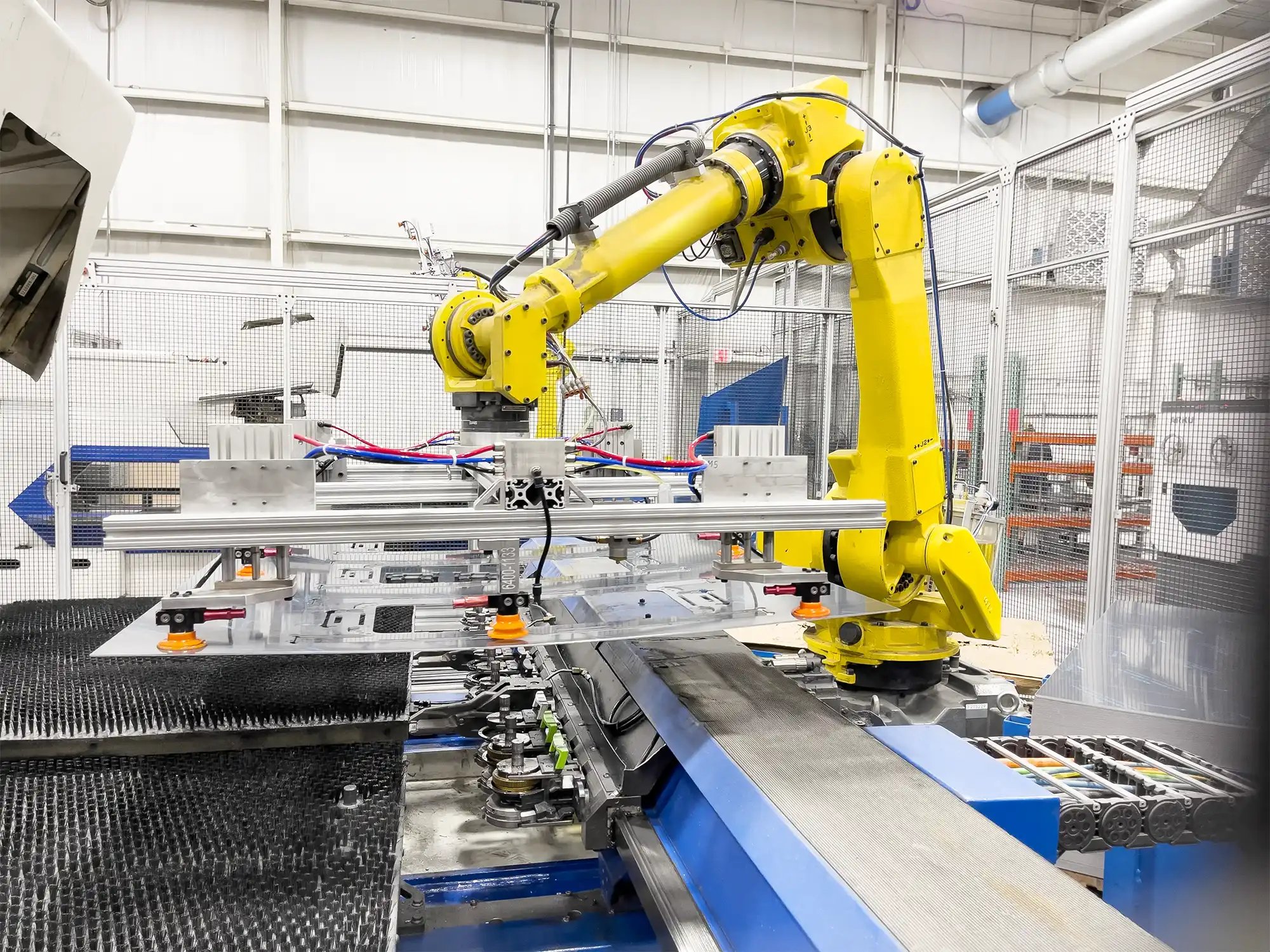
As a world-leading medical device Contract Development and Manufacturing Organization (CDMO), Paragon Medical brings end-to-end integration to custom Surgical Cases and Trays manufacturing. We eliminate supply chain fragmentation by providing design, prototyping, tooling, machining, surface finishing, and assembly under a single quality system.
Key market forces driving changes in hospital buying behaviors, ASC procedure shifts, smart tracking integration, and environmental sustainability.
Traditional orthopedic surgeries relied on heavy 5-to-8 tray sets containing every possible instrument size. The rapid migration of joint replacement and spine surgeries to Ambulatory Surgery Centers (ASCs) has created an urgent demand for weight-optimized, single-tray procedural sets containing only essential instruments. Global procurement teams are aggressively redesigning tray footprints to remain under hospital manual handling weight limits (<25 lbs) while minimizing reprocessing costs per case.
Instrument loss and tray misplacement cost healthcare networks millions annually. Next-generation surgical cases and trays are now engineered to integrate direct-marked UDI matrix barcodes and heat/steam-resistant RFID transponders. Procurement strategies prioritize CDMOs capable of micro-machining recessed RFID pockets into metal and Radel trays, enabling automated digital tracking through hospital sterilization cycles and inventory management systems.
Global healthcare procurement bodies (especially in North America and Western Europe) are placing stringent sustainability requirements on medical device OEMs. Aluminum cases and recyclable engineering thermoplastics are replacing single-use sterile wrap packs in favor of rigid reusable sterilization container systems. OEM procurement leaders are evaluating CDMOs based on recycled material sourcing, energy-efficient anodizing processes, and low-waste manufacturing workflows.
Geopolitical disruptions and shipping bottlenecks have exposed vulnerabilities in single-source overseas tray suppliers. Leading MedTech enterprises are shifting procurement models toward global CDMOs with multi-site redundancy. Operating mirrored facilities across North America, Europe, and Asia allows OEMs to dual-source identical tray designs locally, ensuring continuous supply chain continuity.
The manufacturing technology behind surgical containment is undergoing a rapid evolution. Driven by advances in additive manufacturing, computational fluid dynamics, and surface engineering, modern trays deliver unprecedented structural performance and sterilant access.
Paragon Medical integrates metal and polymer additive manufacturing (3D printing) to fabricate complex bracket geometries and lightweight lattice structures that were previously impossible to produce via traditional CNC milling. Generative design algorithms optimize hole perforation patterns to maximize steam flow while maintaining structural stiffness against drops and impact loads.
Moisture retention inside sterilized cases ("wet packs") is a primary cause of surgical delivery failure. Advanced engineering teams utilize CFD simulation software to model steam airflow and condensation drainage inside closed cases during autoclave drying cycles. This enables engineers to strategically position drainage channels, elevate silicone brackets, and select optimal material thermal mass before physical manufacturing begins.
Expert answers to the top engineering, compliance, and supply chain questions asked by global procurement executives and OEM design engineers.
Anodized aluminum offers lower initial tooling costs, excellent thermal conductivity for quick drying, and total flexibility for full-color procedural graphics. However, high-pH enzymatic detergent washers used in CSSD departments can degrade standard anodizing layers over time if hard-coat sulfuric anodizing is not specified. Conversely, Radel® PPSU (Polyphenylsulfone) exhibits complete chemical immunity to aggressive alkaline washers and withstands over 1,000 steam autoclave cycles without warping or micro-cracking, resulting in a lower Total Cost of Ownership (TCO) over extended 5-to-10 year clinical lifecycles despite higher initial raw material cost.
ISO 17665 mandates moist heat sterilization validation for medical devices, requiring surgical trays to provide unimpeded steam contact across all instrument surfaces and hollow cannulations. ISO 11607-1/2 governs packaging systems for terminally sterilized medical devices. For rigid reusable cases, compliance requires demonstrating structural integrity under transit vibration (ASTM D4169), seal continuity (when paired with biological barrier filters), verified sterilant efficacy (typically achieving a 10^-6 Sterility Assurance Level), and zero dry-time moisture retention (preventing wet packs).
Silicone brackets are custom-molded using medical-grade Shore 50A-70A durometer silicone. Design for Manufacturability (DFM) optimizes line contact rather than surface contact around instruments, minimizing occlusion zones where steam could be blocked. Relieved undercuts and pass-through drainage slots engineered into the silicone base prevent water entrapment during the autoclave exhaust cycle while firmly gripping instruments to survive 30-G drop shocks during global distribution.
Wet packs occur when thermal mass disparities lead to condensation accumulation faster than steam venting can exhaust moisture. Paragon Medical addresses wet packs through three primary engineering tactics: (1) Optimizing perforation hole ratios (typically 30% to 45% open area on top lids and bottom bases), (2) Incorporating raised tray feet and internal hydrophobic polymer tray risers that elevate instruments above condensate accumulation paths, and (3) Strategic thermal mass balancing combining lightweight aluminum bases with Radel inserts to eliminate localized cold spots.
Through Paragon Medical’s dedicated Innovation Centers, initial 3D conceptual CAD models and rapid thermoformed or additive prototypes are delivered within 1 to 2 weeks. Following DFM review, clinical trial prototypes and sterilizable verification units are produced in 4 to 6 weeks. Complete hard tooling fabrication, graphic anodizing setup, ISO 13485 validation, and ramping to full commercial production typically range from 12 to 16 weeks depending on kit complexity and regulatory validation timelines.
FDA and EU MDR regulations require clear UDI tracking on surgical containment systems. Paragon Medical utilizes sub-surface graphic anodizing and precision fiber laser etching to embed high-contrast Data Matrix 2D barcodes, serial numbers, and colored instrument placement outlines directly into aluminum and polymer tray surfaces. Unlike surface paint or standard stickers, embedded anodized graphics become part of the aluminum oxide layer, resisting fading across hundreds of automated washer-disinfector cycles.