
Endoscopic Surgery Instruments OEM/CDMO Sourcing Guide: Precision Engineering, Technological Trends, and Global Manufacturing Standards
As global healthcare systems accelerate their transition toward minimally invasive surgery (MIS), contract manufacturing of Endoscopic Surgery Instruments demands an unprecedented level of micro-precision, material integrity, and regulatory compliance. This comprehensive technical guide provides procurement executives, OEM product managers, and surgical device engineers with strategic intelligence on selecting world-class CDMO partners, evaluating technological shifts, and streamlining end-to-end device commercialization.
High-Precision Endoscopic Surgery Instruments Portfolio
Navigating the complexities of modern endoscopy requires specialized sub-assemblies and complete finished devices engineered for flawless clinical execution. Paragon Medical manufactures an expansive portfolio of rigid, semi-flexible, and articulating endoscopic surgery instruments tailored to OEM specifications across laparoscopy, arthroscopy, gynecology, urology, and robotic-assisted surgical platforms.
Clinical-Grade Mechanical & Articulating Endoscopic Instruments
Modern endoscopic procedures demand instruments that combine ergonomic feel with uncompromising mechanical reliability. Paragon Medical specializes in the high-precision contract manufacturing of reusable and single-use endo-mechanical assemblies designed for maximum tactile feedback, low actuation force, and long fatigue life.
Our endo-mechanical portfolio includes multi-articulating graspers, micro-dissectors, endoscopic scissors, needle holders, and punch forceps engineered with complex micro-gears, tension-wire drive systems, and custom jaw kinematics. By utilizing 5-axis Swiss CNC turning and wire EDM technology, we maintain dimensional tolerances down to ±0.002 mm across every critical hinge and pin joint.

Laparoscopic Graspers & Scissors
Custom-engineered 5mm and 10mm laparoscopic instruments featuring ultra-sharp tungsten carbide inserts, ratchet locking mechanisms, and 360-degree continuous shaft rotation for optimal surgical maneuverability.
- Materials: 17-4PH Stainless Steel, 316L, Nitinol
- Shaft Outer Diameter: 2.0mm to 10.0mm
- Surface Finish: Electropolished, Passivated, PVD Coated
- Sterilization: Autoclave & EtO Compatible
Electrosurgical & Bipolar Endo-Tools
Advanced energy-based endoscopic devices featuring integrated RF energy delivery, monopolar/bipolar jaw insulation, heat-shrink dielectric tubing, and smoke evacuation lumen integration.
- Materials: Medical-Grade PEEK, Ceramic Coatings, Titanium
- Dielectric Rating: Up to 10,000V Breakdown Voltage
- Lumen Configuration: Dual-channel fluidics & suction integration
- Assembly Class: ISO Class 7 Cleanroom Manufacturing
Rigid & Flexible Endoscope Shaft Components
High-aspect-ratio shaft tubing, laser-slotted nitinol hypotubes, pull-wire assemblies, and optical rod lens housings crafted with ultra-thin wall thicknesses for next-generation endoscopes.
- Wall Thickness: Micro-tubing down to 0.08mm
- Laser Processing: Micro-cutting, spiral kerfing, seam welding
- Flexibility: Engineered torque transmission & steerability
- Compliance: ISO 13485 & FDA QSR Compliant
Technical Material Selection & Processing Matrix for Endoscopic Instruments
Selecting the optimal material matrix is paramount to balancing bio-compatibility, mechanical yield strength, edge retention, and resistance to harsh reprocessing cycles (steam autoclave, STERRAD, hydrogen peroxide plasma).
| Material Grade | Primary Endoscopic Applications | Mechanical & Thermal Properties | Key Manufacturing Capabilities |
|---|---|---|---|
| 17-4PH Stainless Steel (H900/H1150) | Jaws, clevises, scissor blades, ratchet locks, linkage pins | High tensile strength (up to 1310 MPa), superior hardness, excellent wear resistance | 5-Axis CNC Milling, Wire EDM, Precision Grinding, Vacuum Heat Treatment |
| 316L & 304 Stainless Steel | Outer shafts, cannula tubes, handles, internal push-rods | Outstanding corrosion resistance, excellent weldability, non-magnetic option | Swiss CNC Micro-Turning, Deep Drawing, Micro-Laser Welding, Passivation |
| Nitinol (Nickel-Titanium Alloy) | Articulating wrists, steerable hypotubes, biopsy baskets, needle guides | Superelasticity (up to 8% strain recovery), shape memory effect, kink resistance | Femtosecond Laser Cutting, Shape Setting, Micro-Welding, Surface Electropolishing |
| Ti-6Al-4V ELI (Grade 23 Titanium) | Ultrasonic dissector horns, lightweight structural housings, MRI-compatible components | High strength-to-weight ratio, extreme fatigue resistance, full magnetic neutrality | Direct Metal Laser Sintering (DMLS), Swiss Machining, Titanium Anodizing |
| Medical-Grade PEEK & PPSU | Dielectric insulation sleeves, handle housings, ergonomic grips, sterilizable trays | High dielectric strength, chemical resistance, withstands 1000+ autoclave cycles | Precision Micro Injection Molding, 5-Axis Polymer CNC Machining, Laser Marking |
Why Global MedTech OEMs Partner with Paragon Medical
Building high-reliability endoscopic instruments requires a Contract Development and Manufacturing Organization (CDMO) that offers complete vertical integration, profound engineering depth, and unyielding adherence to Google E-E-A-T quality standards (Experience, Expertise, Authoritativeness, and Trustworthiness).
Over 100 Years of Manufacturing Legacy & 1.2M Sq. Ft. Operational Scale
Paragon Medical stands as a recognized titan in medical device contract manufacturing. Backed by over a century of accumulated precision engineering knowledge, our footprint encompasses 1.2 million square feet of operational excellence across 8+ state-of-the-art facilities in North America, Europe, and Asia.
Our dedicated global footprint allows medical device OEMs to mitigate supply chain risks, optimize freight logistics, and achieve seamless dual-sourcing strategies. From early-stage concept modeling to high-volume commercial production, Paragon Medical provides a single-source CDMO platform that reduces time-to-market by up to 30%.

Design for Manufacturability (DFM) & Innovation Centers
Our dedicated Innovation Centers bridge the gap between design engineering and commercial manufacturing. We perform rigorous DFM, DFA, finite element analysis (FEA), and rapid physical prototyping within days to accelerate clinical trial timelines.
Metal & Polymer Additive Manufacturing
Pioneering additive manufacturing technologies (3D metal printing in Titanium and CoCr) enable complex organic geometries, integrated fluid channels, and lightweight endoscopic components that are impossible with traditional subtractive machining.
ISO Class 7 & Class 8 Cleanroom Assembly
Fully controlled environmental assembly, micro-welding, bioburden control, ultrasonic cleaning, visual inspection under high-magnification microscopes, and pouch/tray sterile packaging according to ISO 11607 standards.
Quality Assurance & Global Regulatory Compliance
ISO 13485:2016 certified, FDA registered, and compliant with EU MDR (2017/745) requirements. We provide complete device master records (DMR), full material melt-lot traceability, 100% optical CMM inspection, and V&V testing protocols.
Advanced Metal & Polymer Additive Manufacturing Capabilities
As endoscopic surgery instruments become increasingly complex—incorporating internal cooling channels, articulating linkages, and micro-sensors—traditional CNC machining hits physical boundaries. Paragon Medical’s state-of-the-art additive manufacturing facility leads the industry in 3D metal printing for medical devices.
Utilizing Direct Metal Laser Sintering (DMLS) and electron beam melting, we produce monolithic endoscopic handles, custom jaws, and titanium endoskeletal components that dramatically reduce assembly part counts while enhancing fatigue resistance and structural rigidity.

Future Procurement Trends in Endoscopic Surgery Instruments
Procurement leaders in the global medical device sector are experiencing a profound shift driven by economic pressure, hospital sterilization bottlenecks, supply chain restructuring, and rapid technological convergence. Understanding these key trends is essential for strategic long-term vendor selection.
Transition Toward Single-Use & Modular Hybrid Ecosystems
Hospitals globally are seeking to eliminate healthcare-associated infections (HAIs) caused by incomplete endoscope reprocessing. Procurement teams are heavily shifting toward single-use disposable endoscopic tools or modular hybrid designs where surgical tips are single-use while handles remain autoclavable.
Integration with Surgical Robotics & AI-Driven Navigation
Endoscopic instruments are no longer standalone mechanical devices. Modern procurement specifies instruments designed for robotic platform interfaces, featuring micro-actuation, wrist articulation, and embedded sensor wireways for real-time haptic feedback and AI-guided tissue characterization.
Supply Chain Nearshoring & Integrated CDMO Consolidation
Navigating geopolitical instability and transportation delays, global OEMs are moving away from fragmented tier-3 suppliers. The market heavily favors single-source CDMO partners capable of managing everything from raw material forging to finished, sterile-packaged box-builds.
Stringent Sustainability & Bio-Compatible Material Standards
Environmental regulations such as EU REACH and PFAS restrictions are reshaping material selection. Procurement managers demand sustainable manufacturing workflows, recyclable polymer handles, and conflict-free medical-grade alloys with zero hazardous heavy metal leaching.
Collaborative Design-to-Manufacturing Transfer for OEM Breakthroughs
Transitioning a prototype endoscopic instrument into commercial-rate production without sacrificing quality requires exceptional program management. Paragon Medical employs a dedicated NPI (New Product Introduction) engineering framework that minimizes technical risk.
By conducting early risk assessments, Failure Mode and Effects Analysis (FMEA), tool validation (IQ/OQ/PQ), and gage R&R studies, we ensure that every production batch meets strict 1.33 Cpk process capability standards across all critical-to-quality (CTQ) dimensions.
Technological Innovations Shaping Next-Generation Endoscopy
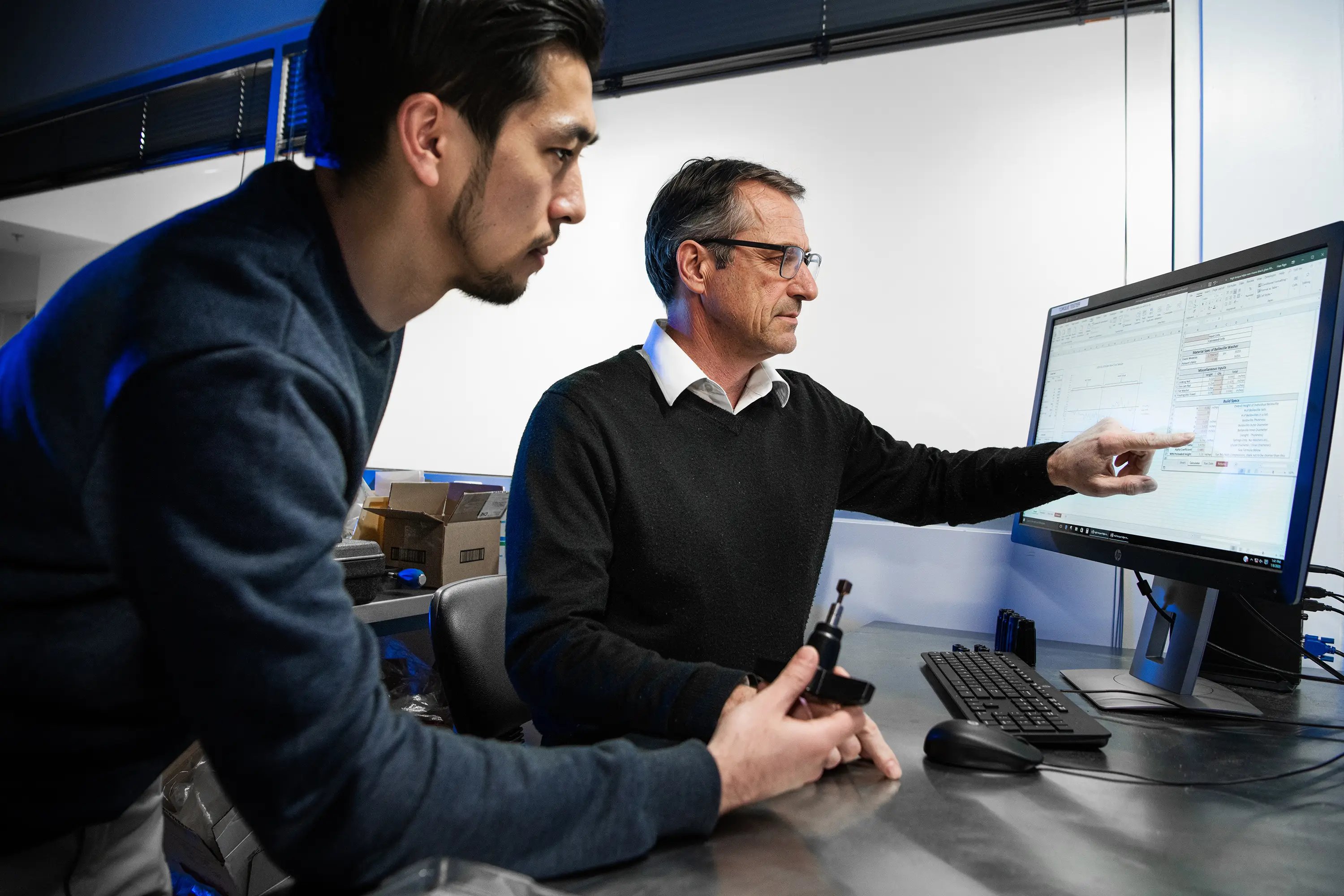
The surgical endoscopy landscape is undergoing rapid technological evolution. From micro-machining tolerances to smart sensor integration, OEM manufacturers must adopt cutting-edge manufacturing processes to remain competitive in minimally invasive surgery markets.
1. Micro-Precision Machining & Ultra-Thin Wall Tubing
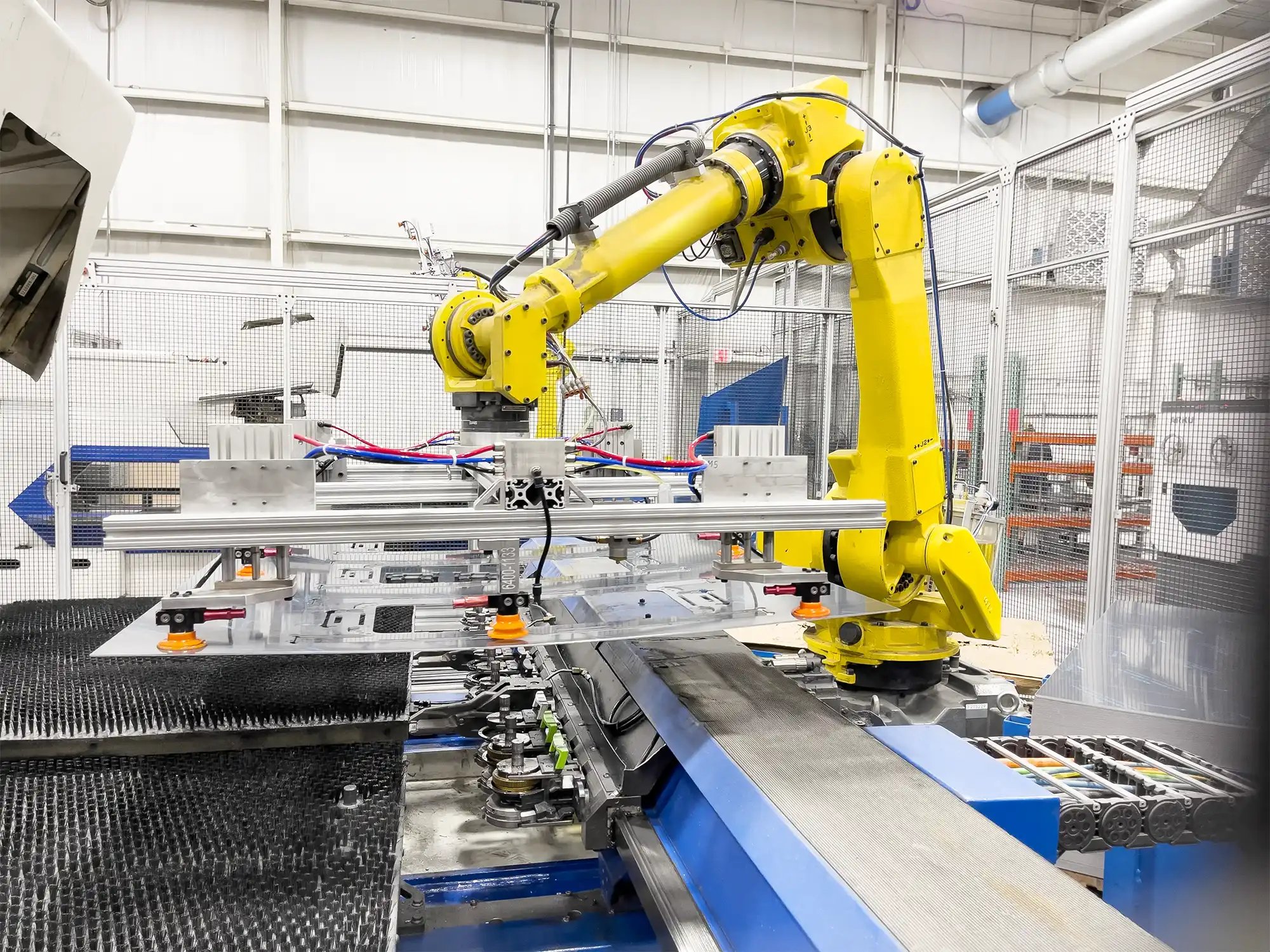
As endoscopic procedures expand into delicate neurological, ENT, and pediatric interventions, instrument dimensions continue to shrink. Paragon Medical utilizes advanced 10-axis Swiss CNC machines, femtosecond laser cutting, and micro-EDM to process stainless steel and nitinol tubing with wall thicknesses under 0.08mm.
This allows OEMs to maximize working channel space for optics, irrigation channels, and steerable tension wires while maintaining maximum column strength and pushability.

2. Smart Ergonomics & Modular Sterilization Trays
Surgical fatigue during prolonged endoscopic procedures is a key concern for clinical users. Modern endoscopic handles incorporate lightweight composite polymers, customizable trigger ratios, and tactile feedback zones. Furthermore, protecting these high-precision instruments between surgeries requires engineered containment solutions.
Paragon Medical designs and manufactures custom sterilizable cases and trays using high-grade anodized aluminum, passivated stainless steel mesh, and molded PPSU inserts designed specifically to extend the working lifespan of delicate endoscopic optics and jaws.
Information Gain Insight: Navigating EU MDR & FDA 510(k) Cleared Manufacturing
The regulatory landscape for medical devices has never been more demanding. Under EU MDR (2017/745), contract manufacturers must demonstrate rigorous technical documentation, biological evaluation (ISO 10993), and full supply chain traceability. Paragon Medical’s quality systems are pre-validated to support seamless technical file submissions, reducing regulatory review cycles for our OEM partners.
Contact UsFrequently Asked Questions by Global Medical Device Buyers
Addressing the most critical technical, operational, and commercial inquiries submitted by global procurement teams when evaluating contract manufacturers for Endoscopic Surgery Instruments.
What are the primary material selection criteria for autoclavable vs. single-use endoscopic instruments?
For reusable, autoclavable endoscopic instruments, materials must withstand repeated exposure to high-pressure steam (134°C / 273°F), aggressive enzymatic detergents, and oxidative sterilants. We recommend 17-4PH stainless steel (precipitation hardened to H1150 or H900) for mechanical jaws and pins due to its outstanding yield strength and pitting corrosion resistance. For outer shafts, 316L stainless steel or titanium alloys (Ti-6Al-4V ELI) provide superior passivated oxide protection.
For single-use disposable endoscopic instruments, the emphasis shifts toward cost-optimized high-performance polymers such as PC/ABS blends, PEEK, or glass-filled nylon for handle housings, paired with precision stamped or MIM (Metal Injection Molded) stainless steel jaws. Paragon Medical’s metallurgical team works directly with your engineering staff to select materials that strike the perfect balance between mechanical performance and target unit cost.
How does Paragon Medical achieve micro-tolerances (±0.002 mm) on complex articulating endoscopic jaws?
Achieving extreme dimensional precision requires a multi-faceted manufacturing strategy. We utilize state-of-the-art 5-axis Swiss-turn CNC lathes equipped with high-rpm live tooling, high-precision wire EDM (Electrical Discharge Machining), and micro-grinding equipment within temperature-controlled machining centers.
Furthermore, our toolmakers employ custom workholding fixtures and inline non-contact optical CMM measuring systems (such as Keyence and Zeiss O-INSPECT) that continuously inspect critical-to-quality (CTQ) dimensions during production runs, guaranteeing 100% feature compliance across high-volume production batches.
What quality management certifications and regulatory documentation are provided with shipped sub-assemblies?
Paragon Medical operates under a fully integrated ISO 13485:2016 and FDA 21 CFR Part 820 certified quality management system. Every shipment of endoscopic surgery instruments includes a complete Device History Record (DHR) package, which contains:
- Certificate of Conformance (CoC) & Certificate of Analysis (CoA)
- Raw material melt-lot certificates with full chemical & physical traceability
- Dimensional inspection reports (First Article Inspection / CMM data)
- Heat treatment & passivation validation certificates (ASTM A967 / AMS 2759)
- Bioburden & particulate testing reports for cleanroom packaged goods
Can Paragon Medical handle custom laser slotting and assembly for steerable flexible endoscopes?
Yes. Paragon Medical possesses advanced femtosecond laser cutting and micro-welding capabilities specifically engineered for flexible and semi-rigid endoscopic shafts. We produce custom kerf-patterned laser-slotted nitinol and stainless steel hypotubes that deliver precise torque transmission, controlled bending radii, and high kink resistance.
Our ISO Class 7 cleanroom teams perform delicate manual and semi-automated assembly, including pull-wire tensioning, PTFE inner liner insertion, heat-shrink jacket reflow, and microscopic tip-jaw micro-welding.
How do you manage IP protection and rapid prototyping during early-stage endoscopic product development?
Protecting your intellectual property is paramount. Paragon Medical enforces strict Non-Disclosure Agreements (NDAs), segregated project servers, and secure physical access controls within our Innovation Centers. Your proprietary CAD files and design concepts are accessible only to assigned project team members.
For rapid prototyping, our dedicated NPI (New Product Introduction) teams bypass standard production queues, utilizing quick-turn CNC machining, metal additive manufacturing, and dedicated toolroom capabilities to deliver functional clinical-grade prototypes within accelerated timeframes.
What is the typical lead time from prototype validation to full commercial manufacturing scale-up?
Lead times depend on design complexity, tooling requirements, and regulatory verification pathways. Typically, prototype delivery occurs within 2 to 6 weeks. Following design freeze and prototype approval, full production line setup, tool validation (IQ/OQ/PQ), and process capability verification require approximately 8 to 16 weeks.
Our Integrated Business Planning (IBP) team collaborates closely with your procurement organization to establish buffer safety stock, vendor-managed inventory (VMI) programs, and flexible ramp-up schedules to support your commercial launch without supply disruption.