

Medical Device CDMO Blog & Insights
Expert articles, technical insights, and innovations in precision medical device manufacturing.
Latest Medical Device Manufacturing Articles
2026 Best Minimally Invasive Surgical Devices for Hospitals
Table of Contents
- Types of Minimally Invasive Surgical Devices Used in Hospitals
- Key Technologies and Clinical Applications in 2026
- Leading Device Categories for Hospital Surgical Programs
- Criteria for Evaluating Safety, Performance, and Cost
- Procurement, Training, and Integration into Hospital Care
- FAQS
- Conclusion
- Related Posts
Minimally Invasive Surgical Devices are changing how hospitals plan operating rooms, train teams, and support patient recovery. In 2026, the category includes laparoscopic instruments, endoscopic systems, robotic platforms, energy devices, and image-guided tools. Their value depends on more than smaller incisions. Reliable visualization, precise control, consistent sterilization, and accessible maintenance all matter at the bedside and in the operating room.
Professor Alfred Cuschieri, a pioneer of minimally invasive surgery, has emphasized the importance of reducing surgical trauma while preserving effective treatment. The sentence here is a paraphrase, not a verified direct quotation: “Less invasive access must still support precise, safe surgery.” That distinction matters. Device comparisons should consider clinical evidence, staff training, workflow fit, service support, and total cost—not just technical features or product claims.
This guide examines device types hospitals may assess in 2026, alongside practical selection criteria and implementation concerns. A laparoscopic camera’s image quality can shape visibility; a robotic system’s footprint can affect room setup. Yet no device is right for every procedure or hospital. The evidence may be uneven, and newer technology does not automatically improve outcomes. That is the uncomfortable part. Hospital teams should weigh intended use, local expertise, and patient needs, then verify claims against current clinical evidence and manufacturer documentation.
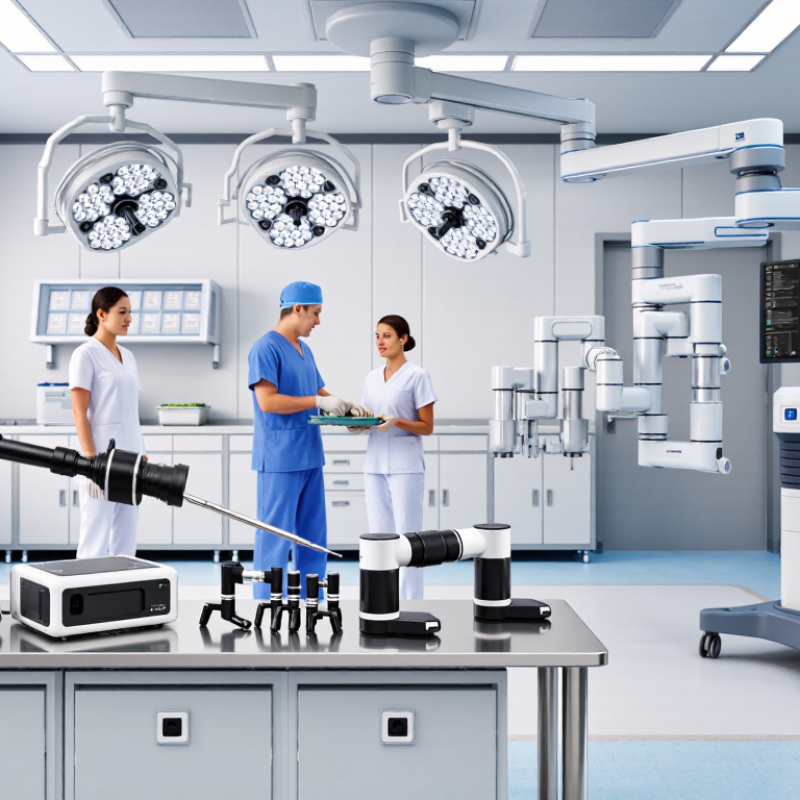
Types of Minimally Invasive Surgical Devices Used in Hospitals
2026 Best Minimally Invasive Surgical Devices for Hospitals
Types vary by procedure. Laparoscopic systems use a camera, light source, access ports, and long instruments to work through small incisions. Endoscopes help clinicians examine or treat areas inside the digestive tract, airways, and other passages. Robotic-assisted platforms translate a surgeon’s hand movements into controlled instrument motion; they do not make decisions independently.
Other common tools include energy devices for cutting or sealing tissue, surgical staplers, and needle drivers designed for confined spaces. In some specialties, image-guidance systems help teams track instruments against live scans. The right setup depends on the operation, patient anatomy, staff training, and available sterile-processing capacity. Fit matters. A device that works well in one operating room may be awkward or costly to maintain in another. Teams should review visibility, instrument range, cleaning requirements, and compatibility before adoption. Those details can be missed during a rushed evaluation.
Tips: Ask clinicians to test the camera view and instrument movement in a realistic simulation. Check that staff can identify faults and access support. Track repair frequency and procedure delays after installation. One limitation remains: simulations cannot fully reproduce tissue response, so training and clinical judgment still matter.
Key Technologies and Clinical Applications in 2026
In 2026, minimally invasive surgery increasingly depends on a coordinated toolkit: high-definition imaging, articulating instruments, energy-based tissue sealing, and robotic assistance. MarketsandMarkets projected the minimally invasive surgical instruments market to grow from $23.4 billion in 2023 to $31.6 billion by 2028. That is a commercial forecast, not proof that every hospital needs robotic systems. For laparoscopic procedures, a stable camera image and reliable instrument access may matter more than a sophisticated console. In endoscopy suites, flexible scopes and image enhancement help clinicians inspect narrow passages and guide targeted treatment.
Clinical value depends on the procedure and the team. In colorectal surgery, for example, smaller incisions can support recovery, but safe results still require careful patient selection, trained staff, and dependable reprocessing. Equipment uptime matters. So does the supply of compatible instruments. The Lancet Commission on Global Surgery estimated that five billion people lacked access to safe, affordable surgical care. That gap makes cost, maintenance, and staff training central to device planning—not optional details. Hospitals should compare outcomes, complications, and total operating costs across procedures before investing. Evidence is uneven, and newer technology does not automatically mean better care.
2026 Best Minimally Invasive Surgical Devices for Hospitals - Key Technologies and Clinical Applications in 2026
This technology-focused overview covers commonly used device categories for minimally invasive procedures. It is not a product ranking: suitability depends on the procedure, patient, clinical evidence, staff training, local approval, and the device’s instructions for use.
| Device Category | Key Technology | Typical Clinical Applications | Potential Clinical Value | Selection and Safety Considerations |
|---|---|---|---|---|
| Laparoscopic visualization systems | Digital camera, light source, display, and rigid laparoscope; systems may offer high-definition, 4K, or stereoscopic 3D imaging. | General, gynecologic, urologic, and colorectal laparoscopic procedures. | Provides magnified visualization of the operative field; stereoscopic systems can provide depth cues. | Assess image quality, compatibility with existing equipment, cleaning and sterilization workflows, and the team’s familiarity with 2D or 3D viewing. |
| Robot-assisted surgical systems | Surgeon-controlled camera and instruments, typically with articulated instrument tips and a magnified 3D view. | Selected urologic, gynecologic, colorectal, thoracic, and general surgical procedures. | Can support instrument articulation and surgeon-controlled visualization in confined operative spaces. | The system does not operate autonomously. Evaluate procedure-specific evidence, setup time, training, instrument availability, maintenance, and total cost; benefits vary by operation and care team. |
| Electrosurgical and ultrasonic instruments | Electrical energy or ultrasonic vibration is used to cut tissue and/or coagulate vessels and tissue. | Dissection, coagulation, and tissue division in laparoscopic and other minimally invasive operations. | Combines tissue handling with energy delivery and may reduce the need to change instruments during some steps. | Thermal injury can occur. Use the correct mode and settings, follow the instructions for use, and allow for heat dissipation before contacting adjacent tissue. |
| Advanced bipolar vessel-sealing instruments | Controlled bipolar energy compresses and seals tissue between instrument jaws; some devices also cut tissue. | Vessel control and tissue division in general, gynecologic, urologic, and colorectal surgery. | May provide an alternative to individual ligatures or clips for eligible vessels and tissue bundles. | Permitted vessel and tissue sizes differ by device. Confirm the indicated use and limits in the device labeling; inspect the operative field and verify hemostasis. |
| Endoscopic and laparoscopic stapling systems | Mechanical instruments place rows of staples and may divide tissue between staple lines. | Gastrointestinal resection, bowel transection, and selected anastomosis procedures. | Can facilitate tissue transection or anastomosis through minimally invasive access. | Cartridge selection must match tissue characteristics and the device instructions. Staple-line bleeding, leakage, or other complications can occur; inspect the staple line and manage findings clinically. |
| Near-infrared fluorescence imaging | Near-infrared imaging detects fluorescent signal after administration of an appropriate fluorescent agent, such as indocyanine green (ICG), when indicated. | Selected procedures involving tissue perfusion assessment or visualization of biliary anatomy, subject to local authorization and clinical protocol. | Adds an optical imaging mode that can provide information not visible under standard white light. | It is an adjunct, not a substitute for anatomical knowledge or clinical judgment. Check agent-specific contraindications, hypersensitivity risks, and the applicable labeling. |
| Insufflators and smoke evacuation systems | Insufflators regulate carbon dioxide flow and intra-abdominal pressure; smoke evacuation systems filter or remove surgical plume. | Creation and maintenance of pneumoperitoneum in laparoscopic procedures; management of surgical smoke where generated. | Supports operative working space and can help control plume that may impair visibility. | Monitor pressure, flow, and gas delivery throughout the procedure. Use filtration and evacuation components according to the device instructions and hospital infection-control policies. |
| Trocars and laparoscopic access ports | Ports provide instrument access through the abdominal wall; designs include cutting, blunt, and optical entry approaches. | Establishing and maintaining access for laparoscopic instruments and the camera. | Provides working channels while supporting instrument exchange during minimally invasive surgery. | Entry can injure blood vessels or organs. Select access technique and port size for the procedure and patient; confirm safe placement and follow established surgical protocols. |
Clinical note: Device indications, compatibility, and performance limits vary. Hospitals should review current instructions for use, applicable regulatory requirements, procedure-specific evidence, staff competency, and local protocols before purchasing or using a device.
Leading Device Categories for Hospital Surgical Programs
2026 Best Minimally Invasive Surgical Devices for Hospitals
Leading Device Categories for Hospital Surgical Programs
Hospital programs often rely on several connected device categories, not one standout machine. Laparoscopic instruments support access through small incisions, while cameras and endoscopic systems provide the operative view. Clear imaging matters. A dim monitor or awkward camera control can slow communication in the operating room. Teams should assess image quality, instrument ergonomics, and compatibility with existing equipment before purchasing.
Energy devices, such as electrosurgical and vessel-sealing tools, help clinicians cut or manage tissue during selected procedures. Their use requires appropriate training, maintenance, and attention to the instructions for each device. No tool fits every case. Endoscopic staplers and retrieval systems may also support specific surgical workflows, but staff need reliable access to compatible supplies. Storage and sterilization demands deserve early review, not an afterthought.
Robotic-assisted platforms form another category for hospitals evaluating complex minimally invasive programs. They can require substantial space, staff training, service support, and ongoing budget planning. More advanced does not always mean more suitable. Procurement teams can compare devices against procedure volume, clinician feedback, reprocessing requirements, and biomedical engineering capacity. A practical evaluation may include observing setup in a real operating room; even a promising system can feel cumbersome when cables, carts, and staff compete for space.
Criteria for Evaluating Safety, Performance, and Cost
For hospitals assessing minimally invasive surgical devices in 2026, safety should be demonstrated, not inferred from a polished specification sheet. Review documented adverse-event data, device failure rates, and compatibility with sterilization and reprocessing workflows. Ask how quickly staff can identify a damaged seal, worn insulation, or incomplete instrument assembly. Small checks matter. Evaluate the full use cycle, including setup, imaging, energy delivery, cleaning, and storage. Independent clinical evidence and clear instructions are more useful than broad claims of precision. Evidence may be limited for newer systems, so note uncertainty rather than treating early results as proof.
Performance should be measured under realistic operating conditions. Compare image clarity, instrument control, procedural time, conversion rates, and reliability across representative cases, while accounting for staff experience. A device that performs well in a demonstration may feel different during a long case. Cost extends beyond purchase price: include single-use components, service contracts, training time, upgrades, and downtime. Estimate cost per procedure over the expected service life, then test assumptions against local case volume. The cheapest option can become expensive. Review support response times and parts availability, too. No scoring model fits every department perfectly; documenting trade-offs makes the decision more transparent.
Procurement, Training, and Integration into Hospital Care
Choosing minimally invasive surgical devices in 2026 starts with clinical need, not a catalog feature list. Map each device to procedures, patient groups, and operating-room workflows. Ask surgeons, nurses, sterile-processing staff, and biomedical engineers to review the same requirements. Their priorities may differ; that is useful evidence, not a nuisance. Compare total cost, including instruments, disposables, maintenance, training time, and expected service life. Check compatibility with imaging systems, data interfaces, and reprocessing capacity before purchase. A capable device can still cause delays if setup adds steps.
Training should reflect real cases and real room conditions. Schedule hands-on practice with the actual instruments, simulator scenarios, and setup sequence. Confirm staff can troubleshoot common alerts and follow cleaning and storage procedures. Define who provides support during early cases, and track setup time, workflow interruptions, and staff feedback. Pilot plans rarely capture every disruption. Revise them when daily practice exposes a gap. Integration also needs clear ownership for maintenance, inventory, and updates.
Tips: Run a workflow test before final approval. Include a sterile-processing technician. Small details matter. Record unresolved issues, assign an owner, and review them after the first month. Do not assume one training session suits every role.
FAQS
Common categories include laparoscopic instruments, cameras, endoscopic systems, energy devices, staplers, retrieval systems, and robotic-assisted platforms. No single tool fits every procedure.
Assess image clarity, camera controls, instrument ergonomics, and compatibility with existing systems. A dim monitor can make communication harder.
Review adverse-event data, failure rates, instructions, and reprocessing requirements. Check whether staff can spot damaged seals or worn insulation. Small checks matter.
Compare image quality, control, procedure time, conversion rates, and reliability across representative cases. Staff experience can affect results. Demonstrations may not reflect long cases.
Include purchase price, disposable components, service, training, upgrades, and downtime. Estimate cost per procedure using local case volumes. The cheapest option may not stay cheap.
Involve surgeons, nurses, sterile-processing staff, and biomedical engineers. Their priorities may differ, and those differences can reveal workflow problems.
Arrange hands-on practice with actual instruments and room setups. Include common alerts, cleaning steps, and storage procedures. One session may not suit every role.
Record setup time, workflow interruptions, staff feedback, and unresolved issues. Assign each issue an owner and review progress after the first month. Plans can miss things.
Conclusion
This article explores the main types of Minimally Invasive Surgical Devices used in hospitals, including instruments and systems designed to support procedures through smaller incisions or natural openings. It reviews how imaging, precision control, energy delivery, and digital guidance technologies can assist clinical teams across different surgical specialties. The discussion also considers how hospitals can match device categories to their surgical programs, patient needs, staff capabilities, and available facilities.
The article outlines practical criteria for evaluating safety, performance, usability, maintenance requirements, and total cost of ownership. It also highlights the importance of procurement planning, structured staff training, workflow testing, and integration with existing hospital systems. By considering clinical value alongside operational readiness, hospitals can make informed decisions about adopting devices and supporting their effective use in patient care.

Blog Tags: