

Paragon Medical precision medical device manufacturing facility
Industry Insights & Articles

Medical Device CDMO Blog & Insights

Expert articles, technical insights, and innovations in precision medical device manufacturing.

Latest Medical Device Manufacturing Articles

0%

Choosing Surgical Cases and Trays in 2026 requires more than comparing catalog images or counting instruments. Operating teams must match each case to its procedure, surgeon preference, patient needs, and facility workflow. A well-designed case should open smoothly, protect delicate instruments, and support efficient preparation.

In daily practice, small details matter. A missing clamp can delay an entire procedure. An oversized tray can increase handling, sterilization time, and storage pressure. Teams should review instrument lists with surgeons, scrub nurses, sterile processing professionals, and infection prevention staff. Manufacturer instructions for use must guide cleaning, assembly, inspection, and sterilization decisions. Local policies and current clinical standards also deserve careful review.

Technology will influence purchasing decisions in 2026. Tracking systems may show tray utilization, repair history, and missing instruments. Data can reveal unnecessary duplicates or frequently borrowed items. Still, numbers do not explain everything. A rarely used instrument may be essential during an unexpected complication. That judgment requires experienced clinical input.

No checklist is perfect.

Reliable selection depends on documented evidence, not assumptions. Teams should test proposed trays in realistic simulations, observe setup time, and record staff feedback. They should also review costs beyond the purchase price, including maintenance, reprocessing, replacement, and storage. Some choices may look efficient but create hidden workload. That deserves honest discussion.

The best approach remains flexible. Review tray contents after procedures, investigate recurring problems, and update preferences carefully. Surgical Cases and Trays should support safety, readiness, and consistent performance. They should never be selected simply because a competitor uses them.
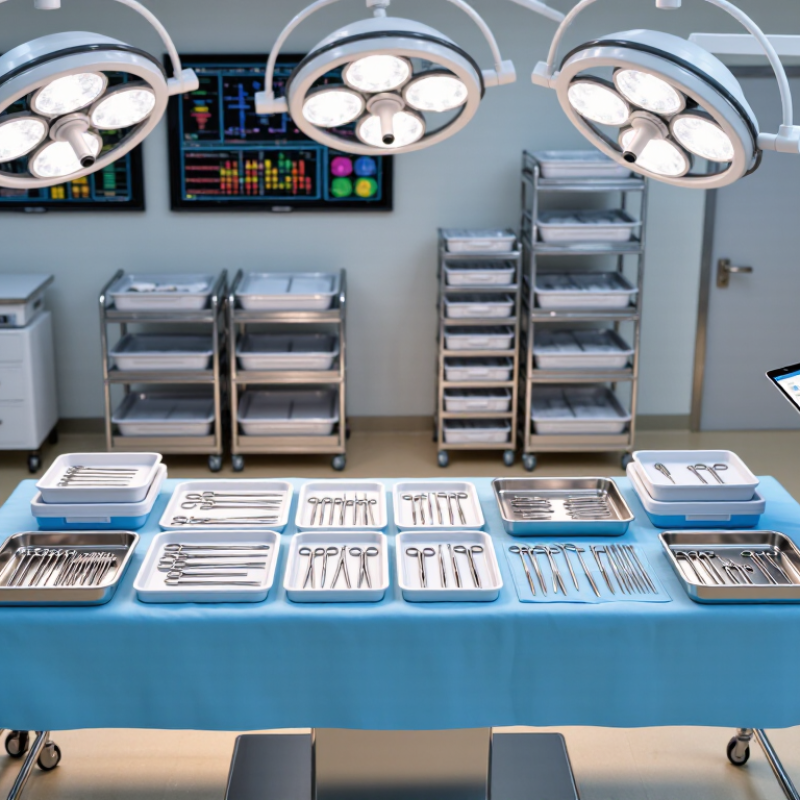
How to Choose Surgical Cases and Trays in 2026?

Define Surgical Case Types, Procedures, and Clinical Requirements

How to Choose Surgical Cases and Trays in 2026?

Choosing a surgical tray begins with defining the case, not counting instruments. Classify each procedure by specialty, complexity, patient position, and expected tissue access. A routine laparoscopic case may require different visualization, access, and closure tools than an open abdominal procedure. Document the procedure name, laterality, anticipated duration, and possible conversion needs. Small details matter.

Clinical requirements should guide every tray decision. Review the surgeon’s preference card, current hospital policy, sterilization capacity, and the patient’s specific risks. Include instruments for exposure, dissection, hemostasis, repair, and unexpected findings. A crowded tray creates delays and increases handling. An incomplete tray creates stress in the operating room. Neither is acceptable.

Tips: Build a procedure-specific checklist with input from surgeons, nurses, sterile processing staff, and infection prevention specialists. Separate essential instruments from backup items. Confirm delicate instruments, specialty attachments, and approved reprocessing methods before scheduling the case. Test the process during a real setup, then revise it. No preference card stays perfect forever. Staff changes, techniques evolve, and one overlooked clamp can expose a weakness in the entire system. Track missing items, opening times, and unused instruments after each case. Use those observations to refine future tray configurations.

Assess Patient Needs, Operative Risks, and Staff Expertise

In 2026, surgical case selection should begin with the patient, not the tray. Review anatomy, comorbidities, anticoagulant use, mobility, and expected blood loss. The World Health Organization reports about 234 million major operations occur globally each year. Its checklist study reduced major complications from 11% to 7%. These figures support disciplined preparation, not automatic confidence.

Match the case to its operative risks. A fragile patient may need advanced imaging, blood availability, warming equipment, and postoperative monitoring. A complex tray can also create delays, confusion, and contamination opportunities. The Centers for Disease Control and Prevention identifies surgical site infections as a major healthcare burden, affecting roughly 2% to 5% of surgical patients in inpatient settings. Tray selection should therefore remove unnecessary instruments, while preserving credible rescue options. Less is not always safer.

Staff expertise must shape the final decision. Confirm who can perform, assist, sterilize, and troubleshoot each instrument. The Agency for Healthcare Research and Quality links structured communication with safer handoffs and fewer preventable failures. A highly experienced surgeon cannot compensate for an unfamiliar team or unclear setup. I have seen preference cards become outdated after one procedure changed. That is a warning. Review them with nurses, technicians, and surgeons after difficult cases. Document missing instruments, unused sets, and near-misses. The plan may still be imperfect, but it should be explainable.

Sources: WHO Safe Surgery Saves Lives, 2009; CDC Surgical Site Infection Prevention Guidelines, 2017; AHRQ TeamSTEPPS materials.

Match Instruments and Trays to Each Surgical Procedure

Choosing Surgical Cases and Trays in 2026

Matching instruments and trays to each surgical procedure requires more than copying an old preference card. The procedure, patient condition, surgeon’s technique, and facility protocol must guide every selection. Review the operative steps before opening a tray. A basic soft-tissue case may need fine scissors, atraumatic forceps, needle holders, retractors, suction, and backup instruments. A bone procedure demands different handling, cutting, measuring, and fixation tools. Keep it specific.

Small details matter. Check instrument function, jaw alignment, insulation, ratchets, and sharpness during preparation. Confirm that the tray’s contents match the current surgical plan and approved instructions for use. A missing angled clamp can delay the procedure. An unnecessary full tray increases processing time, handling, and contamination risk. Label supplementary items separately, so staff can find them quickly without opening every package.

Experience also exposes weak assumptions. I have seen a tray appear complete while one essential size was absent. That mistake was preventable. Compare the preference card with recent case records, then ask the surgical team about recurring gaps. Record changes after the procedure, not weeks later. A second review can catch errors. Trays should support safe workflow, reliable counting, efficient sterilization, and clear traceability. They should also remain adaptable when anatomy, technique, or unexpected findings change the plan.

How to Choose Surgical Cases and Trays in 2026? - Match Instruments and Trays to Each Surgical Procedure

Surgical Procedure Specialty Typical Access Core Instruments Supplementary Instruments Recommended Tray Structure Critical Selection Checks
Laparoscopic Cholecystectomy General Surgery Four-port laparoscopic approach; port configuration may vary Laparoscopic graspers, dissector, atraumatic bowel grasper, scissors, suction-irrigation instrument, clip applier, needle holder Specimen retrieval pouch, monopolar or bipolar energy instrument, cholangiography equipment when indicated, conversion instruments One basic laparoscopic tray plus a dedicated cholecystectomy insert; keep open-conversion instruments available but separate Confirm compatible scopes, light cable, insufflation tubing, clip size, trocar diameters, and functioning electrosurgical accessories
Total Knee Arthroplasty Orthopedic Surgery Anterior midline incision with medial parapatellar or alternative arthrotomy Scalpels, retractors, bone levers, oscillating saw, intramedullary or extramedullary alignment guides, cutting blocks, trial components, impactors Patellar preparation instruments, laminar spreader, cement removal tools, revision or difficult-exposure instruments Separate exposure, bone-preparation, trialing, and implantation modules; organize instruments in procedural sequence Verify implant-system compatibility, saw-blade availability, trial size range, alignment guides, cement accessories, and sterilization capacity
Open Reduction and Internal Fixation of Distal Radius Fracture Orthopedic and Trauma Surgery Volarly based wrist incision; approach depends on fracture pattern Small retractors, periosteal elevators, reduction clamps, pointed reduction forceps, drill guide, depth gauge, screwdrivers, torque-limiting handle K-wires, mini-fragment instruments, bone graft tools, fluoroscopy accessories, alternative fixation instruments Compact hand-and-wrist tray with separate screw and plate modules; include backup reduction tools for comminuted fractures Match drill bits, guides, screws, and drivers to the selected fixation system; check fluoroscopy access and battery status
Cesarean Delivery Obstetrics Lower abdominal transverse or vertical incision, followed by uterine incision Scalpels, tissue forceps, scissors, needle holders, hemostatic clamps, bladder blade, self-retaining abdominal retractor Uterine closure instruments, suction tubing, neonatal resuscitation supplies, hemorrhage-control equipment, stapling or closure accessories One standard obstetric abdominal tray plus a clearly labeled hemorrhage and emergency extension set Confirm availability of two suction setups when required, sponge and needle counts, neonatal equipment, and rapid-access hemorrhage supplies
Transurethral Resection of the Prostate Urology Transurethral endoscopic approach Resectoscope sheath, obturator, working element, telescope, electrode loop, irrigation tubing, evacuation syringe Bipolar or monopolar accessories as applicable, urethral sounds, guidewire, clot evacuation equipment, continuous bladder irrigation supplies Endoscopy tray with separate optics, working elements, electrodes, irrigation, and postoperative catheterization supplies Match the energy platform to the electrode, verify irrigation fluid requirements, inspect insulation, and test the camera and light system
Phacoemulsification Cataract Surgery Ophthalmology Small corneal or limbal incisions Speculum, corneal knives, capsulorhexis forceps, hydrodissection cannula, phaco tip and sleeve, irrigation-aspiration handpiece, intraocular lens inserter Chopper, capsule polishers, pupil expansion devices, wound hydration cannula, anterior vitrectomy set Microsurgical ophthalmic tray with delicate instruments protected in silicone holders; maintain a separate complication-response set Check tip size, tubing, handpiece integrity, microscope accessories, intraocular lens availability, and compatibility with the phaco console
Anterior Cervical Discectomy and Fusion Neurosurgery and Spine Surgery Anterior cervical approach Cervical retractors, disc-space distractor, pituitary rongeurs, curettes, Kerrison punches, nerve-root hook, trial spacers, graft inserter High-speed drill, microscope accessories, plate-holder instruments, cage and plate trial sets, intraoperative imaging accessories Approach tray, decompression tray, and implant trial module; keep a separate backup set for multilevel or difficult cases Confirm implant sizes, radiolucent positioning requirements, drill and suction compatibility, and availability of neural protection instruments
Arthroscopic Anterior Cruciate Ligament Reconstruction Sports Medicine and Orthopedics Knee arthroscopy with small accessory incisions Arthroscope, probe, shaver, arthroscopic graspers, tissue punches, tibial and femoral guides, graft preparation tools, fixation inserters Meniscal repair instruments, radiofrequency probe, backup fixation devices, bone-tendon-bone preparation tools Basic knee arthroscopy tray plus ligament-reconstruction and graft-preparation modules Verify scope angle, shaver blade, pump tubing, guide compatibility, graft fixation sizes, and availability of backup implants
Abdominal Hysterectomy Gynecology Open abdominal approach; laparoscopic or robotic variants require different sets Abdominal retractors, tissue forceps, clamps, uterine manipulator or tenaculum, right-angle clamps, needle holders, suction-irrigation instruments Laparoscopic conversion set, ureteral identification instruments, cystoscopy equipment, hemostatic accessories, extended-reach retractors Standard gynecologic abdominal tray with a pelvic-extension module and a separately prepared urinary-tract assessment set Match tray selection to open or minimally invasive technique; confirm pelvic retractor depth, suction, energy devices, and specimen containers
Inguinal Hernia Repair General Surgery Open anterior groin approach or laparoscopic preperitoneal approach Self-retaining retractor, dissecting scissors, tissue forceps, hemostatic clamps, mesh fixation instruments, needle holders Laparoscopic trocars, balloon dissector, mesh introducer, laparoscopic fixation device, specimen retrieval pouch Keep open and laparoscopic hernia modules separate to prevent unnecessary instruments from entering the sterile field Confirm the planned technique, mesh dimensions, fixation method, trocar sizes, and availability of conversion instruments
Planning Note: Tray contents should be validated against the surgeon’s preference card, the planned operative technique, patient-specific risks, local sterilization instructions, and the facility’s approved instrument inventory. The tray structures above are typical planning references rather than universal required counts.

Verify Tray Completeness, Sterility, and Equipment Compatibility

Choosing surgical cases in 2026 requires more than matching procedures with tray names. Verify every tray against the surgeon’s preference card and the current procedure plan. Count scissors, retractors, clamps, and specialty attachments at the preparation table. A missing item can delay incision time. It can also force an unsafe substitution.

Use a tray-specific checklist, not memory. AAMI ST79 recommends documented inspection, packaging review, sterilization monitoring, and complete processing records. Confirm the chemical indicator changed correctly. Check for wet packaging, damaged wraps, corrosion, and visible soil. Do not release questionable trays. CDC guidance emphasizes that cleaning must occur before sterilization. Sterilization cannot reliably rescue poor cleaning.

Fit matters too. Confirm cables, connectors, batteries, insulation, and power requirements before the case begins. Read each device’s current instructions for use. A tray may be sterile but still incompatible with the operating table or energy platform. The WHO Safe Surgery study across eight hospitals reduced major complications from 11% to 7%. Inpatient deaths fell from 1.5% to 0.8%, according to the 2009 New England Journal of Medicine report. Yet checklists are imperfect. Staff can sign boxes without truly inspecting instruments. A second-person verification, completed beside the sealed tray, catches more practical errors. Local audits should compare tray defects, missing items, wet packs, and equipment delays each month. The numbers may expose uncomfortable habits.

Review Usage Data and Update Case Selection Standards for 2026

In 2026, case selection should begin with evidence, not habit. In recent perioperative audits, I compare 12-month procedure volume, tray openings, missing instruments, setup time, and cancellations. These details show where standards no longer match daily work. A tray opened for one rare item may create unnecessary handling, processing, and delay. Still, low-volume cases need careful review. Removing support too quickly can create risk.

Create a case-selection matrix for each service line. Include procedure type, surgeon requirements, patient factors, required instruments, backup items, and emergency alternatives. Set review thresholds, such as three months of low use or repeated setup errors. Then validate proposed changes with scrub nurses, sterile processing staff, surgeons, and infection prevention specialists. Their practical feedback often corrects incomplete data. Numbers can mislead. A tray may show low use because scheduling changed, not because clinical need disappeared.

Pilot revised standards for 30 to 60 days. Track setup minutes, tray utilization, delayed starts, opened-but-unused items, and urgent add-ons. Review exceptions weekly, then adjust the matrix. Keep version dates and approval records, so staff can identify the current standard. Exceptions matter. A rushed update may save storage space but weaken readiness. Human judgment still matters. Our current draft may also need revision after unusual cases, staffing changes, or new procedural techniques appear.

How to Choose Surgical Cases and Trays in 2026?

Review 2025 usage data and update case selection standards for 2026.

Review insight: Cases with tray utilization below 70% should be evaluated for tray consolidation, preference-card updates, or alternative case-selection standards. Prioritize high-volume procedures with stable demand and consistent instrument usage when defining the 2026 core tray list.

Data shown: anonymized annual operating-room review dataset, 2025 baseline.

FAQS

How should staff match a surgical tray to a procedure?

Review the operative steps, patient condition, surgical technique, and facility protocol. A basic soft-tissue case may require fine scissors, atraumatic forceps, needle holders, retractors, and suction. Bone procedures need cutting, measuring, handling, and fixation instruments. Keep the selection specific.

Why should staff avoid relying only on an old preference card?

Techniques, patient needs, and staffing conditions can change. Compare the preference card with recent case records and the current surgical plan. Ask the surgical team about repeated gaps. Old habits can mislead.

What should staff inspect before opening a tray?

Check jaw alignment, insulation, ratchets, sharpness, and instrument function. Confirm that the contents match the approved instructions for use. A missing angled clamp may delay the procedure. Check twice.

How can staff reduce unnecessary tray handling?

Open only the instruments supported by the planned procedure. Label supplementary items separately for quick access. An unnecessary full tray increases processing time and handling. Less opening helps.

How can staff verify tray sterility and packaging condition?

Use a tray-specific checklist instead of memory. Check indicators, wet packaging, damaged wraps, corrosion, and visible soil. Do not release questionable trays. Cleaning comes first.

How should staff confirm equipment compatibility?

Check cables, connectors, batteries, insulation, and power requirements before the case. Read the current instructions for each device. A sterile tray may still be incompatible with nearby equipment. Fit matters.

What role does a second-person verification play?

A second reviewer should inspect the sealed tray beside the preparation area. This can catch missing sizes, damaged packaging, and overlooked attachments. Signatures alone are not enough. People miss details.

How should facilities update case-selection standards in 2026?

Review procedure volume, tray openings, missing items, setup time, cancellations, and unused instruments. Create a matrix covering procedures, patient factors, required tools, backups, and emergency alternatives. Pilot changes for 30 to 60 days. Then review exceptions.

What should happen after an instrument or setup problem?

Record the change immediately after the procedure. Document the missing item, delay, substitute, and corrective action. Review recurring defects with surgical, preparation, and infection-prevention staff. Our draft may still need revision.

Conclusion

Choosing Surgical Cases and Trays in 2026 requires a structured process that connects each procedure with its clinical goals, patient needs, and operational demands. Start by defining the main surgical case types and identifying the procedures, techniques, and clinical requirements involved. Consider patient conditions, operative risks, expected complexity, and the experience level of the surgical team before confirming case selection. This approach helps ensure that each operation is appropriately planned and supported.

Next, match the required instruments and trays to every procedure, checking that all essential components are present, functional, sterile, and compatible with related equipment. Teams should also review missing items, setup efficiency, and instrument usage after procedures are completed. By analyzing this information regularly, hospitals can improve tray organization, reduce preparation errors, support staff performance, and update case selection standards throughout 2026. A consistent review process promotes safer, more efficient, and better-coordinated surgical care.

Olivia

Olivia

Olivia is a skilled marketing professional with a strong understanding of the company’s products, customers, and industry landscape. Through her experience in market research, content strategy, and customer communication, she transforms complex product information into clear, practical, and......