

Paragon Medical precision medical device manufacturing facility
Industry Insights & Articles

Medical Device CDMO Blog & Insights

Expert articles, technical insights, and innovations in precision medical device manufacturing.

Latest Medical Device Manufacturing Articles

0%

Sourcing Additive Manufacturing Medical Components requires more than finding a supplier with a modern printer. It demands evidence, disciplined communication, and a clear understanding of clinical risk. A supplier may produce a beautiful titanium lattice, yet still lack validated cleaning, sterilization, or batch traceability. That gap can become expensive.

Terry Wohlers, a widely recognized additive manufacturing industry expert, defines the technology this way: “Additive manufacturing is a process of joining materials to make objects from 3D model data, usually layer upon layer, as opposed to subtractive manufacturing methodologies.” His definition highlights an essential sourcing question: can the supplier repeatedly transform approved digital data into safe, consistent components?

This guide examines how to evaluate manufacturers, materials, equipment, and production controls. It considers ISO 13485 quality systems, biocompatibility evidence, powder or filament control, dimensional inspection, surface finishing, and sterilization compatibility. Ask for process-validation records, inspection methods, nonconformance data, and a transparent change-control procedure. Visit the facility when possible. Look closely at powder storage, operator training, calibration labels, and the path from printer to packaging.

Experience matters here.

However, no checklist guarantees success. A supplier may pass an audit and still struggle with a complex geometry or changing design file. Requirements can also differ between prototypes, surgical instruments, and implantable devices. That uncertainty deserves attention, not polished promises. Careful sourcing connects engineering performance with clinical purpose, regulatory expectations, and long-term supply reliability.
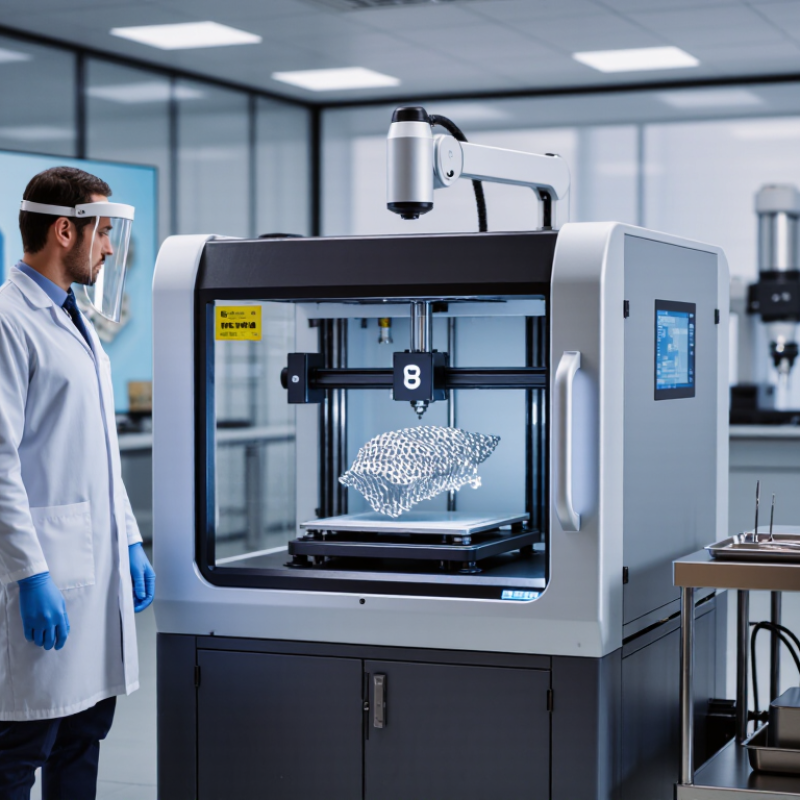
How to Source Additive Manufacturing Medical Components?

Define Clinical Use and ISO 14971 Risk Controls Before Sourcing

How to Source Additive Manufacturing Medical Components?

Define Clinical Use and ISO 14971 Risk Controls Before Sourcing.

Additive manufacturing is expanding quickly. The 2024 Wohlers Report valued the global industry at $20.035 billion in 2023, with 13.5% annual growth. That growth creates more supplier choices, but clinical purpose must guide every decision. A spinal implant, surgical guide, and anatomical model need different evidence, materials, and controls. Write the intended use before requesting quotations. Define patient contact, sterilization, service life, dimensional limits, and acceptable surface conditions. Keep it specific.

ISO 14971:2019 requires manufacturers to identify hazards, estimate risks, apply controls, and evaluate residual risk. Therefore, sourcing should begin with a risk file, not a machine catalogue. Ask suppliers for material certificates, powder or resin traceability, process validation, inspection records, and change-control procedures. Request evidence from production-like builds, not only attractive samples. The FDA’s 2023 CDRH Annual Report recorded 3,173 510(k) clearances, showing how much regulated evidence enters device decisions. Additive parts need that discipline too. A perfect prototype can still fail clinically. That uncomfortable gap is often missed. Supplier capability must match the risk controls. Procurement alone cannot close it.

Select Ti-6Al-4V, PEEK, or 316L Under ISO 10993 Requirements

How to Source Additive Manufacturing Medical Components?

Medical component sourcing starts with the intended body contact, duration, sterilization method, and manufacturing process. ISO 10993-1:2018 requires a risk-based biological evaluation, not a simple material certificate. A polished datasheet can still hide a weak biological rationale.

Ti-6Al-4V suits load-bearing implants because it combines high strength with strong corrosion resistance. Powder must include chemistry, particle-size distribution, oxygen content, and lot traceability. PEEK offers low density, radiolucency, and useful chemical stability. However, its surface may need modification for cell attachment. 316L remains practical for instruments and temporary components. Its performance depends heavily on porosity, passivation, and residual powder removal. Wohlers Report 2024 valued the global additive manufacturing industry at approximately 20 billion US dollars in 2023, increasing scrutiny on repeatable medical production.

Ask suppliers for sterilization compatibility, extractables data, process validation records, and dimensional inspection results. Review the exact ISO 10993 endpoints required for the finished device. Do not evaluate only the raw resin, metal, or powder. Printing parameters, support removal, cleaning agents, and surface roughness can change biological risk. I would also compare witness coupons from every production lot. Small differences matter. One weakness remains common: teams often select the strongest material before defining the clinical exposure. That order deserves reconsideration.

Specify 20–100 μm Layers and 300–800 μm Pores for Validation

How to Source Additive Manufacturing Medical Components?

A reliable sourcing process begins with measurable build requirements. Specify 20–100 μm layers and 300–800 μm pores before requesting quotations. These values should describe the intended function, not only the machine settings. Smaller layers may improve surface detail, but they can increase build time and thermal sensitivity. Larger pores can support fluid movement, yet they may weaken thin struts. Trade-offs matter.

Ask suppliers for build records, powder or feedstock traceability, and dimensional inspection data. Require samples from different platform locations, because density and pore geometry can vary across one build. Micro-computed tomography can examine internal pores without sectioning the component. Optical microscopy can verify surface features and layer-related defects. Test actual pore sizes, not just nominal computer models.

Define acceptance limits before validation begins. For example, compare measured layers against the 20–100 μm range and confirm pores remain within 300–800 μm after cleaning and finishing. Document deviations carefully. A component may pass dimensional checks but fail after sterilization, fatigue testing, or packaging. That is easy to overlook. Quality systems should also cover biocompatibility evidence, process qualification, operator training, and change control. Supplier capability is not proven by a polished sample alone. Some assumptions will be wrong. Recheck them with representative geometry, realistic loads, and independent test review.

How to Source Additive Manufacturing Medical Components?

Specify 20–100 μm layers and 300–800 μm pores for validation.

The validation plan covers five representative manufacturing settings. Layer thickness remains within the 20–100 μm target range, while pore size spans 300–800 μm to support evaluation of dimensional accuracy, permeability, and internal architecture.

Qualify Suppliers Through ISO 13485 and ISO/ASTM 52900 Audits

How to Source Additive Manufacturing Medical Components?

Supplier qualification should begin with evidence, not attractive samples. An ISO 13485 audit examines how a manufacturer controls quality across the entire product lifecycle. Review design transfer records, risk files, training logs, calibration certificates, and corrective-action reports. Ask how operators identify a powder, resin, or filament lot at every production step. Traceability should reach the finished component and its inspection results.

ISO/ASTM 52900 adds an important technical layer. It provides shared terminology and principles for additive manufacturing processes, materials, and workflow stages. It is not a replacement for ISO 13485 certification. During an audit, confirm that the supplier uses consistent terms for build orientation, support removal, post-processing, and inspection. Confusing these terms can create gaps between engineering and production teams. Small gaps matter.

Inspect the production floor, not only the quality manual. Observe machine maintenance, environmental monitoring, material storage, and part handling. Request build files, parameter-control records, dimensional reports, and nonconformance histories. A reliable supplier should explain why each parameter is controlled and when revalidation is required. Ask for evidence from comparable medical components, while protecting confidential information. A clean binder can still hide weak habits. I have found that honest suppliers openly discuss failed builds and unfinished improvements. That candor is valuable, although it should never replace objective records. Qualification should remain a documented decision based on audit findings, technical capability, and repeatable process performance.

Verify FDA 510(k), Sterilization, Traceability, and Lot Consistency

How to Source Additive Manufacturing Medical Components?

A supplier should prove more than FDA registration. FDA performance data show over 3,000 510(k) submissions annually, making document precision essential. Ask for the exact clearance number, intended use, predicate device, and manufacturing site. Then map the printed component to the finished device’s submission. A supplier’s certificate is not enough. I would verify each claim in the FDA database and review change-control records. Materials, software, build orientation, and post-processing can affect the cleared configuration.

Sterilization evidence needs similar discipline. Request the sterilization method, validated cycle, packaging qualification, and residual testing. For radiation or ethylene oxide, review validation against applicable ISO standards and confirm a sterility assurance level of 10⁻⁶. The World Health Organization’s 2022 global report estimated healthcare-associated infections affect 7 of 100 acute-care patients in high-income settings. That risk makes weak sterilization records unacceptable. Traceability should connect powder or filament, machine, operator, build file, inspection results, and final lot number. Lot records should include dimensional data, surface checks, mechanical results, and retained samples. Ask for control charts, not only certificates of analysis. Consistency matters.

Small gaps can matter.

I would also compare three consecutive lots, because one successful build proves little. My own checklist can still miss supplier-side changes, especially subcontracted sterilization. Independent audits and periodic requalification remain necessary.

How to Source Additive Manufacturing Medical Components? - Verify FDA 510(k), Sterilization, Traceability, and Lot Consistency
Verification Dimension What to Confirm Before Sourcing Recommended Objective Evidence Practical Acceptance Criteria Control Level
FDA 510(k) Status Determine whether the finished medical device requires a 510(k), is exempt, or is subject to another FDA pathway. Confirm that the additive-manufactured component is covered by the device's cleared intended use and design configuration. FDA 510(k) decision documentation, cleared indications for use, device classification, substantial-equivalence rationale, and a documented regulatory assessment. The supplier's scope must match the intended use, anatomical application, patient-contact profile, and finished-device configuration. A supplier certificate alone is not a substitute for regulatory clearance. Required
Quality System Assess whether the supplier operates a documented quality system suitable for medical-device manufacturing and maintains controlled procedures for design, production, inspection, nonconformance, and corrective action. Quality-system audit report, applicable registration or certification, document-control procedure, training records, nonconformance records, and corrective-action samples. Procedures are approved, current, traceable to responsible personnel, and supported by objective records. Any audit findings have documented containment and closure plans. Required
Material Identity Verify the exact powder, resin, filament, or other feedstock grade used for production, including material formulation, supplier specification, storage conditions, and permitted reuse or refresh limits. Material certificate of analysis, safety data sheet, incoming inspection record, lot number, storage log, and approved-material specification. Material identity, grade, lot number, and expiry or retest status are recorded before production. Unapproved substitutions and undocumented material blending are prohibited. Required
Biocompatibility Evaluate the finished component and any residual substances based on the nature and duration of patient contact. Consider the impact of printing, cleaning, coloring, coating, and post-processing. Biological evaluation plan and report, chemical characterization where applicable, extractables or leachables assessment, and test reports using recognized medical-device methods. Testing and risk assessment cover the final finished state, not only the raw material. Residual chemicals and processing aids are within justified and documented limits. Risk-Based
Sterilization Method Confirm the intended sterilization method, validated cycle, packaging configuration, material compatibility, and maximum number of processing or reprocessing cycles where relevant. Sterilization validation protocol and report, cycle parameters, load configuration, biological or chemical-indicator records, packaging validation, and material-compatibility data. The validated process achieves the specified sterility assurance level for the defined product and load. The component remains within dimensional, mechanical, and functional specifications after sterilization. Required
Cleaning and Residue Control Verify removal of unfused powder, support material, machining debris, solvents, detergents, and other process residues from internal and external surfaces. Cleaning validation, residual-limit rationale, visual inspection criteria, sampling plan, test method, and environmental-control records. Acceptance limits are defined for relevant residues and are supported by validated or justified test methods. Internal channels and difficult-to-clean features are specifically addressed. Required
Dimensional Accuracy Confirm critical dimensions, tolerances, datum schemes, surface requirements, and the effect of orientation, build position, shrinkage, support removal, and post-machining. Approved drawing or 3D definition, first-article inspection report, calibrated measurement records, capability study, and inspection-program revision history. All critical-to-quality characteristics meet approved tolerances. Measurement equipment is calibrated and suitable for the feature size and required accuracy. Required
Mechanical and Functional Performance Assess tensile, fatigue, compression, flexural, wear, connection, or other performance characteristics relevant to the component's intended use and build orientation. Material and process qualification reports, mechanical-test data, functional-test records, sample-size rationale, and failure-investigation procedure. Results meet the approved specification under defined test conditions. Anisotropy, porosity, surface defects, and post-processing effects are evaluated where they can affect performance. Required
Build-Record Traceability Ensure every component can be linked to its digital file revision, machine, operator, material lot, build job, process parameters, post-processing, inspection results, and release decision. Unique device or batch identifier, build-file revision, build report, machine ID, operator record, material-lot record, inspection report, and certificate of conformity. Traceability is complete from incoming material through shipment. Records are protected against unauthorized change and can be retrieved within the organization's defined retention period. Required
Lot Consistency Define the manufacturing lot and monitor variation between lots, builds, machines, operators, material lots, and post-processing cycles. Lot-definition procedure, statistical process-control charts, capability analysis, trend reports, requalification triggers, and periodic product-review records. Critical characteristics remain within specification across representative lots. The supplier has predefined actions for drift, out-of-trend results, material changes, and process interruptions. Controlled
Process Validation Identify processes whose output cannot be fully verified by subsequent inspection, such as additive build parameters, heat treatment, surface treatment, or sterilization. Approved validation protocol, installation and operational qualification, performance qualification, validated parameter window, and revalidation criteria. Validation uses representative equipment, materials, operators, worst-case configurations, and defined acceptance criteria. Changes are assessed through formal change control. Required
Change Control Control changes to material, machine, software, build orientation, process parameters, inspection methods, facility, subcontractors, packaging, and sterilization. Change-control procedure, impact assessment, approval record, verification or validation results, updated risk analysis, and customer-notification record where applicable. No material or process change is implemented without documented review of regulatory, biological, mechanical, dimensional, and sterilization effects. Required
Packaging and Shelf Life Verify that packaging protects the component from contamination, damage, moisture, and loss of sterile-barrier integrity during transport and storage. Packaging specification, seal or integrity testing, distribution simulation, environmental conditioning, labeling review, and shelf-life justification. Packaging remains intact for the defined storage period and distribution conditions. Sterile products include appropriate sterilization-status and expiration information. If Sterile
Supplier Audit and Ongoing Monitoring Use a risk-based supplier qualification process and continue monitoring quality, delivery, complaints, deviations, nonconformities, and corrective-action effectiveness. Initial and periodic audit reports, supplier scorecard, complaint log, deviation records, corrective-action evidence, and management-review inputs. Supplier performance is reviewed at a defined frequency. Escalation thresholds, containment actions, and requalification requirements are documented before commercial production. Controlled
Note: Regulatory and validation requirements depend on the device classification, intended use, patient-contact duration, sterilization method, manufacturing process, and applicable jurisdiction. Final acceptance criteria should be approved by the responsible quality and regulatory functions.

FAQS

How should a medical component material be selected?

Define body contact, exposure duration, sterilization, and manufacturing process first. Material strength alone is not enough. A reversed selection order can create avoidable risk.

When is Ti-6Al-4V a suitable choice?

Ti-6Al-4V suits load-bearing implants because it combines strength and corrosion resistance. Request chemistry, particle-size distribution, oxygen content, and lot traceability. Do not accept vague powder records.

What advantages and limitations does PEEK offer?

PEEK provides low density, radiolucency, and useful chemical stability. Its surface may need modification for cell attachment. That detail is easy to overlook.

Where can 316L be useful?

316L remains practical for instruments and temporary components. Its performance depends on porosity, passivation, and residual powder removal. Clean surfaces matter.

What biological information should suppliers provide?

Request extractables data and the required ISO 10993 endpoints for the finished device. Evaluate the printed component, not only raw resin, metal, or powder. Printing parameters can change biological risk.

Which production records should be reviewed?

Review process validation, dimensional inspection, cleaning records, and surface-finish results. Support removal and cleaning agents can affect the final component. Small changes matter.

How can regulatory clearance claims be verified?

Request the exact clearance number, intended use, predicate device, and manufacturing site. Check whether the printed component matches the cleared finished device. A supplier certificate is insufficient.

What sterilization evidence is important?

Request the validated cycle, packaging qualification, residual testing, and sterilization method. Confirm a sterility assurance level of 10⁻⁶ where applicable. Weak records deserve scrutiny.

How should lot consistency be assessed?

Link powder or filament, machine, operator, build file, inspections, and final lot number. Compare at least three consecutive lots. One successful build proves little.

Can supplier audits prevent every quality problem?

No. Independent audits and periodic requalification remain useful. Subcontracted sterilization can introduce unnoticed changes. Even a careful checklist may miss them.

Conclusion

Sourcing Additive Manufacturing Medical Components requires a structured process that begins with the intended clinical use, patient risks, performance requirements, and ISO 14971 risk controls. Buyers should define whether the component will be implanted, externally used, or incorporated into a surgical instrument, then select materials such as Ti-6Al-4V, PEEK, or 316L stainless steel according to mechanical needs, biocompatibility, and ISO 10993 evaluation requirements.

Technical specifications should cover build orientation, surface finish, dimensional tolerances, layer thicknesses of approximately 20–100 μm, and validated pore sizes of about 300–800 μm where porous structures are needed. Supplier qualification should include ISO 13485 systems, ISO/ASTM 52900 process audits, equipment control, operator competence, and documented inspection methods. Before approval, verify applicable FDA 510(k) status or pathway, sterilization compatibility, material and process traceability, batch records, and consistent performance across production lots. These controls help ensure that sourced components are safe, repeatable, and suitable for their defined medical application.

Evelyn

Evelyn

Evelyn is a professional marketing specialist dedicated to helping businesses understand how thoughtful products, reliable service, and clear communication can create lasting value. With extensive knowledge of the company’s product portfolio, Evelyn combines market insight with practical expertise......