Medical Device Rapid Prototyping turns early clinical ideas into tangible, testable forms. Engineers may begin with a sketch, CAD model, or anatomical scan. The prototype could be a 3D-printed housing, a molded handle, or a transparent fluid pathway. That speed matters. Teams can assess grip, fit, assembly, and basic function before committing to expensive tooling. Clinicians also provide practical feedback from real use conditions. A device that looks efficient on a screen may feel awkward in a gloved hand. Small details often reveal major design risks.
The process requires more than fast fabrication. Experienced teams connect design decisions with intended use, user needs, and documented risk controls. Materials, sterilization methods, tolerances, and manufacturing limits must receive early attention. Quality specialists commonly align development records with established quality systems and risk-management practices, such as ISO 13485 and ISO 14971, where applicable. A prototype supports learning, but it does not automatically prove safety or performance. Verification and validation remain separate, essential activities. Prototypes can mislead. Their appearance may suggest readiness, even when durability, biocompatibility, or software behavior remains uncertain. That weakness deserves honest review. Effective prototyping therefore combines rapid iteration with disciplined documentation, expert judgment, and evidence-based testing. The best result is not merely a convincing model. It is a clearer path toward a reliable, manufacturable, and clinically appropriate medical device.
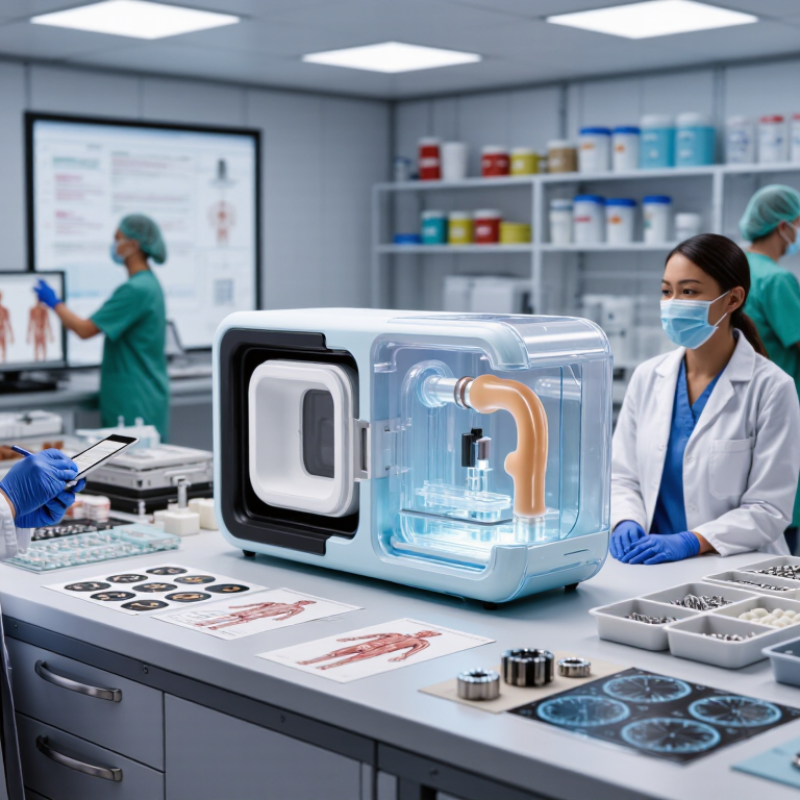
Definition and Purpose of Medical Device Rapid Prototyping
Medical device rapid prototyping means creating physical or digital device models quickly for evaluation. Its purpose is not merely faster manufacturing. It helps engineers test shape, fit, handling, assembly, and user safety before committing to expensive tooling.
A prototype may be printed in hours, then tested beside a clinician’s workstation. Does the grip slip with gloves? Can a nurse read the display under poor lighting? Does the housing leave enough space for cleaning? These details expose design weaknesses early.
A functional model can also support bench testing, risk analysis, and design reviews. However, it does not prove clinical performance or regulatory compliance.
It is evidence, not approval.
The U.S. Food and Drug Administration reported 3,173 510(k) clearances and 48 PMA approvals in fiscal year 2023, according to its CDRH Annual Report.
Each pathway requires documented evidence, and rapid prototypes can strengthen that evidence when used within a controlled design process. They can support verification planning, but material changes may affect strength, biocompatibility, or sterilization.
That limitation matters.
A prototype often looks finished before it is safe. Teams should record materials, tolerances, test conditions, and design changes from the first model. ISO 13485-based quality practices encourage this traceability.
Still, prototypes sometimes create false confidence. A better purpose is disciplined learning: find failure points early, question assumptions, and convert physical observations into measurable requirements.
Key Technologies Used to Create Medical Device Prototypes
What Is Medical Device Rapid Prototyping?
Key technologies used to create medical device prototypes now combine speed, precision, and controlled testing. Engineers often begin with CAD models, anatomical scans, and design-for-manufacturing reviews. SLA printing can produce smooth handles and transparent housings. SLS supports strong, complex parts without support structures. FDM remains useful for early ergonomic checks. CNC machining creates durable metal or polymer components with tight tolerances. Silicone molding can replicate soft-touch grips and flexible interfaces.
According to the Wohlers Report 2024, the additive manufacturing industry reached approximately $20.0 billion in 2023, growing 13.5% from the previous year. This growth reflects wider prototyping use across healthcare engineering. However, fast production does not prove clinical suitability. The FDA’s guidance on additive manufacturing highlights material control, process validation, dimensional accuracy, and post-processing. A prototype may feel excellent in the hand but fail sterilization or fatigue testing. That gap deserves attention.
Tips: Test the roughest realistic version early. Measure fit, force, cleaning access, and repeated-use damage. Keep material certificates and process settings together. Do not treat visual similarity as performance evidence. In my experience, teams sometimes optimize appearance too soon. That is a useful mistake, but an expensive one.
Step-by-Step Process for Developing a Medical Device Prototype
What Is Medical Device Rapid Prototyping?
Step-by-Step Process for Developing a Medical Device Prototype
Medical device rapid prototyping turns a documented clinical need into a testable physical model. The work begins with user interviews, workflow observation, and a clear problem statement. A surgeon, nurse, technician, and patient may notice different risks. Capture each perspective.
Translate those findings into measurable design requirements. Define size, force, temperature, cleaning conditions, and expected service life. Sketch several concepts before selecting one. Create a simple prototype using suitable materials, then check grip, reach, visibility, and movement. Keep dated drawings, test notes, and design decisions in a controlled record. This traceability supports professional review.
Do not rush.
Test the model with representative users in a safe, simulated setting. Watch for awkward hand positions, unclear controls, and unintended contact points. Ask users to explain what they think will happen next. Their answers often reveal hidden assumptions. Revise the geometry, interface, or materials after each test cycle.
A prototype is not automatically a clinical device. Engineering teams must plan verification, validation, risk analysis, and applicable biocompatibility or sterilization evaluations. Requirements may change when testing exposes new hazards. That is normal, although poor documentation can make the change difficult to defend. One practical lesson is simple: a polished appearance can hide weak performance. Repeat critical tests, involve independent reviewers, and preserve evidence for every important decision.
Materials, Testing, and Design Considerations
What Is Medical Device Rapid Prototyping?
Medical device rapid prototyping turns early concepts into physical models for evaluation. Materials deserve careful attention from the beginning. A rigid polymer may reveal ergonomic problems, but it may not represent the final device. Silicone-like materials can model flexibility, yet their strength and sterilization behavior may differ. Material choice should reflect the prototype’s purpose.
Testing must match real use. A handheld device needs grip, drop, vibration, and repeated-use checks. A skin-contact component requires biocompatibility planning and controlled surface evaluation. Fluid-path parts need leak, pressure, and contamination testing. Test conditions should be recorded clearly, including temperature, force, cycle count, and failure location. Small details matter. A loose connector can expose a larger design weakness.
Design decisions should connect user needs, manufacturing limits, and risk controls. Engineers can use prototypes to study assembly steps, cleaning access, and accidental misuse. Traceable revisions make results easier to review. A prototype that passes one test may still fail during transport or clinical handling. That is easy to overlook. Early models often contain hidden assumptions about users, operators, and maintenance. Those assumptions need evidence, not confidence. Some prototypes are deliberately imperfect, because visible weaknesses guide better questions. The final design should be tested with representative materials, qualified processes, and documented acceptance criteria.
What Is Medical Device Rapid Prototyping?
Materials, testing, and design considerations
Rapid prototypes help teams evaluate form, fit, ergonomics, assembly, and workflow before committing to production tooling. The chart shows representative tensile-strength values for commonly used prototype materials. Actual performance varies with formulation, print orientation, layer settings, post-processing, humidity, and test method.
For medical-device development, dimensional inspection, functional testing, biocompatibility assessment, sterilization compatibility, and risk management should be planned according to the intended use and applicable requirements such as ISO 10993 and ISO 14971. Prototype material data must not be treated as equivalent to final-device validation data.
Applications, Benefits, and Limitations in Medical Device Development
What Is Medical Device Rapid Prototyping?
Medical device rapid prototyping converts digital designs into physical test models. Engineers can examine a surgical handle, implant shape, or catheter pathway before production tooling. A hand-held model reveals awkward grips and sharp edges that computer screens often hide. The fit becomes visible. Designers can adjust geometry within hours, not weeks.
Applications now include patient-specific anatomical models, surgical planning aids, diagnostic housings, and low-volume testing parts. According to the Wohlers Report 2024, global additive manufacturing revenue reached US$20.035 billion in 2023, growing 2.3% year over year. Grand View Research also reported strong double-digit growth expectations for medical 3D printing, although estimates differ by market definition. These figures suggest expanding adoption, not automatic clinical success.
The benefits are practical. Teams can compare several concepts, collect clinician feedback, and reduce early tooling waste. Prototypes also improve communication between engineers, physicians, and patients. Yet limitations deserve more attention. Printing materials may not match production polymers, implant metals, or sterilization conditions. Surface roughness can alter fluid flow and cleaning performance. Dimensional shrinkage can affect a tight anatomical fit. A beautiful prototype may hide weak fatigue behavior. That gap matters.
FDA technical guidance emphasizes process control, material characterization, and validation for additively manufactured devices. Rapid iteration can create informal design changes without complete documentation. Teams sometimes test usability carefully but under-test aging, packaging, or repeated loading. The method saves time, but it does not remove engineering judgment.
FAQS
Rapid prototyping turns digital concepts into physical models for hands-on evaluation. It helps teams inspect fit, grip, assembly, and access. It does not prove clinical suitability. Important caveat.
SLA can create smooth handles and transparent housings. SLS supports strong, complex parts without support structures. FDM works well for early ergonomic checks. CNC machining produces durable parts with tight tolerances. Silicone molding can model soft grips and flexible interfaces.
Choose materials according to the question being tested. A rigid polymer can reveal grip or fit problems. It may not represent the final device. Flexible materials can model movement but differ in strength. That difference needs review.
Test grip, drop resistance, vibration, and repeated use. Record force, temperature, cycle count, and failure location. Inspect scratches, loose parts, and changing handle comfort. A beautiful shell can still fail.
Check leakage, pressure resistance, contamination risks, and connector stability. Test under realistic temperatures and repeated pressure cycles. A loose connector may reveal a larger design weakness. Small details matter.
Plan biocompatibility evaluation and controlled surface checks. Inspect rough edges, seams, residue, and cleaning access. The prototype material may behave differently from production material. Do not assume similarity.
Traceable revisions connect test results with specific design changes. Record dimensions, materials, process settings, and acceptance criteria. This makes failures easier to investigate. Memory is not enough.
No. A deliberately imperfect model can expose hidden assumptions. Test the roughest realistic version early. It may reveal awkward grips or blocked cleaning areas. That is useful, but sometimes expensive. Teams should reflect before polishing appearance.
Conclusion
Medical Device Rapid Prototyping is the process of quickly creating and evaluating early versions of medical products before full-scale manufacturing. Its purpose is to transform a concept into a functional model, identify design problems, improve usability, and reduce development time and cost. Common technologies include computer-aided design, 3D printing, computer numerical control machining, laser cutting, and silicone or polymer molding. The choice of method depends on the device’s complexity, required accuracy, intended use, and production stage.
The development process typically begins with defining clinical needs and design requirements, followed by digital modeling, material selection, prototype fabrication, and repeated testing. Prototypes may be assessed for fit, strength, safety, ergonomics, cleanliness, and interaction with users or other equipment. Medical-grade materials and realistic testing conditions are important for producing meaningful results. Rapid prototyping supports surgical tools, diagnostic equipment, implants, wearable devices, and customized products. However, prototypes may not fully represent final manufacturing performance, regulatory requirements, or long-term durability, so additional validation and controlled development are necessary.