

Medical Device CDMO Blog & Insights
Expert articles, technical insights, and innovations in precision medical device manufacturing.
Latest Medical Device Manufacturing Articles
Top 10 ENT Surgical Instruments Manufacturers Worldwide
Table of Contents
- Defining ENT Surgical Instruments and Their Clinical Applications
- Criteria for Evaluating ENT Instrument Manufacturers
- Profiles of Ten Leading ENT Surgical Instrument Manufacturers
- Comparing Product Portfolios, Technologies, and Global Reach
- Factors to Consider When Choosing an ENT Instrument Supplier
- FAQS
- Conclusion
- Related Posts
ENT surgery depends on instruments that offer control in confined spaces. A well-balanced nasal forceps, a clear-view laryngoscope, or a reliable suction tip can shape the surgeon’s handling of delicate tissue. Small details matter.
This guide introduces ten manufacturers active in the worldwide ENT surgical instruments market. It is designed to help clinicians, procurement teams, and researchers compare suppliers—not to declare one brand best for every operating room. Needs vary with procedure type, instrument design, sterilization workflow, service access, and local purchasing requirements. A set suited to routine ear procedures may not meet the demands of endoscopic sinus surgery.
The comparison considers publicly available information, including product range, specialty focus, manufacturing and quality commitments, and support for customers. These factors offer useful starting points, but they cannot replace hands-on evaluation or independent verification. Product catalogs may change, and availability can differ by country. That limitation deserves attention.
Readers will find manufacturers associated with instruments such as otologic picks, nasal specula, tonsil instruments, and laryngeal tools. Where information is available, the overview also notes practical distinctions that may matter during selection. A long catalog alone is not proof of better performance. Nor does a familiar name guarantee that every instrument suits a specific surgeon or facility. This overview aims to be clear about those trade-offs, while recognizing that public data may leave gaps. Use it as a research starting point, then confirm current specifications, service terms, and suitability directly with each manufacturer.
Defining ENT Surgical Instruments and Their Clinical Applications
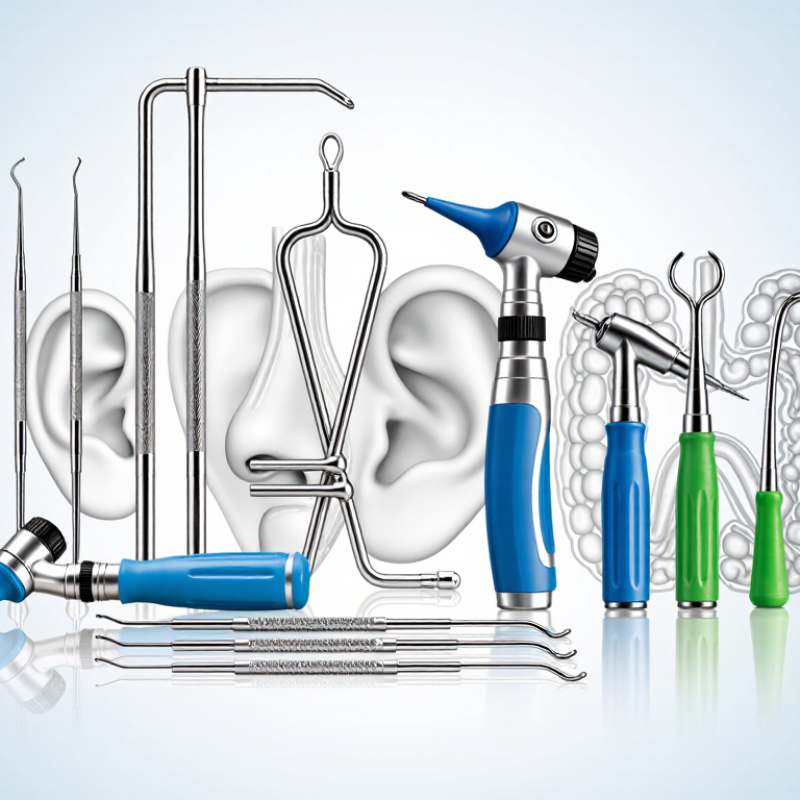
ENT surgical instruments are specialized tools used to examine, access, and treat the ear, nose, and throat. Many procedures occur in confined spaces, where visibility and precise movement matter. In ear surgery, microscopes, fine forceps, and narrow suction tips help clinicians work around delicate structures. Nasal and sinus procedures may use specula, endoscopes, angled graspers, and cutting instruments to reach small passages. Small details matter.
For throat and voice-box care, laryngoscopes provide a view of the airway, while biopsy forceps or other fine instruments may help collect tissue or treat specific conditions. The instrument selected depends on the procedure, the patient’s anatomy, and the clinician’s assessment. A slim instrument can improve access, but it may offer less leverage or feel less stable in the hand. There is no universally ideal design.
Clinical performance also depends on practical factors beyond shape. A clear view can be reduced by fogging, blood, or secretions, so compatible suction and lighting are important. Instruments must be checked for damage and cleaned and sterilized according to applicable clinical protocols. Even familiar tools can feel different across procedures; that detail deserves more attention in equipment selection. Manufacturers’ technical specifications can inform purchasing, but clinicians should also assess handling, visibility, and suitability for their intended applications.
Top 10 ENT Surgical Instruments Manufacturers Worldwide — Defining ENT Surgical Instruments and Their Clinical Applications
Representative ENT surgical instrument families and the clinical functions they support.
ENT surgical instruments support procedures involving the ear, nose, throat, and related head and neck structures. Values count the illustrative clinical applications listed for each instrument family; they do not represent procedure frequency, market share, or a manufacturer ranking.
Criteria for Evaluating ENT Instrument Manufacturers
Choosing an ENT instrument manufacturer requires more than comparing catalogue prices. Otoscopes, nasal specula, and laryngeal instruments must withstand repeated handling and, where applicable, validated reprocessing. The WHO’s 2021 World Report on Hearing estimates that 1.5 billion people experience hearing loss, while 430 million need rehabilitation services. That scale makes dependable clinical equipment important, but it does not prove any supplier’s quality. Small details matter.
Evaluate documented quality systems, material specifications, inspection records, and support for maintenance and repair. Ask how the manufacturer tests jaw alignment, hinge movement, surface finish, and corrosion resistance; these details affect control and cleaning. ISO 13485 addresses medical-device quality management, while ISO 17664-1:2021 sets requirements for manufacturers’ information on processing reusable devices. Request clear, model-specific reprocessing instructions and evidence that claimed performance has been verified. Also review traceability, complaint handling, and staff training. A polished catalogue can still leave practical questions unanswered. I would treat vague claims as a reason to ask for evidence, not as proof of poor quality. Manufacturers should provide precise documentation that clinicians and sterile-processing teams can actually use.
Profiles of Ten Leading ENT Surgical Instrument Manufacturers
Profiles of leading ENT surgical instrument manufacturers are most useful when they show what each maker actually builds. One may specialize in fine nasal forceps, with narrow jaws that reach confined spaces. Another may focus on microsurgical scissors, where smooth alignment matters during repeated use. Other profiles can cover suction elevators, nasal specula, and retractors designed for clear access and stable handling. Small details count.
Several manufacturers concentrate on visualization and powered tools. Their portfolios may include laryngoscopes, rigid endoscopes, microdebrider blades, or surgical drill systems. Each product asks different questions: Is the image crisp under operating-room lights? Can a blade be cleaned and inspected easily? Does a handpiece feel balanced during long procedures? These are practical questions, not brochure language.
A complete comparison also includes makers of instrument trays and integrated procedure sets, plus manufacturers offering custom designs for specific clinical workflows. Their expertise may lie in material selection, precise finishing, or consistent assembly. Yet no producer excels at everything. A polished catalog cannot replace checking dimensions, reprocessing guidance, service support, and quality documentation. Buyers should compare these details across all ten profiles, while remembering that product suitability depends on the procedure and the surgical team.
Comparing Product Portfolios, Technologies, and Global Reach
Comparing ENT surgical instrument manufacturers requires more than counting catalog pages. A useful portfolio may include otoscopes, nasal specula, laryngoscopes, micro-ear instruments, and endoscopic tools. Look closely at working-end geometry, handle balance, and compatibility with existing scopes. A forceps tip that seems minor on paper can affect visibility in a narrow field. Fit matters. Reusable instruments also need clear cleaning instructions and durable joints; disposable options may reduce reprocessing steps but add ongoing supply needs. More features do not always mean better workflow.
Technology comparisons should focus on practical details, not novelty alone. Check illumination consistency, image clarity, instrument articulation, and whether components connect reliably across a surgical setup. Ask for technical documentation, sterilization guidance, and evidence supporting stated performance. Global reach is more than shipping to many countries. Regional service teams, replacement-part availability, local-language training, and predictable delivery can matter when a small component delays a scheduled case. These capabilities vary by product and location, so procurement teams should verify them directly. A polished catalog can still conceal awkward tray layouts or hard-to-source accessories. That deserves a closer look. Hospitals should compare instruments in realistic workflows, while recognizing that one evaluation rarely captures every specialty’s needs.
Factors to Consider When Choosing an ENT Instrument Supplier
Choosing an ENT instrument supplier requires more than comparing catalogue prices. The World Health Organization’s Global Atlas of Medical Devices (2017) reports roughly two million types of medical devices, grouped into more than 7,000 categories. That scale makes clear product identification and traceable documentation important. Ask suppliers for material specifications, inspection records, and evidence that each instrument matches its stated design.
Examine the instruments in person when possible. A forceps handle should feel secure with gloves, while a speculum should open smoothly without catching. Check joint movement, tip alignment, surface finish, and whether cleaning instructions are practical for your facility. Small defects matter. They can slow routine work.
Also assess delivery consistency, repair support, and availability of replacement parts. Request sample documentation and clarify how complaints or quality issues are handled. ISO 13485 certification can indicate a medical-device quality management system, but certification alone does not prove that a specific instrument will perform well in your setting. That judgment still needs clinical and technical review. Procurement checklists help, though they can miss the feel of a tool in a clinician’s hand.
FAQS
They are specialized tools for examining and treating the ear, nose, and throat. Many are designed for confined spaces.
Clinicians may use microscopes, fine forceps, and narrow suction tips. Delicate structures require careful handling.
Specula, endoscopes, angled graspers, and cutting instruments can provide access. Slim tools may reach narrow spaces, but can feel less stable.
Laryngoscopes help clinicians see the airway. Fine instruments may collect tissue or treat specific conditions.
Fog, blood, or secretions can reduce visibility. Suitable lighting and suction can help keep the working area clear.
Check for damage, then clean and sterilize it according to clinical protocols. Familiar tools can still feel different.
Compare dimensions, reprocessing guidance, service support, and quality documentation. Catalog details alone are not enough.
Consider the procedure, patient anatomy, visibility, and handling. No single design suits every case. The trade-offs deserve a closer look.
Conclusion
This article explores the role of ENT Surgical Instruments in procedures involving the ear, nose, and throat, from routine examinations to specialized surgical care. It outlines how instruments are designed to support precision, visibility, and control in clinical settings, then introduces practical criteria for assessing manufacturers, including product quality, innovation, manufacturing expertise, regulatory compliance, service, and reliability.
The article also profiles ten leading manufacturers without focusing on any single brand, comparing their product ranges, technologies, and international presence. It concludes with guidance for selecting a supplier, emphasizing the importance of matching instrument capabilities to clinical needs, evaluating durability and usability, and considering training, maintenance, availability, and long-term support. Together, these topics provide a framework for understanding the market and making informed decisions about ENT instrument sourcing.

Blog Tags: