
Latest Medical Device Manufacturing Articles
Featured CE & ISO 13485 Certified Medical Components & Tooling
Engineered to sub-micron tolerances for critical surgical, orthopedic, and aerospace-grade polymer applications. Explore our standardized and custom OEM manufacturing solutions.
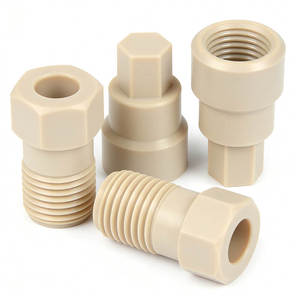
Custom High-Precision Medical PEEK Filter Adapter Component Made Plastic Parts CNC Machining Service
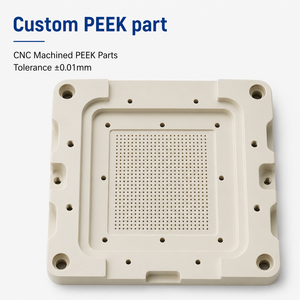
Custom CNC Machined PEEK Medical Fixture With Precision Micro-hole Array For Surgical Component Assembly
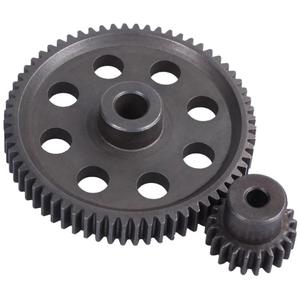
High Precision PEEK CNC Machined Parts AS9100D Certified Engineering Plastic Milling Components for Aerospace & Medical Industry
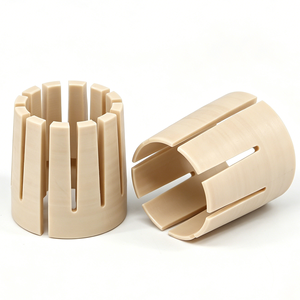
Customized Slotted PEEK Bushing Machining CNC Plastic Part High Performance PEEK Components For Industrial Use
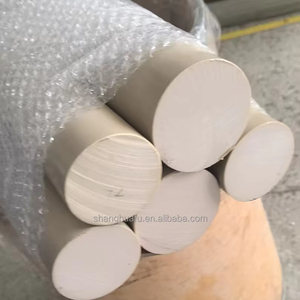
High-Performance Pure PEEK Unfilled Rod Bar Custom Diameter 6-250mm 260C Heat Resistant Aerospace Medical Grade Natural/Black
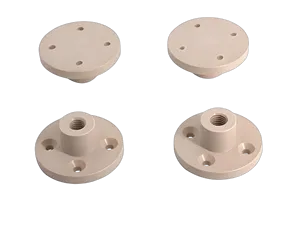
Customization With Multiple Functions And Specifications Electronic Electrical Structural Parts Polymer PEEK Custom-shaped Parts
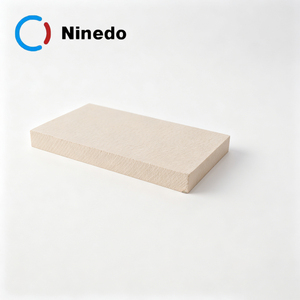
Custom Size High Temperature Resistant PEEK Sheet Polyetheretherketone Board for Medical Aerospace
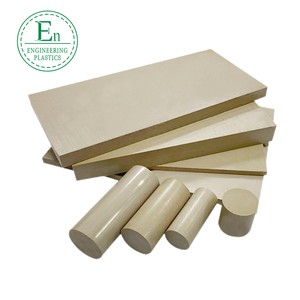
ISO 9001 Certified Precision 100% Pure Raw Materials Heat Resistance Peek Medical Peek Bar Plate Poly Ether Ketone Peek Rod Plate
End-to-End CDMO Infrastructure & Industrial Authority
From conceptual Design for Manufacturability (DFM) through high-speed micro-milling and full validation execution, our global manufacturing ecosystem eliminates regulatory hurdles and accelerates market entry.
Rigorous CE & EU MDR Compliance
All tooling architectures, high-volume molds, and finished PEEK assemblies fully align with EU Regulation 2017/745 (MDR) and ISO 13485 standards. Full material traceability with batch-specific certificates of analysis (CoA) guarantees zero contamination risk.
Sub-Micron CNC & EDM Tooling
Utilizing state-of-the-art 5-axis Swiss CNC lathes, high-speed micro-milling, and wire EDM, we craft high-cavitation injection molds and dies capable of maintaining tolerances down to ±0.002 mm with surface roughness Ra < 0.1 µm.
PEEK & High-Temp Polymer Expertise
Recognized leaders in machining unfilled, glass-filled, and carbon-fiber reinforced Polyetheretherketone (PEEK). We manage precise thermal expansion control and minimize internal stress during high-temperature polymer processing.
Engineering Principles of Medical-Grade Injection Tooling & Dies
In modern medical device manufacturing, tooling design serves as the foundation for component repeatability, bio-compatibility, and operational longevity. Whether fabricating structural components for surgical robotics, micro-fluidic diagnostic chips, or implantable orthopedics, precision dies must withstand extreme cycling while maintaining sub-micron dimensional stability.
1. Mold Steel & Cavity Alloy Selection Parameters
The selection of die steel directly dictates tool life, thermal transfer efficiency, and corrosion resistance against aggressive medical-grade polymers. For medical injection molds, standard industrial steels are insufficient due to the risk of micro-pitting, chemical degradation, and particulate generation.
| Tooling Material | Hardness (HRC) | Corrosion Resistance | Primary Application in Medical Tooling |
|---|---|---|---|
| Stavax ESR (S136) | 48 - 54 HRC | Exceptional (High Cr) | High-gloss optical lenses, transparent PEEK micro-arrays, diagnostic cassettes. |
| Böhler M390 Microclean | 58 - 62 HRC | Ultra-High | Abrasive filled PEEK (30% Carbon/Glass), implantable marker housings, high-wear inserts. |
| Titanium Grade 5 (Ti-6Al-4V) | 36 - 42 HRC | Total Bio-Inertness | Direct medical device stamping dies, ultrasonic horn tooling, cleanroom fixtures. |
| Ampcoloy 940 (CuNiBe) | 28 - 32 HRC | Moderate | Conformal cooling cores for rapid thermal dispersion in thick-walled polymer components. |
2. Thermal Dynamics & Conformal Cooling in PEEK Molding
Polyetheretherketone (PEEK) represents one of the most mechanically robust thermoplastics used in medical devices due to its chemical inertness, radiolucency, and mechanical similarity to human cortical bone. However, processing PEEK requires mold temperatures exceeding 160°C to 200°C and melt temperatures up to 400°C.
Our tooling designs integrate 3D-printed metal additive conformal cooling channels. By matching thermal dissipation to complex part geometries, we prevent residual stress, differential shrinkage, and warpage. This dynamic thermal management ensures that complex components—such as micro-slotted bushings, surgical fixtures, and filter adapters—achieve crystalline uniformity across millions of production cycles.
Future Procurement Trends in Medical Device Tooling & Dies (2026–2035)
Global procurement directors and supply chain executives within the MedTech OEM ecosystem face unprecedented structural changes. The convergence of tightened regulatory oversight, supply chain nearshoring, and ultra-miniaturization is reshaping how medical tooling and contract manufacturing services are sourced globally.
1. Paradigm Shift Toward Integrated CDMO Tooling Solutions
Historically, original equipment manufacturers (OEMs) fragmented their supply chain: engaging separate vendors for prototype design, toolmaking, injection molding, and cleanroom packaging. Procurement data from 2024–2026 indicates a rapid shift toward single-source Contract Development and Manufacturing Organizations (CDMOs).
- Reduction of Inter-Vendor Tolerance Stack-up: Consolidating die fabrication and molding under one quality umbrella ensures that mold design directly accounts for machine-specific shrinkage profiles.
- Accelerated IQ/OQ/PQ Validation: Integrated CDMOs deliver fully validated tooling packages (Installation Qualification, Operational Qualification, Performance Qualification) directly into production environments, shaving up to 16 weeks off regulatory submission timelines.
- Unified Regulatory Risk Management: A single point of responsibility for ISO 13485 and FDA 21 CFR Part 820 compliance significantly reduces audit overhead for global buyers.
2. Transition to Bio-Compatible High-Performance Polymers Over Metals
Substitutions of stainless steel and titanium by medical-grade PEEK, PPSU (Polyphenylsulfone), and Radel are accelerating across surgical instrument and implant sectors. PEEK's weight reduction (up to 70% lighter than titanium), combined with high sterilization tolerance (autoclave, Gamma, EtO), demands specialized high-durability dies equipped with Diamond-Like Carbon (DLC) coatings to withstand polymer shear stresses during micro-injection.
3. AI-Driven Predictive Maintenance & Embedded Mold Sensors
Smart tooling is no longer a luxury; it is becoming a standard procurement mandate for Tier-1 medical manufacturers. Modern exported dies feature embedded cavity pressure sensors, thermal thermocouples, and cycle counters that stream real-time telemetry back to central quality monitoring networks. This enables predictive maintenance prior to tool flash generation, eliminating defective production runs entirely.
State-of-the-Art Manufacturing & Micro-Fabrication Trends
As minimally invasive surgical techniques (MIS) advance, components must fit into increasingly constrained anatomical spaces. Tooling engineers are pushing the boundaries of physics to manufacture dies capable of reproducing features at the micron scale.
1. Micro-Fluidic Array Tooling & Femtosecond Laser Machining
Surgical diagnostic kits and micro-hole filter adapters demand arrays of thousands of micro-apertures with diameters under 50 micrometers. Traditional micro-drilling introduces burrs and thermal distortion. High-end medical tooling factories now leverage ultra-short pulse femtosecond laser ablation and micro-EDM to carve cavity details without heat-affected zones (HAZ), achieving pristine wall surfaces essential for laminar fluid dynamics.
2. Hybrid Additive Metal Tooling (DMLS Injection Dies)
Direct Metal Laser Sintering (DMLS) using Maraging Steel MS1 or Titanium Ti64 allows for the creation of internal core inserts with internal lattice structures and optimized thermal pathways that were impossible with conventional CNC milling. This hybrid approach reduces injection cycle times by 20% to 35% while extending overall die fatigue life under repeated clamping pressures.
Frequently Asked Questions for Medical Tooling Procurement
Detailed technical insights for quality engineers, procurement managers, and OEM sourcing directors.
Q: How do CE Certification and EU MDR compliance impact medical tooling export specifications?
CE marking under the EU Medical Device Regulation (MDR 2017/745) mandates strict material traceability, risk management (ISO 14971), and biocompatibility testing (ISO 10993). When exporting tooling or molded PEEK components, the factory must provide comprehensive Device Master Records (DMR), raw resin lot certification, mold steel origin certificates, and full dimensional inspection reports (CMM / Optical). Dies must be manufactured without restricted lubricants or toxic processing aids that could leach into final clinical components.
Q: What are the key challenges when CNC machining micro-hole arrays in medical PEEK fixtures?
Machining micro-hole arrays in unfilled or filled PEEK requires precise control over thermal build-up and chip evacuation. Due to PEEK’s low thermal conductivity, heat generated during high-speed drilling can cause localized melting, burr formation, or micro-cracking. To achieve sub-micron concentricity, our facilities utilize customized carbide micro-drills, high-pressure coolant through the spindle, stress-relieved annealed PEEK stock, and 50,000 RPM precision spindles in temperature-controlled machining environments.
Q: How does AS9100D certification complement ISO 13485 for medical device manufacturing?
While ISO 13485 focuses on medical quality systems and patient safety, AS9100D introduces rigorous aerospace-grade operational controls, such as strict First Article Inspection Reports (FAIR according to AS9102), advanced risk mitigation, and stringent supply chain traceability. Facilities holding both AS9100D and ISO 13485 certifications offer superior process control, minimal lot-to-lot variance, and elevated reliability for high-risk implantable components and structural surgical tooling.
Q: What is the expected tooling life (shot count) for precision medical plastic injection dies?
Tooling life depends on mold steel selection, resin abrasiveness, and maintenance schedules. Class 101 medical injection molds constructed with hardened stainless steel like Stavax S136 or Böhler M390 are rated for over 1,000,000 shots. When molding unfilled PEEK, mold wear is low; however, molding 30% Carbon Fiber Reinforced PEEK requires specialized surface treatments such as PVD, Nitriding, or DLC coatings to protect core gates and runners against high-shear abrasion.
Q: What validation documentation is provided with exported medical tooling and custom components?
Every export package comes complete with a standardized validation dossier. This includes Design for Manufacturability (DFM) reports, Moldflow thermal simulation analyses, CMM full-dimension inspection data, Material Safety Data Sheets (MSDS), Biocompatibility Compliance certificates, and complete IQ/OQ/PQ protocols. This documentation enables seamless technology transfer directly into FDA-registered or CE-compliant assembly plants globally.