
Latest Medical Device Manufacturing Articles
Featured Medical PEEK & Titanium Instrumentation Solutions
Engineered for uncompromising mechanical stability, biocompatibility, and ultra-high dimensional precision under ISO 13485 and CE MDR regulatory frameworks.
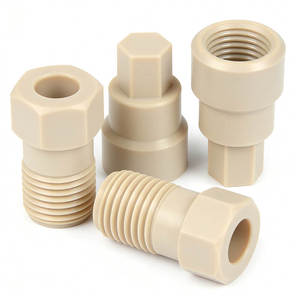
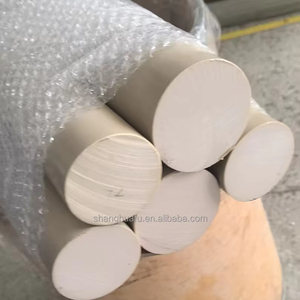
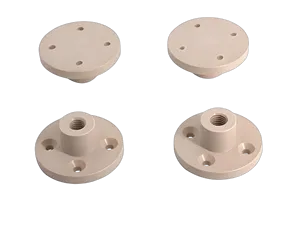
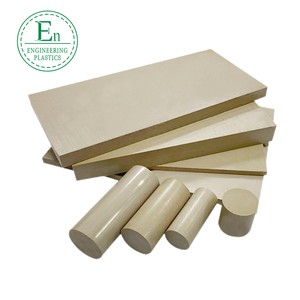
Engineering Excellence in CE Certified Spinal Implants and Instrumentation Manufacturing
In modern orthopedic and neurological surgery, spinal stabilization systems demand the highest standard of biomechanical precision, material purity, and regulatory validation. As a premier CE Certified Spinal Implants and Instrumentation Supplier & Exporter, our contract development and manufacturing organization (CDMO) operates at the intersection of bio-engineering science, advanced polymer chemistry, and state-of-the-art CNC micro-machining.
Our enterprise infrastructure spans over 1.2 million square feet of advanced manufacturing space, equipped with multi-axis Swiss lathe turning centers, high-speed 5-axis milling centers, automated cleanroom packaging lines, and optical coordinate measuring machines (CMM). We serve global Original Equipment Manufacturers (OEMs) across Europe, North America, Asia-Pacific, and Latin America, enabling seamlessly scaled production from early-stage clinical feasibility prototypes to full-volume commercial deployment.
Biomaterial Innovation & Technological Development Trends in Spinal Implants
The global market for spinal implants and instrumentation is undergoing a profound technological shift driven by minimally invasive surgery (MIS), patient-specific implants (PSI), and advanced material science. Sourcing directors and biomedical engineers must evaluate suppliers based on their mastery of both polymer and metallic material innovations.
1. Medical-Grade PEEK (Polyetheretherketone) vs. Titanium Alloys
Implants constructed from unfilled medical-grade PEEK (ASTM F2026) offer an elastic modulus (approx. 3.6 GPa) closely matching human cortical bone (18 GPa), substantially reducing stress shielding compared to conventional Titanium Ti6Al4V ELI (approx. 110 GPa). Furthermore, PEEK's total radiolucency permits unimpeded artifact-free visualization under CT and MRI modalities, allowing spine surgeons to evaluate post-operative osseous fusion clarity.
| Performance Metric | Medical-Grade PEEK (Unfilled) | Titanium Alloy (Ti6Al4V ELI) | Porous PEEK / CFRP Composite |
|---|---|---|---|
| Elastic Modulus (GPa) | 3.5 – 4.0 (Bone-matched) | 110 – 114 (High stiffness) | 7.0 – 18.0 (Custom tailored) |
| Radiolucency (CT/MRI) | 100% Radiolucent (Zero artifacts) | Radiopaque (Metallic artifacts) | Controlled radiolucency with markers |
| Osseointegration Capability | Requires surface texturing/coating | Excellent natural bio-adhesiveness | Enhanced cellular ingrowth matrix |
| Sterilization Compatibility | Autoclave, Gamma, EtO, Plasma | Autoclave, Gamma, EtO, Plasma | Autoclave, Gamma, EtO |
| Primary Applications | Interbody Cages (PLIF/TLIF/ALIF), Bushings | Pedicle Screws, Rods, Retractors | Motion Preservation, Specialized Cages |
2. Surface Modifications & Porous 3D-Printed Micro-Structures
To overcome the hydrophobic nature of standard polymer surfaces, advanced manufacturing protocols integrate plasma-treated Titanium plasma spray (TPS) coatings, Hydroxyapatite (HA) deposition, or direct laser additive manufacturing of lattice structures onto PEEK and Titanium substrates. These bio-conductive micro-architectures promote rapid osteoblast proliferation and accelerated bone ingrowth, dramatically reducing non-union risks in lumbar and cervical spinal fusion procedures.
Strategic Future Procurement Trends for Global Medical Buyers
Procurement executive strategies are rapidly evolving from transactional unit-cost purchasing toward comprehensive, risk-mitigated supply chain partnerships. OEMs and international distributors prioritizing the following critical trends will secure distinct competitive advantages:
End-to-End Manufacturing & Quality Management Infrastructure
Our manufacturing facility operates under strict vertical integration to guarantee absolute batch-to-batch repeatability and zero defect rates. Key capabilities powering our OEM export leadership include:
-
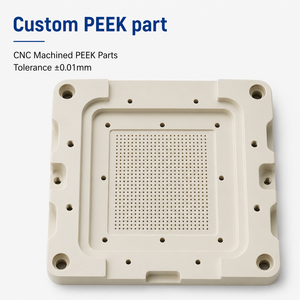
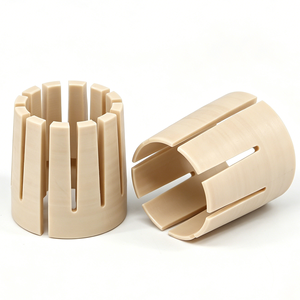
High-Precision CNC Micro-Machining: State-of-the-art 5-axis milling and Swiss-type multi-spindle turning capable of holding micro-tolerances down to ±0.002mm on complex geometries such as slotted PEEK bushings, micro-hole assembly fixtures, and low-profile spinal plates.
-
Cleanroom Assembly & Packaging: Controlled ISO Class 7 and Class 8 cleanrooms dedicated to cleaning, ultrasonic degreasing, assembly, heat sealing, and sterile barrier packaging in accordance with ISO 11607 standards.
-
Comprehensive Quality Assurance Protocol: Every production lot undergoes rigorous coordinate measuring machine (CMM) inspection, optical profile verification, surface roughness testing (Ra < 0.2 μm), and static/dynamic fatigue testing under ISO 12189 and ASTM F2077.
-
Design for Manufacturability (DFM) Support: Our dedicated biomedical engineering staff collaborates directly with client R&D teams to optimize CAD files for lower unit cost, reduced cycle times, and maximized mechanical durability.
Spinal Implant & Instrumentation Procurement FAQ
Essential answers to key regulatory, manufacturing, and supply chain questions for medical device procurement directors and engineering managers.
Partner with a Trusted Global Spinal Implants CDMO Leader
Whether you require custom CNC machined PEEK components, CE certified spinal instrumentation kits, or complete OEM contract manufacturing, our engineering team is ready to accelerate your project to commercial success.
Contact Us