
Latest Medical Device Manufacturing Articles
Featured Surgical Robot & Medical PEEK End Effectors
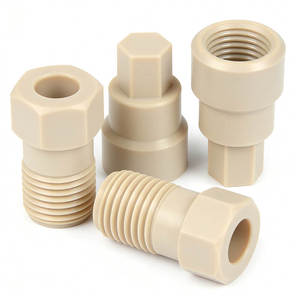
Custom High-Precision Medical PEEK Filter Adapter Component Made Plastic Parts CNC Machining Service
- Biocompatible PEEK-OPTIMA Material
- Micro-milling tolerance: ±0.005mm
- Sterilization: Autoclave & EtO Ready
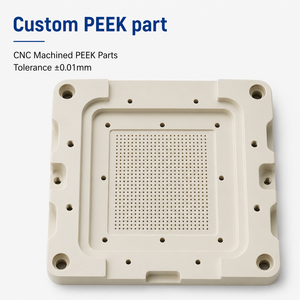
Custom CNC Machined PEEK Medical Fixture With Precision Micro-hole Array For Surgical Component Assembly
- High-Density Hole Diameter: >0.15mm
- Zero-Burr Swiss Machining
- Robotic Wrist Alignment Tooling
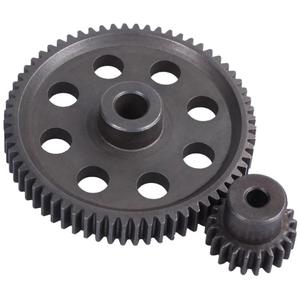
High Precision PEEK CNC Machined Parts AS9100D Certified Engineering Plastic Milling Components for Aerospace & Medical Industry
- AS9100D & ISO 13485 Compliant
- Extreme Thermal Resistance (260°C)
- High Tensile Strength Polymer
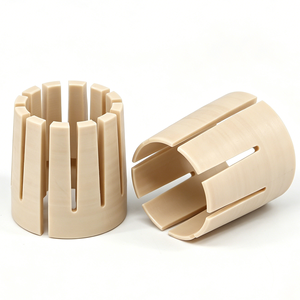
Customized Slotted PEEK Bushing Machining CNC Plastic Part High Performance PEEK Components For Industrial Use
- Self-lubricating low-friction wear
- Cable-actuated joint insulation
- Custom slotting geometry
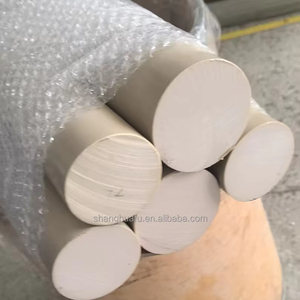
High-Performance Pure PEEK Unfilled Rod Bar Custom Diameter 6-250mm 260C Heat Resistant Aerospace Medical Grade Natural/Black
- 100% Virgin Medical Grade Polymer
- Diameter Range: Ø6mm – Ø250mm
- Class VI Biocompatibility Testing
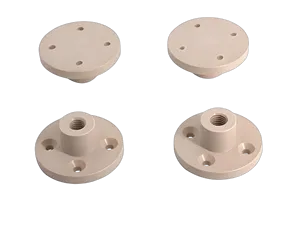
Customization With Multiple Functions And Specifications Electronic Electrical Structural Parts Polymer PEEK Custom-shaped Parts
- Dielectric high-voltage isolation
- Complex 5-Axis geometry shapes
- Acoustic & vibration dampening
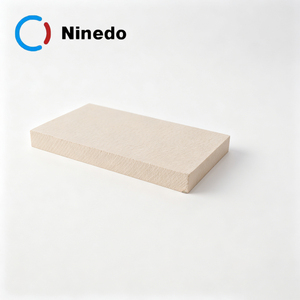
Custom Size High Temperature Resistant PEEK Sheet Polyetheretherketone Board for Medical Aerospace
- High dimension stability & stiffness
- Low outgassing & chemical inertness
- Custom thickness machining stock
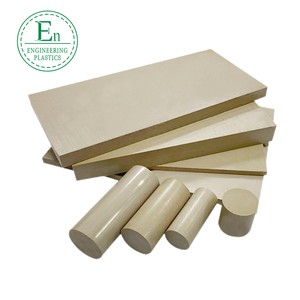
ISO 9001 Certified Precision 100% Pure Raw Materials Heat Resistance Peek Medical Peek Bar Plate Poly Ether Ketone Peek Rod Plate
- Lot-controlled trace materials
- Zero internal porosity guarantee
- Ideal for micro-machined end-effectors
Engineering Next-Generation Surgical Robot End Effectors: Compliance, Materials, and Kinematic Precision
Robotic-Assisted Surgery (RAS) has transitioned from an innovative clinical alternative to the global standard of care across laparoscopy, orthopedics, urology, and neurosurgery. At the epicenter of this technological shift lies the Surgical Robot End Effector—the critical mechanical and electromechanical interface that translates surgeon commands from a master console into microscopic, sub-millimeter tissue manipulation inside the human body. As original equipment manufacturers (OEMs) strive to engineer surgical systems with higher degrees of freedom (DoF), haptic tactile feedback, and miniaturized footprints, sourcing high-precision components from a CE Certified Surgical Robot End Effectors Factory & Supplier has become an absolute strategic imperative.
Advanced PEEK Engineering & Micro-Mechanism Articulation
The functional envelope of a surgical robot wrist assembly requires multi-axial articulation—typically incorporating pitch, yaw, roll, and actuation (grasping, cutting, or cauterizing)—within a rigid cannula diameter ranging from 5mm down to 2.5mm. Achieving this level of mechanical dexterity without mechanical backlash requires unyielding raw material integrity.
By leveraging 100% Pure Raw Material PEEK (Polyetheretherketone) alongside precision CNC micro-milling, our production facilities eliminate micro-structural porosity. PEEK's modulus of elasticity closely matches human cortical bone, while its outstanding dielectric breakdown strength provides critical electrical insulation for monopolar and bipolar electrosurgical end-effectors, protecting surrounding patient tissue from thermal energy leaks.

ISO Class 7 Cleanroom Assembly & Swiss Micro-Machining
Producing cable-driven pulleys, miniature jaw grippers, flexure joints, and slotted insulative bushings demands specialized CDMO infrastructure. Operating within 1.2 million square feet of worldwide manufacturing operations, our factory ecosystem features dedicated ISO 13485 certified cleanrooms, AS9100D aerospace-grade quality management, and ultra-high precision 5-axis Swiss CNC turning.
Every micro-hole array (down to Ø0.15mm) drilled into custom PEEK assemblies undergoes automated 3D optical coordinate measuring machine (CMM) inspection to verify geometric dimensioning and tolerancing (GD&T). This guarantees seamless integration into multi-cable surgical wrist drive systems without binding or friction spikes.

Material Performance Comparison for Robotic End Effector Components
Selecting the optimal material substrate is paramount when balancing sterilizability, wear resistance, dielectric isolation, and structural rigidity.
| Property / Specification | Medical Grade PEEK (Unfilled) | Carbon-Reinforced PEEK | Titanium (Ti-6Al-4V ELI) | 316L Stainless Steel |
|---|---|---|---|---|
| Tensile Strength (MPa) | 95 - 100 | 170 - 210 | 860 - 960 | 515 - 620 |
| Flexural Modulus (GPa) | 4.1 | 18.0 | 114.0 | 193.0 |
| Dielectric Strength (kV/mm) | 19.0 (Outstanding Isolation) | Conductive (N/A) | N/A (Conductor) | N/A (Conductor) |
| Autoclave Sterilization Life | > 500 Cycles | > 500 Cycles | Infinite | > 200 Cycles (Corrosion Risk) |
| Density (g/cm³) | 1.30 | 1.40 | 4.43 | 8.00 |
| Primary End-Effector Role | Insulative Bushings, Sheaths, Adapters | High-Torque Internal Gears & Wrists | Load-Bearing Jaw Structures & Cables | Disposables & Cutting Blades |
Industry & Technological Development Trends (2025–2035)
Single-Use Modular Transition
Hospitals are accelerating the adoption of single-use, modular end-effectors to eliminate cross-contamination risks and lower reprocessing overheads. This requires low-cost, ultra-precise PEEK injection molding combined with automated micro-assembly to achieve high volume without sacrificing sub-micron accuracy.
Smart Sensor & Haptic Integration
Next-gen end-effectors feature embedded MEMS strain gauges and fiber-optic Bragg grating (FBG) force sensors. PEEK components serve as essential structural housings that shield delicate micro-electronics from electromagnetic interference (EMI) during RF electrosurgical cautery.
Micro-Additive & CNC Hybrids
Direct Metal Laser Sintering (DMLS) of titanium jaw graspers paired with 5-axis CNC finish milling enables internal organic channels for integrated suction, irrigation, and laser fiber routing within a single 3mm end-effector tip.
Accelerating R&D to Commercial-Scale Production
Transitioning a surgical end-effector concept into a commercially viable, CE-marked medical device requires seamless engineering collaboration. Our Innovation Centers partner with MedTech engineering teams during early-stage prototyping to perform critical finite element analysis (FEA), stress simulation on micro-pulleys, and mold-flow analysis for custom PEEK components.
By optimizing component geometry early in the design cycle, we mitigate manufacturing risks, shorten FDA 510(k) and EU CE MDR submission timelines, and guarantee long-term supply chain scalability.
Future Procurement Trends in Surgical Robotics Tooling
For OEM procurement executives and supply chain directors, navigating the geopolitical and regulatory complexities of medical device manufacturing requires moving away from single-source component vendors toward fully integrated CDMO (Contract Development and Manufacturing Organization) partners.
1. Dual-Region CDMO Footprints
MedTech leaders prioritize CDMO partners offering redundant manufacturing facilities across North America, Europe, and Asia. This geographic balance ensures supply chain resilience against regional trade disruptions while maintaining strict compliance with localized regulatory frameworks.
2. Full Material Traceability & Biocompatibility
Under EU MDR 2017/745, procurement teams must verify raw material lineage down to the specific polymer batch or melt lot. Standardized procurement protocols require full ISO 10993 cytotoxicity and hemocompatibility certifications for all patient-contacting PEEK and metal components.
3. Vertical Integration & Sub-System Assembly
Rather than sourcing individual pins, bushings, and jaws from disparate machine shops, procurement leads increasingly request complete sub-assemblies—pre-tested for torque, tension, cable alignment, and cleanroom packaged ready for final robotic arm integration.
Uncompromising Quality Assurance & Global Certifications
With over a century of collective manufacturing heritage and 8+ global manufacturing hubs, our factory stands at the forefront of surgical component production. Our quality management system maintains compliance with:
- CE Marking (EU MDR 2017/745): Technical documentation and Annex IX quality management for surgical accessories.
- ISO 13485:2016: Comprehensive medical device quality management system certification.
- AS9100D Certification: Aerospace-grade precision milling standards for high-stress structural components.
- FDA Registration: Facilities audited and registered for Class II and Class III device manufacturing.
Frequently Asked Questions by Surgical Robotics Procurement Teams
Q: What technical documentation is provided with your CE Certified Surgical Robot End Effectors?
Every shipment includes comprehensive quality dossiers, including Certificates of Conformance (CoC), Raw Material Test Reports (MTRs) with full lot traceability, ISO 10993 biocompatibility compliance data, CMM dimensional inspection reports, and sterilization validation reports (for pre-sterilized packaged components).
Q: Why is medical-grade PEEK preferred over stainless steel for certain end-effector components?
Medical PEEK offers an extraordinary combination of lightweight mechanical strength, high dielectric breakdown strength (preventing stray electrical burns during monopolar/bipolar electrosurgery), low friction coefficient for cable guides, and exceptional resistance to repeated steam autoclave cycles without dimensional warping.
Q: Can your factory manufacture custom end-effector components based on our proprietary CAD files?
Yes. We specialize in custom CDMO manufacturing. We work directly with your STEP, IGES, or SolidWorks files to perform Design for Manufacturability (DFM) reviews, develop custom tooling fixtures, and machine micro-precision components tailored to your exact surgical system specifications.
Q: What micro-machining tolerances can your facility achieve for surgical wrist components?
Utilizing state-of-the-art 5-axis Swiss CNC micro-milling and precision wire EDM machines, we consistently achieve manufacturing tolerances down to ±0.002mm (2 microns) with surface finishes finer than Ra 0.2 µm, ensuring ultra-smooth cable motion and backlash-free wrist articulation.
Q: How do you manage lead times and supply chain risks for high-volume OEM orders?
We implement Integrated Business Planning (IBP) and Kanban buffer inventory management. With multi-site manufacturing capabilities across 1.2M+ square feet globally, we guarantee continuous production continuity, rapid prototyping cycles within 2–3 weeks, and reliable high-volume commercial scaling.
Q: What cleanroom standards are utilized during final cleaning and packaging?
Our components undergo multi-stage ultrasonic cleaning using bio-burden controlled deionized water systems, followed by assembly and primary packaging inside certified ISO Class 7 and Class 8 cleanrooms to ensure compliance with strict particulate and bioburden standards.
Empowering Surgeons with Precision End-Effectors
Ultimately, every end-effector component we manufacture serves a vital clinical objective: enabling surgeons to operate with enhanced dexterity, minimal patient trauma, and reduced procedure times. Whether used in delicate robotic cardiac valve repairs, robotic prostatectomies, or targeted orthopedic joint resurfacing, our components deliver unwavering reliability in the most demanding operating room environments worldwide.

Request Technical Specifications & Custom OEM Catalog
Partner with a world-class CE Certified Surgical Robot End Effectors Factory. Connect with our engineering team today to review your DFM requirements, request sample components, or download our comprehensive product catalog.