
Latest Medical Device Manufacturing Articles
Featured Cardiovascular & Precision Surgical Components
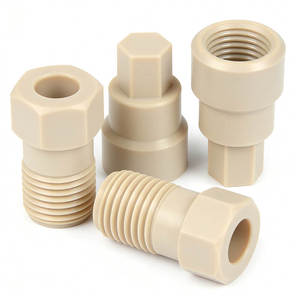
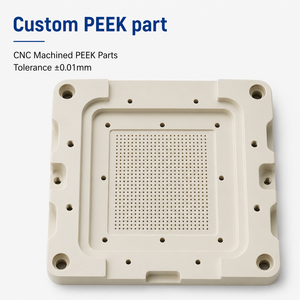
Explore our ISO 13485-certified ultra-precision medical-grade PEEK components, micro-machined fixtures, and high-performance polymer assemblies tailored for structural heart, vascular access, and minimally invasive surgical platforms.
1. Technical Whitepaper: The Evolution of Cardiovascular Component Sourcing & High-Performance Polymer Engineering
The global cardiovascular device market is experiencing an unprecedented paradigm shift driven by the rapid expansion of Transcatheter Aortic Valve Replacement (TAVR), Percutaneous Coronary Intervention (PCI), Left Atrial Appendage Closure (LAAC), and Electrophysiology (EP) ablation procedures. As interventional cardiology transitions toward less invasive modalities, OEMs face rigorous demands for ultra-miniaturized, hemocompatible, and stress-resistant structural components.
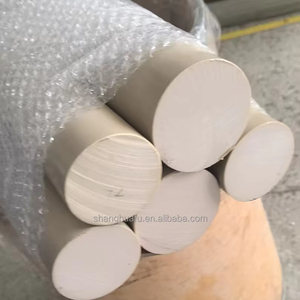
As a leading China Wholesale Cardiovascular Medical Devices Supplier & Exporter, our contract development and manufacturing organization (CDMO) integrates deep material science expertise with state-of-the-art precision Swiss CNC turning, 5-axis micro-milling, and additive polymer processing. We specialize in converting medical-grade implants and instrument designs from traditional titanium or cobalt-chromium alloys into advanced biomaterials such as Polyetheretherketone (PEEK-OPTIMA™), Carbon-Reinforced PEEK, and Implant-Grade PTFE.
Information Gain Insight: Modern cardiovascular devices demand materials that eliminate artifact interference during intraoperative Fluoroscopy and MRI imaging. Unfilled and implant-grade PEEK offer radiolucency combined with elastic moduli matching human cortical bone, reducing stress shielding in vascular anchors while ensuring 100% hemocompatibility under high-velocity blood flow conditions.
Comparative Analysis: Implant-Grade PEEK vs. Traditional Metallic Alloys in Vascular Applications
Choosing the correct structural material for cardiovascular delivery catheters, valve housings, and fluid adapters requires analyzing mechanical fatigue, biocompatibility, and sterilization endurance. The table below details key performance metrics across core medical materials:
| Engineering Material | Tensile Strength (MPa) | Flexural Modulus (GPa) | Hemocompatibility & Cytotoxicity | Imaging Artifact Risk (MRI/CT) | Sterilization Tolerance (Autoclave/EtO/Gamma) |
|---|---|---|---|---|---|
| Medical Pure PEEK (Unfilled) | 95 – 105 | 3.8 – 4.2 | ISO 10993 / USP Class VI Passed | Zero Artifacts (Radiolucent) | Exceptional (500+ Autoclave cycles) |
| 30% Carbon Fiber PEEK | 210 – 245 | 18.0 – 21.0 | ISO 10993 Certified | Minimal Artifacts | Exceptional |
| Titanium Alloy (Ti-6Al-4V ELI) | 860 – 930 | 110.0 – 114.0 | Excellent Bio-inertness | High Metallic Scattering | High Tolerance |
| 316L Stainless Steel | 515 – 620 | 193.0 | Standard Bio-inertness | Severe MRI Artifact Distortion | High Tolerance |
2. Enterprise Engineering Competencies & Precision CDMO Infrastructure
Operating as a primary wholesale supplier and direct exporter from China's premier high-tech manufacturing corridors, our manufacturing ecosystem provides global OEMs with end-to-end commercialization capabilities, reducing time-to-market while upholding uncompromising regulatory compliance.
Sub-Micron Micro-Machining
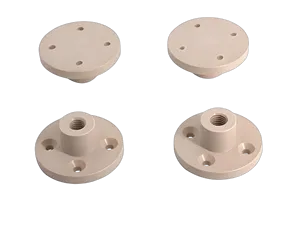
Utilizing Japanese Tsugami Swiss-type CNC lathes and 5-axis Mikron machining centers, we routinely achieve micro-hole arrays down to 0.05mm and wall thicknesses of 0.1mm with tight tolerances of ±0.002 mm for intricate cardiovascular filter adapters and lumen connectors.
ISO Class 7 Cleanroom Operations
All micro-cleaning, ultrasonic degreasing, assembly, heat-sealing, and primary pouch packaging take place inside certified ISO Class 7 (Class 10,000) cleanrooms, maintaining stringent Bioburden and Endotoxin limits compliant with ISO 11607 standards.
AS9100D & ISO 13485 Certification
Our quality management system is doubly certified under ISO 13485:2016 for medical devices and AS9100D for high-reliability aerospace engineering, establishing 100% full-lot traceability from virgin raw resin to final inspection.
3. Global Sourcing & Procurement Trends in Cardiovascular Medical Devices (2025–2030)
Procurement directors and strategic sourcing executives in MedTech must navigate evolving supply chain landscapes, regulatory tightening under EU MDR, and technological shifts. Key sourcing trends shaping the next decade include:
Trend 1: Accelerated Shift Toward Vertical CDMO Integration in China
Global medical device manufacturers are increasingly migrating away from fragmented multi-vendor supply chains toward integrated Contract Development and Manufacturing Organizations (CDMOs). By consolidating raw material supply, micro-machining, surface treatment, and cleanroom kitting under one roof in China, multinational firms achieve 30% to 45% cost optimizations while mitigating supply chain disruption risks.
Trend 2: Expansion of Minimally Invasive Surgery (MIS) & Structural Heart Delivery Systems
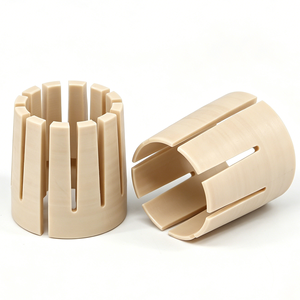
The transition from open-heart surgical procedures to catheter-based interventions is driving demand for custom micro-machined PEEK bushings, slotted flex-components, and radiopaque marker bands. Sourcing managers are actively prioritizing suppliers capable of executing complex 3D micro-hole array machining for sheath manifolds and valve deployment devices.
Trend 3: Demand for Bio-Harmonized Raw Material Provenance
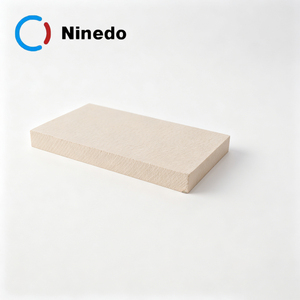
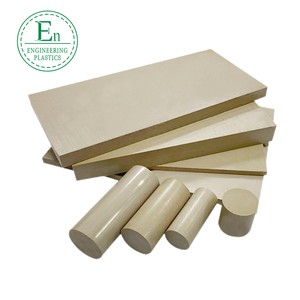
Regulatory authorities including the US FDA, NMPA, and EU Notified Bodies require absolute proof of material origin. Leading exporters now provide full master file (MAF) support, resin lot certification, USP Class VI compliance reports, and Extractables/Leachables (E&L) testing dossiers for all PEEK rods, sheets, and custom molded components.
4. Technology Development Trends: Advanced Machining & Polymer Surface Engineering
As cardiovascular devices demand tighter integration between electronic sensors, fluidic micro-channels, and physical anchors, state-of-the-art polymer machining technology is rapidly evolving.
Femtosecond Laser Micro-Machining
To prevent thermal degradation and micro-cracking in sensitive PEEK and PTFE polymers, femtosecond laser cutting allows ultra-clean burr-free micro-slots and micro-porous textures without altered heat-affected zones (HAZ).
Cold Plasma Surface Activation
Enhancing hydrophilic properties and anticoagulant bonding on PEEK surfaces via low-temperature atmospheric plasma treatments. This allows superior adhesion for drug-eluting coatings and heparinized bio-functional layers.
3D Optical CMM Metrology
Non-contact 3D optical coordinate measuring systems verify sub-micron geometry on micro-hole arrays and slotted sleeves without physical probe contact, eliminating structural deformation on delicate elastomeric or polymeric parts.
5. Enterprise Advantages: Why Global OEMs Choose Our Wholesale Platform
Leveraging decades of combined precision engineering experience, our modern facility serves as a trusted OEM supplier to Fortune 500 medical companies across North America, Europe, and Asia-Pacific.
- 100% Virgin Material Guarantee: We strictly utilize original medical-grade PEEK resins (Victrex PEEK, Evonik VESTAKEEP®, Solvay Zeniva®) with complete lot traceability and no recycled content.
- Rapid Prototyping to Mass Production: Dedicated rapid-response engineering teams deliver functional prototypes within 3 to 5 business days, seamlessly transitioning into full-scale automated production runs.
- Rigorous Quality Control Framework: Comprehensive testing protocol including 100% Visual CMM Inspection, Tensile & Flexural Testing, Autoclave Hydrothermal Stability Testing, and Endotoxin (LAL) Analysis.
- Comprehensive Regulatory Dossier Support: Full documentation provided for customer FDA 510(k), PMA, and CE Mark technical file submissions, including DFM reports and IQ/OQ/PQ validation protocol.
Partner with China's Premier Cardiovascular Device CDMO
Accelerate your product development cycle with ISO 13485-certified precision manufacturing, micro-machining, and cleanroom assembly customized to your exact specifications.
6. Frequently Asked Questions (FAQ) for Sourcing Managers & Procurement Engineers
Find authoritative answers regarding our OEM capabilities, quality compliance, material certifications, minimum order quantities (MOQ), and global export procedures.
Our manufacturing facility operates under a certified ISO 13485:2016 Quality Management System specifically tailored for medical device components, alongside ISO 9001:2015 and AS9100D quality standards. Our cleanroom environments are certified to ISO Class 7 (10,000) standards in full compliance with ISO 14644 guidelines.
Yes. Every batch of medical-grade PEEK, PTFE, or implantable alloy is accompanied by Mill Test Certificates (MTC), raw material lot analysis, and compliance certificates for USP Class VI, ISO 10993 (Cytotoxicity, Hemocompatibility, Sensitization), and REACH/RoHS compliance.
Our high-precision 5-axis Swiss CNC micro-milling and turning equipment routinely achieves linear tolerances down to ±0.002 mm (2 microns) and surface roughness finishes down to Ra 0.2 µm, ideal for vascular catheter adapters, micro-hole arrays, and fluidic manifolds.
Absolutely. We support engineering design verification through rapid prototype production. Small-batch prototype samples for functional testing and DFM (Design for Manufacturability) analysis can be produced and exported within 3 to 7 working days.
After precision machining, parts undergo multi-stage automated ultrasonic cleaning using pyrogen-free DI water. They are immediately vacuum-sealed inside sterile medical-grade Tyvek pouches within our ISO Class 7 cleanroom to prevent particulate contamination and endotoxin buildup.
We accommodate both low-volume specialized pilot runs (MOQ starting at 10 to 50 pieces for complex implant prototypes) and high-volume wholesale production runs exceeding 50,000+ units. Standard production lead times range from 2 to 4 weeks depending on geometry and cleanroom requirements.
We place the utmost priority on protecting client IP. We routinely execute binding bilateral NDAs prior to reviewing CAD models or technical drawings. All design data is stored on encrypted, access-controlled internal servers.
We provide full DDP (Delivered Duty Paid), DAP, FOB, and CIF export logistics solutions via major air express carriers (DHL, FedEx, UPS) and specialized temperature-controlled air freight. All customs documentation, Certificate of Origin (COO), and commercial invoices are fully managed by our export compliance department.
Initiate Your Custom Engineering Consultation Today
Send us your technical CAD files (STEP, IGES, DXF) or project specifications for an immediate DFM feedback report and competitive B2B wholesale quotation within 24 hours.