
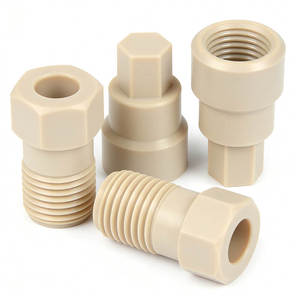
Latest Medical Device Manufacturing Articles
Featured Medical-Grade PEEK & Precision Components
Explore our spectrum of sub-micron precision PEEK filter adapters, micro-hole array fixtures, and CNC machined structural components engineered for critical infusion pump applications.
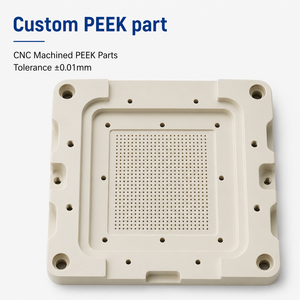
Custom CNC Machined PEEK Medical Fixture With Precision Micro-hole Array For Surgical Component Assembly
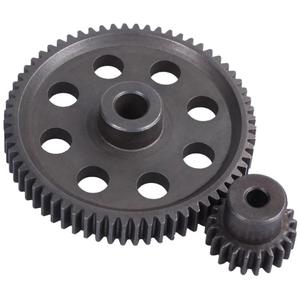
High Precision PEEK CNC Machined Parts AS9100D Certified Engineering Plastic Milling Components
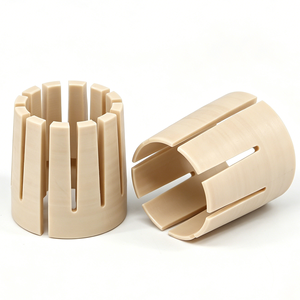
Customized Slotted PEEK Bushing Machining CNC Plastic Part High Performance PEEK Components
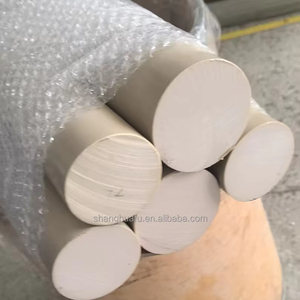
High-Performance Pure PEEK Unfilled Rod Bar Custom Diameter 6-250mm Heat Resistant Medical Grade
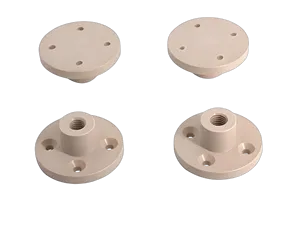
Customization Electronic Electrical Structural Parts Polymer PEEK Custom-shaped Components
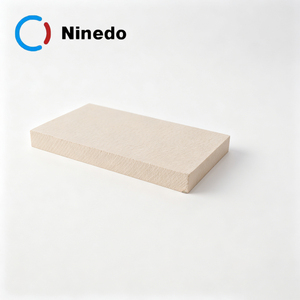
Custom Size High Temperature Resistant PEEK Sheet Polyetheretherketone Board for Medical Devices
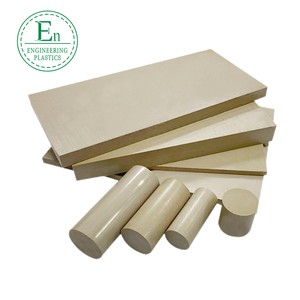
ISO Certified Precision 100% Pure Raw Materials Medical PEEK Bar Plate & Rod Components
100+
Years Manufacturing Heritage
1.2M
Sq. Ft. Global Facilities
8+
Global Manufacturing Centers
99%+
On-Time Delivery Performance
Industry Whitepaper
Engineering Next-Generation Infusion Pump Architecture: High-Precision OEM Component Manufacturing
In modern critical care, parenteral nutrition, oncology chemotherapy, and ambulatory drug delivery, the reliability of an infusion pump hinges entirely on the dimensional fidelity, chemical inertness, and structural integrity of its internal sub-assemblies. As global healthcare shifts toward personalized dosage delivery, smart connectivity, and wearable micro-infusion systems, Original Equipment Manufacturers (OEMs) face unprecedented engineering challenges.
This technical whitepaper examines the core manufacturing paradigms, material science breakthroughs, and quality assurance frameworks required to contract-manufacture Custom OEM Infusion Pump Components. From ultra-precise PEEK micro-hole arrays to non-reactive fluidic manifold adapters, we analyze how leading Contract Development and Manufacturing Organizations (CDMOs) mitigate risk, accelerate commercialization, and ensure strict compliance with FDA 21 CFR Part 820 and ISO 13485 standards.
Global CDMO Infrastructure: Scale, Quality, & Engineering Rigor
Selecting a custom OEM infusion pump component manufacturer requires a partner capable of scaling seamlessly from rapid early-stage prototyping to millions of commercial units annually. Leveraging over 100 years of combined manufacturing heritage and operating across 1.2 million square feet of state-of-the-art global facilities, our manufacturing footprint provides total supply chain security and technical breadth.
ISO Cleanroom Assembly
Components are precision-machined, ultrasonic cleaned, and assembled within ISO Class 7 and Class 8 controlled environments to eliminate bioburden and particulate contamination risk.
Sub-Micron Machining
Utilizing multi-axis Swiss CNC milling and micro-drilling capabilities, achieving micro-hole arrays and intricate fluid channels down to ±0.0025 mm tight tolerances.
AS9100D & ISO 13485
Dual-certified quality systems ensure rigid process validation (IQ/OQ/PQ), full lot traceability, and comprehensive Design for Manufacturability (DFM) support.
Critical Components in Infusion Pump Assemblies
Infusion pump mechanisms demand specialized mechanical and chemical properties due to constant contact with aggressive pharmacological agents, lipids, and cleaning disinfectants. Below are the primary OEM component categories engineered in our centers of excellence:
- PEEK Filter Adapters & Manifolds: Chemically inert, high-temperature polyetheretherketone adapters designed for micro-filtration housings, resisting cracking under continuous fluid pressures.
- Precision Micro-Hole Arrays: CNC micro-drilled fixtures engineered to precise pore geometries for air-in-line detection systems and downstream occlusion pressure sensors.
- Peristaltic Pump Finger Actuators & Cam Guide Bushings: Friction-resistant, self-lubricating slotted bushings machined from unfilled and carbon-filled PEEK for ultra-quiet operation and low wear rates.
- Syringe Driver Lead-Screw Components & Plunger Grips: High-rigidity dimensional components maintaining volumetric linear accuracy down to microliters per hour.
Material Science Selection Matrix for Infusion Components
Selecting the optimal polymer or alloy is paramount to preventing leachables/extractables (E&L) and mechanical creep under cyclic peristaltic loading.
| Material Type | Tensile Strength (MPa) | Biocompatibility Standard | Chemical Resistance | Typical Infusion Application | |
|---|---|---|---|---|---|
| Medical Pure PEEK (Unfilled) | 95 - 105 | USP Class VI / ISO 10993 | Outstanding (pH 1-14) | Fluidic Manifolds, Filter Adapters, Valving | - |
| 30% Glass-Filled PEEK | 160 - 175 | ISO 10993 Compliant | Excellent | Structural Housings, Internal Drive Gears | - |
| Titanium Grade 5 (Ti-6Al-4V) | 880 - 950 | ISO 10993-1 Certified | Superior | High-Pressure Pump Chambers, Ultrasonic Transducers | - |
| 316L Stainless Steel | 515 - 620 | ASTM F138 Compliant | High (Except Halogens) | Plunger Rods, Peristaltic Drive Shafts | - |
| Medical-Grade PTFE / UHMWPE | 25 - 40 | USP Class VI Certified | Universal | Dynamic Seals, Low-Friction Bushings | - |
Global Procurement & Technology Trends (2025–2035)
As the medical device market responds to global supply chain re-alignment and rapid technological shifts, procurement leaders must anticipate key industry vectors governing infusion pump component sourcing:
1. Supply Chain Resilience & Dual-Sourcing
Global OEMs are moving away from single-source suppliers toward integrated CDMO partners offering multi-site redundancies across North America, Europe, and Asia to mitigate geopolitical and logistics vulnerabilities.
2. Wearable & Smart Infusion Miniaturization
Ambulatory patch pumps require miniaturized fluidic channels and ultra-lightweight biocompatible polymers. Components must shrink in footprint while doubling in dimensional precision.
3. Additive & Hybrid Manufacturing
Combining 3D printed complex internal flow paths with high-precision CNC micro-milling enables custom flow geometry without expensive mold tooling investments.
Design for Manufacturability (DFM) & Rigorous Quality Assurance
Our collaborative engineering model integrates early DFM feedback to eliminate failure modes prior to tooling or production launch. Through advanced 3D coordinate measuring machines (CMM), optical micro-profilometry, and non-destructive CT scanning, every component produced strictly complies with tight geometric dimensioning and tolerancing (GD&T) specifications.
Furthermore, our integrated business planning (IBP) model aligns raw material inventory, cleanroom capacity, and production scheduling with your demand forecasts, securing on-time delivery rates consistently exceeding 99%.
Frequently Asked Questions (FAQ) for OEM Infusion Components
Find authoritative answers regarding material selection, validation protocols, custom manufacturing options, and regulatory compliance.
Q1: Why is PEEK preferred over traditional polymers for infusion pump manifolds?
PEEK (Polyetheretherketone) provides exceptional chemical resistance across a broad pH spectrum, preventing leaching when exposed to aggressive oncology formulations or lipid emulsions. Additionally, its superior mechanical strength allows micro-threads and tight tolerances to hold up under continuous cyclic operating pressures without creep or stress cracking.
Q2: What cleanroom cleanliness standards are maintained during component production?
We perform precision machining, ultrasonic solvent cleaning, initial inspection, and final pouch packaging in certified ISO Class 7 and ISO Class 8 cleanroom facilities, minimizing particulate contamination and bioburden in accordance with ISO 14644 standards.
Q3: Can you support custom short-run prototyping before full commercial tooling?
Yes. Our dedicated Innovation Centers utilize high-speed multi-axis CNC machining, Swiss micro-turning, and medical-grade additive manufacturing to fabricate functional prototypes in native medical-grade materials, facilitating rapid V&V testing and regulatory submittals.
Q4: How do you handle lot traceability and regulatory documentation for medical OEMs?
Every production batch is backed by full raw material certs, Certificate of Conformance (CoC), CMM inspection reports, and complete Device History Records (DHR). Our quality system aligns with FDA 21 CFR Part 820 and ISO 13485 regulations.
Q5: What micro-hole array tolerances can be achieved for fluid sensing components?
Our specialized micro-machining and micro-drilling stations can achieve hole diameters down to 50 microns with positional tolerances of ±0.0025 mm, ensuring accurate flow measurement and bubble-detection sensor housing performance.
Q6: Do your PEEK materials comply with international biocompatibility standards?
All medical-grade PEEK resins utilized in our components undergo comprehensive testing to meet USP Class VI and ISO 10993 requirements for tissue contact, cytotoxicity, systemic toxicity, and hemocompatibility.
Q7: How does your integrated manufacturing planning protect against supply chain disruptions?
With 8+ global manufacturing centers and strategic raw material safety stocking programs, we offer redundant manufacturing capabilities and strategic demand planning to insulate OEM partners from regional operational disruptions.
Q8: What is the process for initiating a custom OEM infusion pump project?
Simply submit your 3D CAD models (STEP/IGES) and engineering specifications via our direct inquiry system. Our DFM engineering team will review tolerances, material options, and deliver a detailed feasibility analysis and quotation.