
Latest Medical Device Manufacturing Articles
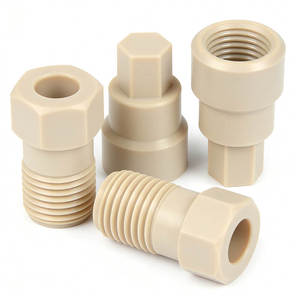
Featured OEM Medical PEEK Components
Engineered from 100% pure raw resins (Victrex, Solvay, Evonik). Fully compliant with ISO 10993 and USP Class VI standards for implantable and surgical applications.
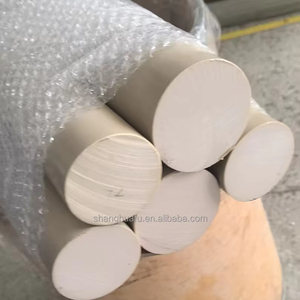
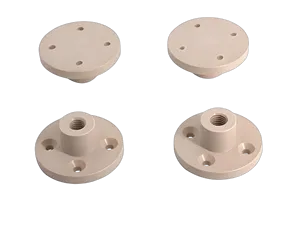
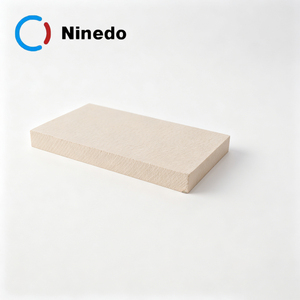
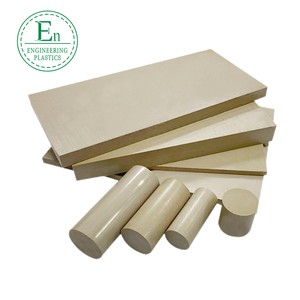
Engineering Next-Generation Medical Devices with Custom OEM PEEK Components
An in-depth analysis of Polyetheretherketone (PEEK) processing, biomechanical compatibility, precision micro-machining parameters, and regulatory compliance for global medical equipment manufacturers.
In the rapidly evolving landscape of advanced surgical instruments, orthopedic implants, and robotic-assisted surgery systems, material selection dictates clinical success. Polyetheretherketone (PEEK)—an ultra-high-performance semi-crystalline thermoplastic—has emerged as the premier alternative to traditional titanium, cobalt-chrome, and stainless steel alloys. As a dedicated Custom OEM PEEK Medical Components Factory & Exporter, our organization bridges the gap between raw polymer science and micrometer-precision engineering, providing global OEMs with certified components engineered for critical life-sustaining and surgical environments.
1. Material Supremacy: Raw Virgin PEEK vs. Legacy Metals in Medical Devices
PEEK’s unique molecular architecture, comprising repeating monomers of two ether groups and a ketone group bound to benzene rings, yields extraordinary thermal, chemical, and mechanical stability. Unlike metals, unfilled medical-grade PEEK possesses an elastic modulus of approximately 3.6 to 4.0 GPa, closely mirroring human cortical bone (18 GPa when reinforced with continuous carbon fibers). This elastic parity effectively mitigates the clinical phenomenon of stress shielding—where overly rigid metal implants absorb physiological loads, causing adjacent bone density loss and implant loosening over time.
Furthermore, medical PEEK exhibits complete radiolucency under X-ray, Computed Tomography (CT), and Magnetic Resonance Imaging (MRI). Surgeons can effortlessly monitor post-operative bone fusion and soft-tissue healing without the severe scatter artifacts caused by metallic hardware. When medical devices require localized radiopacity, our OEM facility incorporates homogeneous distributions of radiopacifiers such as Barium Sulfate (BaSO4, 20% to 40% weight ratios) or Bismuth Subcarbonate, permitting precise fluoroscopic visualization during minimally invasive procedures.
| Material Specification | Unfilled PEEK (Natural) | 30% CFR-PEEK (Carbon Reinforced) | Titanium Alloy (Ti-6Al-4V) | Stainless Steel (316L) |
|---|---|---|---|---|
| Density (g/cm³) | 1.30 | 1.44 | 4.43 | 8.00 |
| Tensile Strength (MPa) | 100 - 110 | 230 - 250 | 900 - 1000 | 550 - 650 |
| Flexural Modulus (GPa) | 3.8 - 4.2 (Matches Bone) | 18.0 - 20.0 (Matches Cortical) | 114 | 193 |
| Radiolucency (CT/MRI) | 100% Artifact-Free | 100% Artifact-Free | Severe Scattering Artifacts | Severe Scattering Artifacts |
| Biocompatibility Standard | ISO 10993 / USP Class VI | ISO 10993 / USP Class VI | ASTM F136 / ISO 5832-3 | ASTM F138 |
| Sterilization Endurance | 1,000+ Autoclave Cycles | 1,000+ Autoclave Cycles | Corrosion/Oxidation Risk | Pitting/Surface Degradation |
2. Precision 5-Axis Machining & Micro-Hole Array Engineering
Machining engineering-grade polymers for medical applications presents distinct physical challenges compared to metal fabrication. PEEK possesses a low thermal conductivity ($0.25 \text{ W/m}\cdot\text{K}$) and a high glass transition temperature ($T_g = 143^\circ\text{C}$). Rapid cutting speeds generate concentrated heat at the tool-material interface, introducing residual internal stress, optical discoloration, micro-cracking, and critical dimensional warping after unclamping.
To overcome these material dynamics, our factory utilizes custom-designed stress-relief thermal annealing protocols before, during, and after multi-axis machining operations:
- Pre-Machining Stress Equalization: PEEK extruded rods and extruded plates undergo controlled ramp heating in convection nitrogen-shielded ovens to 200°C, followed by ultra-slow cooling rates ($10^\circ\text{C}/\text{hour}$) to relieve extrusion memory.
- 5-Axis CNC Precision Milling: Utilizing high-speed oil-cooled high-diamond PCD cutters, tight-tolerance geometric features are machined at optimal chip-load speeds to eliminate plastic burr formation.
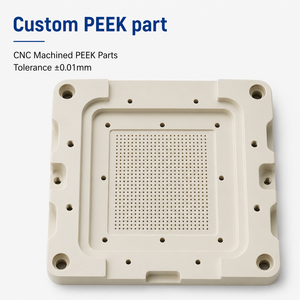
- Micro-Hole Array Fabrication: As demonstrated in our specialized surgical assembly fixtures, micro-drilling heads achieve clean hole arrays down to 0.10mm diameter with aspect ratios exceeding 10:1, exhibiting zero entrance/exit burring or material smearing.
- Post-Machining Thermal Stabilization: Secondary annealing cycles locks in finished tolerances down to ±0.005mm (5 microns), ensuring dimensional stability across repeated steam autoclaving.
Pure Raw Resins
Exclusively sourcing 100% medical-grade raw polymer resins from world-leading chemical suppliers (Victrex, Solvay, Evonik) with complete batch chemical traceability.
ISO Class 7/8 Cleanrooms
Component washing, ultrasonic bio-burden removal, micro-assembly, and primary packaging are conducted inside controlled cleanroom environments.
AS9100D & ISO 13485
Dual quality management systems audited for high-risk medical device manufacturing, orthopedic implants, and aerospace structural plastic components.
3. Application Spectrum in Medical Device OEM Operations
Custom PEEK components serve as critical structural and functional elements across numerous clinical disciplines:
A. Surgical Instrumentation & Endoscopic Systems: In endoscopic camera housings, laparoscopic graspers, and surgical filter adapters, PEEK provides electrical insulation preventing high-frequency electrosurgical current leakage. Its chemical inertness resists aggressive hospital enzymatic detergents, disinfectant solvents, and high-pH cleaning agents.
B. Orthopedic & Spinal Implant Systems: PEEK spinal fusion cages (interbody cages), pedicle screws, bone anchors, and cranial reconstruction plates benefit directly from PEEK's biostability and fatigue resistance. Over tens of millions of load-bearing flexural cycles, PEEK components exhibit negligible particulate wear, lowering the incidence of periprosthetic osteolysis.
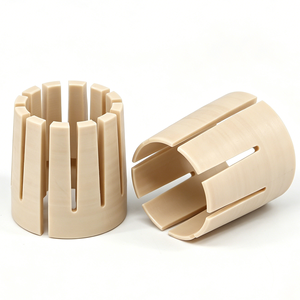
C. Robotic-Assisted Surgery (RAS) Structural Assemblies: Modern robotic surgical arms require lightweight end-effectors to minimize inertia and maximize joint reaction speeds. Precision-machined PEEK bushings, slotted sleeves, and structural brackets deliver high stiffness-to-weight ratios while allowing smooth self-lubricating movement without systemic oil contamination.
4. Future Procurement Trends & Strategic Technology Forecast
As global regulatory bodies (such as the European Union under EU MDR 2017/745 and the US FDA under revised 510(k)/PMA guidelines) tighten scrutiny on material origin and supply chain transparency, procurement leaders must align with qualified CDMO/OEM partners. Key technological and procurement trends transforming the PEEK medical sector include:
1. Convergence of Subtractive CNC & Additive PEEK Manufacturing: While subtractive CNC milling provides unmatched surface finishes ($Ra < 0.4\mu\text{m}$) and tight micro-tolerances, additive 3D PEEK printing (FDM/FFF and Selective Laser Sintering) enables patient-specific porous lattice structures for rapid osseointegration. The future of OEM procurement relies on hybrid manufacturing workflows—3D printing complex interior geometries followed by 5-axis CNC finishing on critical mating surfaces.
2. Bioactive PEEK Formulations: Second-generation PEEK materials infused with Hydroxyapatite (HA) or Titanium particles are entering mass production. These composite materials present osteoconductive properties, actively encouraging bone cell apposition directly onto the component surface while maintaining PEEK’s structural elasticity.
3. Supply Chain Traceability and Master File Registration: Tier-1 MedTech procurement teams are consolidating supplier bases, moving away from simple machine shops toward full-service OEM partners capable of providing complete material Master Files (Device Master Files submitted to regulatory bodies), Certificate of Analysis (CoA), material melt traceability, and certified cleanroom packaging.
5. Why Global OEMs Partner with Our Factory
Our manufacturing facility operates as a dedicated original equipment manufacturer and exporter, delivering distinct competitive advantages to our international procurement clients:
- 100% Virgin Raw Materials Guarantee: We enforce a strict zero-regrind policy for all medical-grade product lines. Every batch of Victrex 450G, Solvay Zeniva, or Evonik VESTAKEEP PEEK is delivered with full mill test reports and lot traceability.
- In-House Tooling & Micro-Fixture Design: Our engineering team develops custom vacuum fixtures, soft-jaw collets, and high-speed PCD micro-tooling in-house, ensuring zero surface scratching or distortion during multi-sided milling.
- Advanced Optical & Coordinate Metrology: Quality control is validated via Zeiss CMM (Coordinate Measuring Machines), OGP optical comparator measurement systems, and laser micrometers within temperature-controlled inspection labs.
- Turnkey Manufacturing Ecosystem: From raw rod/sheet extrusion conversion to multi-axis CNC machining, ultrasonic multi-stage washing, cleanroom assembly, and custom labeling—we streamline your medical device supply chain.
Frequently Asked Questions for OEM Procurement
Addressing critical engineering, quality assurance, and supply chain queries for high-precision PEEK components.
Q1 How do you prevent internal stress and warping during deep PEEK CNC machining?
We execute strict multi-stage thermal annealing protocols. Raw extruded PEEK rods and plates are annealed prior to machining to release extrusion stresses. For complex or thin-walled components, intermediate stress-relief cycles are applied post-rough milling before final high-precision finishing passes. This guarantees absolute dimensional stability.
Q2 What regulatory certifications and material compliance reports do you provide?
Every shipment is accompanied by a comprehensive Quality Documentation Package. This includes Certificate of Conformance (CoC), raw material mill certificates verifying 100% virgin polymer resin (Victrex/Solvay/Evonik), ISO 10993 cytotoxicity test summaries, USP Class VI compliance documentation, and dimensional CMM inspection reports.
Q3 Can custom OEM PEEK components withstand repeated hospital sterilization procedures?
Yes. Medical-grade PEEK demonstrates superior hydrolytic stability. Components can endure over 1,000 steam autoclave cycles at 134°C (273°F) without experiencing hydrolysis, loss of mechanical tensile strength, or surface cracking. They are also fully compatible with Ethylene Oxide (EtO), Gamma radiation (up to 1400 kGy), and Sterrad hydrogen peroxide gas plasma sterilization.
Q4 What are your minimum order quantities (MOQ) and prototype lead times?
We support both early-stage R&D rapid prototyping and scalable high-volume production runs. Prototype quantities (1 to 50 pieces) can be delivered within 5 to 7 working days following DFM approval. Mass production orders benefit from dedicated multi-axis CNC machine cells with flexible lead times based on your delivery schedule.
Q5 How do you achieve burr-free surfaces on micro-scale PEEK medical components?
We utilize ultra-sharp PCD (Polycrystalline Diamond) cutting tools operating at high RPMs and optimized feed rates to ensure clean shearing without plastic tearing. Post-machining, parts undergo microscopic manual deburring under 40x magnification, cryogenic deburring, and ultrasonic multi-frequency washing to remove micro-particulates.
Q6 Do you support OEM design customization and Design for Manufacturability (DFM) reviews?
Absolutely. Our senior engineering team conducts comprehensive 3D CAD/CAM DFM reviews for every project. We assist in optimizing wall thicknesses, corner radii, thread engagements, and tolerance stack-ups to optimize unit costs while maintaining clinical performance.
Our OEM Manufacturing Workflow
From initial engineering drawing review to cleanroom-packaged mass delivery.
DFM & CAD Optimization
Our engineers analyze your STEP/IGES files for thermal stress relief, tooling accessibility, and micrometer tolerance stack-up validation.
Resin Traceability & Annealing
Selecting certified 100% virgin PEEK resins, executing pre-machining thermal stress annealing, and preparing custom precision fixtures.
5-Axis Micro-Machining
Executing multi-axis CNC milling, Swiss lathe turning, and micro-hole array drilling under strict oil-cooled thermal regulation.
Cleanroom QA & Delivery
Validation on Zeiss CMMs, ultrasonic bio-burden cleaning, ISO Class 7 cleanroom packaging, and global express export shipping.
Partner with a Premier OEM PEEK Manufacturing Factory
Request a comprehensive DFM review, engineering consultation, or immediate quotation for your high-precision medical PEEK components.
Get a Quote