
Latest Medical Device Manufacturing Articles
Featured OEM Vascular Access & Medical PEEK Components
Engineered for extreme bio-compatibility, tight dimensional tolerances (±0.005mm), and sterilizability in minimally invasive surgical applications.
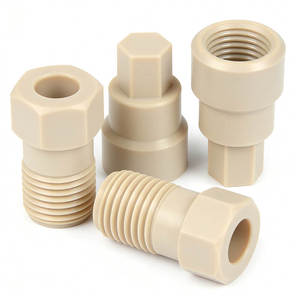
Custom High-Precision Medical PEEK Filter Adapter Component Made Plastic Parts CNC Machining Service
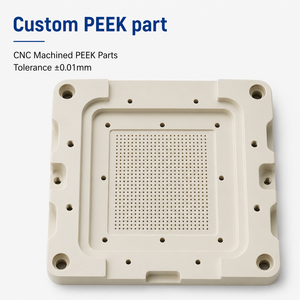
Custom CNC Machined PEEK Medical Fixture With Precision Micro-hole Array For Surgical Component Assembly
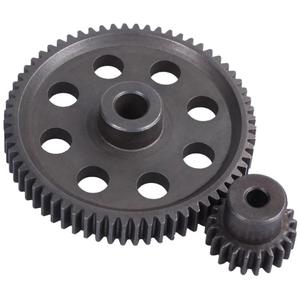
High Precision PEEK CNC Machined Parts AS9100D Certified Engineering Plastic Milling Components for Aerospace & Medical Industry
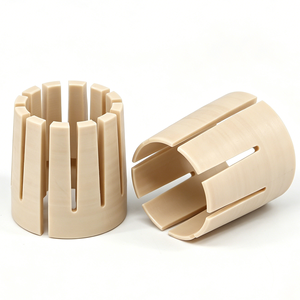
Customized Slotted PEEK Bushing Machining CNC Plastic Part High Performance PEEK Components For Industrial Use
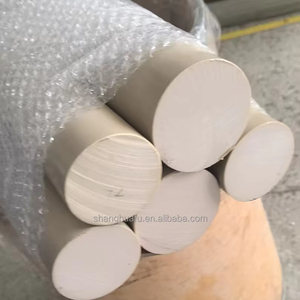
High-Performance Pure PEEK Unfilled Rod Bar Custom Diameter 6-250mm 260C Heat Resistant Aerospace Medical Grade Natural/Black
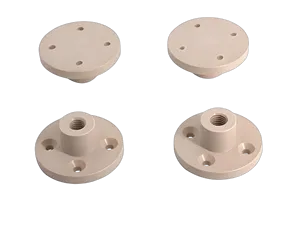
Customization With Multiple Functions And Specifications Electronic Electrical Structural Parts Polymer PEEK Custom-shaped Parts
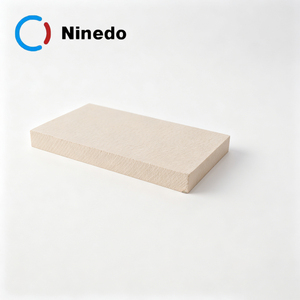
Custom Size High Temperature Resistant PEEK Sheet Polyetheretherketone Board for Medical Aerospace
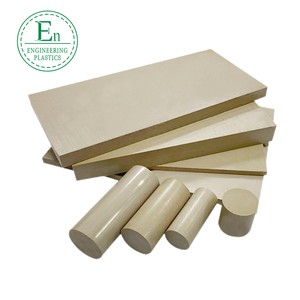
ISO 9001 Certified Precision100% Pure Raw Materials Heat Resistance Peek Medical Peek Bar Plate Poly Ether Ketone Peek Rod Plate
1. Executive Overview: Custom OEM Vascular Access Component Engineering
Vascular access interventions represent the foundational infrastructure of modern clinical medicine, encompassing central venous catheters (CVC), peripherally inserted central catheters (PICC), hemodialysis access sheaths, micro-puncture introducers, and interventional cardiology manifolds. As medical device original equipment manufacturers (OEMs) shift toward smaller profile catheters, multi-lumen configurations, and smart sensor integration, the demand for high-reliability contract manufacturing partners has reached an unprecedented peak.
Custom vascular access OEM components demand ultra-precise engineering. Components such as catheter hubs, hemostasis valve bodies, fluidic dilator connectors, luer lock adapters, and micro-porous filter caps require strict adherence to regulatory standards (FDA 21 CFR Part 820, ISO 13485:2016, and EU MDR 2017/745). Achieving zero-defect fluidic integrity under burst pressures exceeding 300 PSI while eliminating risks of particulate generation, blood hemolysis, or microbial adhesion necessitates advanced polymer selection, micro-CNC Swiss machining, laser micro-ablation, and controlled cleanroom assembly.
| Material Class | Tensile Strength (MPa) | Biocompatibility Standard | Sterilization Compatibility | Primary Vascular OEM Application |
|---|---|---|---|---|
| Medical Grade PEEK (Unfilled) | 90 - 100 MPa | ISO 10993 / USP Class VI | Autoclave, EtO, Gamma, E-Beam | High-pressure fluidic adapters, manifold connectors, micro-hole filter matrices |
| 316LVM Stainless Steel / Nitinol | 550 - 1100 MPa | ISO 10993-5 / 10993-10 | EtO, Autoclave, Dry Heat | Introducer needles, dilator cores, guidewire torque devices, micro-tubing stiffeners |
| Fluoropolymers (PTFE / FEP / PFA) | 20 - 35 MPa | USP Class VI Compliant | EtO, E-Beam | Peel-away sheath liners, lubricous micro-catheter lumens, valve seals |
| Polycarbonate / TPU Alloys | 60 - 80 MPa | ISO 10993-1 | EtO, Gamma (grade dependent) | Over-molded catheter hubs, transparent junction boxes, extension line clamps |
Full-Lifecycle CDMO Capabilities & Factory Infrastructure
Leveraging over a century of collective precision manufacturing legacy, 1.2 million sq. ft. of global operational footprint, and dedicated R&D Innovation Centers.
Sub-Micron CNC & Swiss Machining
Our state-of-the-art Swiss 9-axis CNC turning centers and micro-milling machines specialize in processing engineering polymers like PEEK, Radel, and Ultem as well as implant-grade metals. We routinely achieve tolerances of ±0.005mm for micro-hole arrays, slotted bushings, and catheter adapter threads.
Class 7 & 8 Cleanroom Operations
Vascular components undergo automated ultrasonic cleaning, plasma surface treatment, cleanroom sub-assembly, micro-leak testing, and sterile barrier pouching inside certified ISO Class 7 and Class 8 cleanrooms to guarantee bioburden control and particulate-free delivery.
Design for Manufacturability (DFM)
Through integrated R&D Innovation Centers, our biomedical engineers co-develop vascular components with OEM client teams. We conduct finite element analysis (FEA), computational fluid dynamics (CFD) for blood flow optimization, and rapid prototyping cycles to compress time-to-market.
Additive & Metal 3D Printing
Pioneering direct metal laser sintering (DMLS) and high-temperature polymer additive manufacturing for rapid tooling, complex porous vascular anchors, and highly custom surgical fixtures without expensive upfront injection tooling costs.
Quality Management & UDI Traceability
Fully compliant with ISO 13485:2016, ISO 9001:2015, and AS9100D. Every component batch carries 100% lot traceability, material melt certificates, CMM dimensional inspection reports, and laser-etched UDI barcode marking.
Global Integrated Supply Chain
Operating 8+ global manufacturing nodes across North America, Europe, and Asia-Pacific to safeguard OEM customers against geopolitical disruption, offering buffer inventory management and vendor-managed inventory (VMI) frameworks.
2. Strategic Procurement Trends in Vascular Access Component Sourcing (2026–2032)
The global market for vascular access devices is projected to expand significantly, driven by an aging global demographic, increasing incidence of chronic kidney disease (CKD) requiring hemodialysis, and the rapid adoption of minimally invasive surgical procedures (MIS). Procurement directors and MedTech supply chain executives face unprecedented pressure to balance regulatory compliance, cost optimization, and supply continuity.
A. Consolidation to Full-Service CDMO Partners
Tier-1 MedTech OEMs are aggressively streamlining their vendor bases, transitioning away from transactional machine shops toward strategic contract development and manufacturing organizations (CDMOs). Modern procurement prefers single-source suppliers capable of managing raw material sourcing, precision machining, overmolding, cleanroom packaging, and sterilization management under a unified Quality Management System (QMS).
B. Shift Toward High-Performance Polymers (PEEK over Stainless Steel)
In vascular access, metal components are increasingly being replaced by medical-grade PEEK (Polyetheretherketone) and self-lubricating fluoropolymers. PEEK provides radiolucency (eliminating artifacts under fluoroscopy), high strength-to-weight ratios, chemical inertness against aggressive drug formulations, and zero risk of ion leaching in long-term blood contact environments.
C. Nearshoring & Dual-Region Operations
Following global supply chain disruptions, vascular access OEMs prioritize suppliers with dual-site redundancy. Sourcing strategies now mandate that critical components (such as hemodialysis catheter hubs and micro-puncture dilator adapters) have validated secondary tooling setups across different geographic regions to prevent unexpected delivery stoppages.
D. Rigorous Total Cost of Quality (TCOQ) Evaluation
Leading procurement teams evaluate component suppliers based on Total Cost of Quality rather than initial piece price. A component that experiences a 0.5% failure rate during hub-to-catheter ultrasonic bonding or final hydrostatic leak testing generates catastrophic scrap and recall costs. Precision machining with guaranteed zero-defect AQL levels yields lower overall lifetime costs.
3. Technological & Manufacturing Advancement Trends
Vascular access component engineering is undergoing a technological revolution. Innovation is driven by four primary technological vectors:
1. Smart Sensors & Fluidic Integration
Modern vascular catheters are evolving into diagnostic nodes. OEM hubs and manifold bodies are now engineered with micro-cavities to accommodate optical sensors, micro-electromechanical systems (MEMS) pressure sensors, and wireless telemetry antennas for real-time blood pressure and flow rate monitoring.
2. Thromboresistant & Antimicrobial Surface Technologies
Catheter-related bloodstream infections (CRBSI) and vascular thrombosis remain major clinical risks. Precision machining factories are pairing surface micro-texture modification (laser surface texturing) with advanced hydrophilic and silver-ion coatings to dramatically reduce platelet adhesion and bio-film formation.
3. Micro-Hole Arrays & Femtosecond Laser Ablation
Precision filtration and controlled drug delivery require micro-hole arrays with hole diameters as small as 5 to 20 microns. Utilizing cold femtosecond laser processing, factories can achieve burr-free micro-perforations in PEEK, PTFE, and Nitinol without heat-affected zones (HAZ) or structural degradation.
4. Automated Optical Inspection (AOI) & AI Quality Control
To meet zero-defect mandates for intravascular devices, high-volume production lines are integrated with multi-axis automated vision inspection systems. AI-driven vision engines scan 100% of manufactured PEEK adapters and bushings for micro-cracks, flash, thread pitch deviations, and particulate contamination.
Vascular Access OEM Components: Procurement FAQ
Answers to critical technical, quality, and supply chain queries encountered by MedTech procurement professionals.
Q: Why is PEEK preferred over traditional polymers for vascular access adapters?
Medical-grade PEEK offers unmatched mechanical strength, creep resistance, and chemical stability. It retains structural integrity under repeated high-pressure contrast injections (up to 300+ PSI) and exhibits zero degradation during harsh gamma or steam autoclave sterilization cycles, preventing micro-cracking and fluid leaks.
Q: What quality certifications are required for custom vascular access component suppliers?
A qualified factory must maintain an active ISO 13485:2016 Quality Management System certification, FDA registration, and full compliance with ISO 10993 (Biological evaluation of medical devices). For dual aerospace/medical applications, AS9100D certification provides an added layer of process control and risk management.
Q: What dimensional tolerances can be achieved on CNC machined PEEK micro-hole arrays?
Utilizing ultra-precision Swiss CNC turning centers and specialized micro-drilling tooling, our facilities reliably achieve machining tolerances down to ±0.005mm (5 microns) on critical hole diameters, hole pitch, and concentricity in unfilled and filled PEEK substrates.
Q: How do you ensure burr-free surfaces on micro-machined plastic components?
We employ a multi-stage deburring process combining cryogenic deburring, high-frequency ultrasonic baths, and specialized microscopic hand-finishing under 40x magnification, followed by automated optical inspection to verify 100% burr-free surface geometry.
Q: Can you support both rapid prototyping and high-volume commercial manufacturing?
Yes. Our dedicated Innovation Centers handle low-volume rapid prototyping (1 to 500 units) via quick-turn CNC machining and 3D printing in 3 to 5 business days. Once validated, programs seamlessly transition to our high-volume automated cleanroom manufacturing lines producing millions of units annually.
Q: What biological and material testing documentation is provided with every shipment?
Every shipment includes a comprehensive Certificate of Conformance (CoC), raw material resin lot traceability certificates, USP Class VI / ISO 10993 compliance test summaries, CMM dimensional inspection reports, and bioburden testing reports upon request.
Q: How are custom vascular components cleaned and packaged before shipping?
Components undergo multi-frequency ultrasonic aqueous washing with non-ionic pyrogen-free detergents inside an ISO Class 7 cleanroom. Products are double-pouched in medical-grade Tyvek/PE pouches and heat-sealed, ready for immediate assembly or sterilization.
Q: What is the typical lead time for custom PEEK vascular component tooling and production?
For CNC machined prototypes and initial clinical samples, lead times range from 1 to 2 weeks. For high-volume production tooling and validated cleanroom manufacturing runs, lead times typically range from 4 to 6 weeks depending on component complexity and sterilization validation requirements.
Partner with a World-Class Vascular Component CDMO
Accelerate your next vascular access, catheter, or micro-fluidic medical device project with engineered precision, ISO 13485 quality systems, and scalable global manufacturing capacity.
Get a Quote