
Latest Medical Device Manufacturing Articles
OEM/ODM Precision Catheter Assemblies & Interventional Components
Explore our custom-engineered medical catheters, cable assemblies, and specialized clinical consumables manufactured under ISO 13485 and FDA-compliant cleanroom standards for global healthcare distributors and OEM medtech partners.
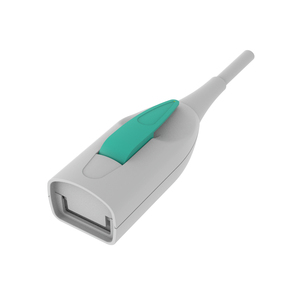
REUNION Custom Medical Connector, Cardiac Catheter Plug Assembly, Medical Cable Assembly
High-density multi-pin medical connector & shielded cable assemblies designed for cardiac electrophysiology monitoring and diagnostic catheters.
Get a Quote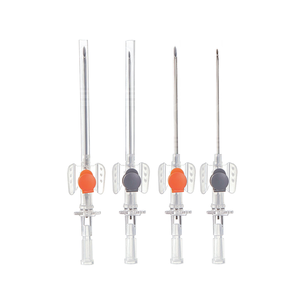
Disposable I.V Catheter / Butterfly Intravenous Catheter Peripheral Venous Catheter Have CE ISO
Sterile peripheral venous catheters featuring radiopaque FEP/TEFLON cannula, passive safety wings, and biocompatible needle guards.
Get a Quote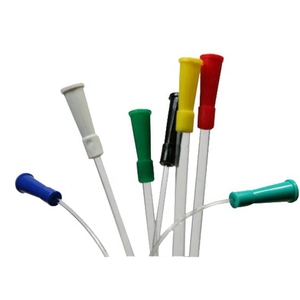
Customized Sizes PVC Urethral Male and Female Nelaton Catheter Medical Consumables for Male and Female Patients
Medical-grade DEHP-free PVC urinary catheters with heat-polished atraumatic eyes and color-coded funnel connectors for smooth insertion.
Get a Quote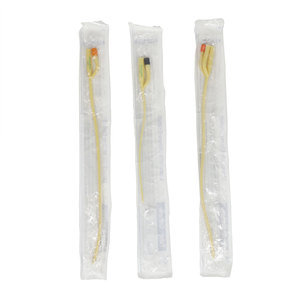
Customized Size Foley Catheter High Quality Disposable Medical 3 Way Latex Foley Catheter For Hospital Clinic
Silicone-coated 3-way latex indwelling Foley catheters featuring high-retention symmetrical balloon geometry and continuous irrigation lumen.
Get a Quote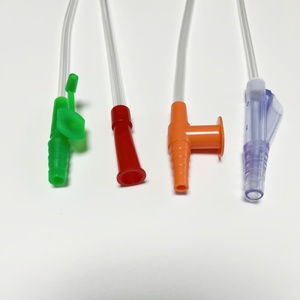
Custom Sizes Sterile Disposable PVC Suction Catheter for Adult and Infant
Airway suction catheters engineered with soft rounded open tips, lateral distal eyelets, and ergonomic thumb-control vacuum valves.
Get a Quote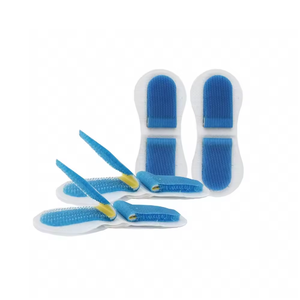
3*9cm Best-Selling Off-Factory Price Sterile Catheter Safety Device For Hospital Use
Universal needle-free catheter securement lock system designed to eliminate suture migration and minimize vascular access dislodgement.
Get a Quote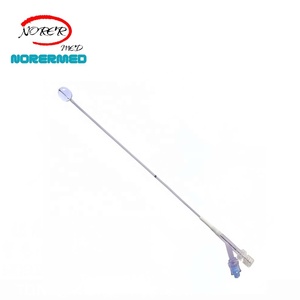
Custom Made Plastic Product Surgical Kyphoplasty Balloon Catheter for Orthopedic Spondylosis Reimplantation
High-pressure non-compliant vertebral balloon catheters built for spinal fracture reduction and bone cement space creation in orthopedic surgery.
Get a Quote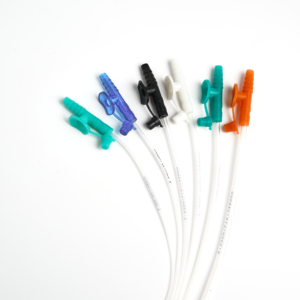
Medical 24/ 72 Hours Closed Suction Catheter System
24h/72h continuous closed tracheostomy suction catheter systems featuring tactile sleeve shields, day-sticker tracking, and flushing ports.
Get a QuoteWhy Global MedTech OEMs Trust Our Catheter Contract Manufacturing
From conceptual prototype development to automated high-volume commercial production, our vertically integrated CDMO platform mitigates supply chain risks while accelerating speed-to-market for complex catheter assemblies.
Full-Cycle CDMO Platform
End-to-end integration covering polymer compounding, multi-lumen extrusion, braid reinforcement, tip forming, insert molding, and sterile barrier packaging.
Advanced Micro-Extrusion
State-of-the-art extrusion lines handling Pebax, PTFE liners, Nitinol braiding, TPU, and PEEK for microvascular, neurovascular, and structural heart applications.
Stringent Quality Assurance
Certified under ISO 13485:2016 and compliant with US FDA 21 CFR Part 820. Complete Master File documentation, IQ/OQ/PQ validation, and ISO Class 7 cleanrooms.
Precision Engineering in Custom Catheter Assembly: Design for Manufacturability (DFM), Material Science, and Global Procurement Trends
In the rapidly expanding landscape of minimally invasive surgery (MIS), electrophysiology, structural heart intervention, and targeted drug delivery, catheter assemblies represent the nexus of advanced polymer physics, micro-precision mechanical engineering, and biocompatible material synthesis. As global OEM medical device manufacturers push the boundaries of distal tracking, kink resistance, low-profile wall thickness, and torque transferability, contract development and manufacturing organizations (CDMOs) have evolved from simple contract assemblers into strategic co-development partners.
1. Anatomical Mechanics & Structural Layering of Custom Catheter Assemblies
A high-performance interventional catheter shaft is rarely a monolithic tube; rather, it is a multi-layered composite construct tailored to meet contradictory anatomical demands: column strength for pushability versus lateral flexibility for navigating tortuous vascular anatomies without causing tissue trauma.
The inner lumen typically features a low-friction liner, most commonly Polytetrafluoroethylene (PTFE) or Fluorinated Ethylene Propylene (FEP). Etched PTFE liners with wall thicknesses down to 0.0005 inches enable smooth passage of guidewires, embolization coils, or diagnostic sensors. Surrounding the liner is the reinforcement layer—a intricate matrix of stainless steel (304V or 316L) or Nitinol wire arranged in braided mesh (16, 32, or 48 carriers) or helical coil configurations. Braiding maximizes 1:1 torque transmission and burst pressure ratings (often exceeding 1,200 PSI for power injection catheters), while coiling enhances hoop strength and kink resistance during sharp anatomical turns.
The outer jacket layer typically utilizes a durometer-stepped polymer strategy. High-durometer polymers such as Polyether block amide (Pebax 7233 or 7033) or Nylon 12 are specified for the proximal shaft to provide push strength, while low-durometer grades (Pebax 3533 or 2533, TPU, or silicone blends) are thermal-bonded at the distal end to ensure atraumatic navigation through fragile vasculature.
| Catheter Shaft Layer | Primary Material Candidates | Key Mechanical Properties | Primary Clinical Function |
|---|---|---|---|
| Inner Liner | Etched PTFE, FEP, HDPE | Coefficient of friction <0.05, chemical inertness | Guidewire trackability & fluid delivery lumen |
| Reinforcement Substructure | 304V Stainless Steel Wire, Nitinol, PEEK filament | Tensile strength >300 kpsi, shape memory, pic frequency control | 1:1 Torque response, kink resistance, burst tolerance |
| Outer Thermal Jacket | Pebax (durometers 25D to 72D), Nylon 12, TPU | Durometer flexibility grading, reflow thermal bonding | Structural integrity, distal softness, hub joint strength |
| Distal Tip & Marker Bands | Platinum-Iridium (90/10), Gold, Tungsten-loaded TPU | High X-ray attenuation, radiopacity, soft tip geometry | Real-time fluoroscopic visualization & non-traumatic tissue interface |
2. Micro-Extrusion Capabilities & Multi-Lumen Engineering
The foundation of catheter manufacturing lies in high-precision polymer extrusion. Advanced extrusion lines equipped with closed-loop laser gauge feedback systems allow CDMOs to extrude single lumen, multi-lumen (up to 12 distinct lumens), bump/tapered tubing, and co-extruded structures with inner diameters starting as small as 0.008 inches.
Multi-lumen catheters are vital for complex clinical procedures requiring concurrent therapies—such as central venous catheterization, closed suction systems, and cardiac ablation. For instance, a 3-way Foley catheter or an advanced cardiovascular catheter requires segregated conduits for balloon inflation, drug infusion, guide wire passage, and fiber-optic signal cables. Polymer rheology management, die temperature zoning, and vacuum calibration are essential parameters to eliminate wall-thickness variation and lumen collapse during lamination.
3. Global Procurement Trends in Catheter Manufacturing (2025–2030)
Strategic sourcing managers and VP of Procurement in global medical device enterprises face unprecedented supply chain dynamics. Analyzing international procurement datasets reveals five major strategic shifts shaping catheter outsourcing choices:
- Shift toward Single-Source CDMO Consolidation: OEMs are actively streamlining supplier bases, replacing fragmented component vendors with end-to-end CDMO partners capable of taking a device from initial DFM design, laser welding, and tip forming to final cleanroom assembly, pouch sealing, and sterilization coordination (EtO/Gamma).
- Surge in Demand for Smart & Sensor-Integrated Catheters: Electrophysiology (EP) mapping, intravascular ultrasound (IVUS), and structural heart interventions require catheters embedded with micro-sensors, thermocouples, and printed flexible circuits. Contract manufacturers must possess electrical assembly capabilities alongside tradicional catheter polymer processing.
- Regulatory Compliance Rigor (EU MDR & FDA 21 CFR Part 820): Increased scrutiny under the European Union Medical Device Regulation (EU MDR 2017/745) and FDA audit protocols has made supply chain transparency paramount. Suppliers must provide full material traceability, ISO 10993 biocompatibility test data, phthalate/DEHP-free compliance, and standardized Master File documentation.
- Nearshoring & Geographically Resilient Manufacturing Hubs: To counter regional geopolitical disruptions and elevated freight lead times, leading medical device exporters operate dual-region cleanroom facilities across North America, Europe, and Asia-Pacific to guarantee supply continuity.
- Miniaturization for Neurovascular Access: Navigating micro-vessels in the brain for ischemic stroke thrombectomy requires microcatheters with ultra-low wall profiles (<0.002 in per wall). This trend drives procurement focus toward suppliers with specialized Nitinol braid wire drawing and micro-flaring machinery.
4. Technological & Manufacturing Trends Shaping Next-Gen Catheters
Technological evolution in catheter contract manufacturing is centered around automation, precision joinery, and functional surface modifications:
Automated Reflow & Laser Bonding: Traditional heat-shrink sleeve reflow processes using thermal nozzles are increasingly augmented by automated IR and laser welding technologies. Carbon dioxide ($CO_2$) and femtosecond lasers deliver localized thermal energy to bond dissimilar polymers (e.g., bonding a soft Pebax tip to a stiff Nylon shaft) without thermal degradation or internal lumen flash formation.
Hydrophilic & Antimicrobial Coatings: Minimizing insertion friction and preventing Catheter-Associated Urinary Tract Infections (CAUTI) or Central Line-Associated Bloodstream Infections (CLABSI) are critical clinical goals. UV-cured hydrophilic coatings reduce friction coefficients by over 90% when wet, while silver-ion or chlorhexidine-impregnated polymer layers provide long-term antimicrobial release.
Steerable & Articulating Shaft Technologies: Structural heart and electrophysiology procedures require catheters with multi-directional deflection capabilities. OEM suppliers integrate pull-wire flat wire assemblies, laser-cut hypotubes (Nitinol or stainless steel), and dual-lumen steering channels to deliver precise 360-degree distal articulation.
5. Design for Manufacturability (DFM) Protocol & Quality Assurance
Achieving commercial manufacturing yields exceeding 98.5% demands a rigorous DFM strategy during early NPI (New Product Introduction) phases. Our engineering team conducts comprehensive finite element analysis (FEA) to simulate trackability, column buckling strength, and stress concentration points at lumen transition zones.
Every lot undergoes rigorous mechanical, analytical, and functional testing protocol:
- Tensile & Yield Strength Testing: Ensuring all bonded joints (hub-to-shaft, tip-to-shaft, balloon sleeve) withstand forces exceeding ISO 10555 standards.
- Burst & Leak Pressure Verification: 100% pneumatic or hydraulic testing to confirm pressure integrity under high-flow contrast injection.
- Particulate Inspection & Fluid Path Cleanliness: Automated optical inspection (AOI) to guarantee zero microscopic flash, debris, or particulate contamination within sterile fluid paths.
- Dimensional Profilometry: Laser micrometers and optical comparators to verify lumen concentricity, outer diameter uniformity, and marker band swage tolerances.
Frequently Asked Questions for Custom Catheter Sourcing
Find authoritative answers to common inquiries from medical device procurement managers, quality assurance specialists, and R&D design engineers regarding OEM/ODM custom catheter contract manufacturing.
What is your Minimum Order Quantity (MOQ) for custom OEM catheter assemblies?
Our MOQ structure is flexible to accommodate different stages of device maturity. For early-stage prototype engineering and clinical trial runs (NPI), we support low-volume pilot batches starting from 50 to 500 units. For commercial contract manufacturing, standard production batch sizes range from 2,500 to 50,000+ units depending on shaft complexity and cleanroom assembly requirements.
Which biocompatible polymers and materials do you process for custom catheter shafts?
We process a complete spectrum of medical-grade thermoplastics and elastomers, including Polyether block amide (Pebax® 25D–72D), Nylon 11 & 12, Polyurethane (TPU), PTFE, FEP, PEEK, Polyethylene (HDPE/LDPE), Polypropylene, and medical silicones. All materials comply with ISO 10993 biocompatibility requirements and USP Class VI standards.
What cleanroom standards and quality certifications govern your facilities?
All micro-extrusion, catheter reflow, assembly, secondary processing, and pouch sealing operations take place inside ISO Class 7 (Class 10,000) and ISO Class 8 (Class 100,000) environmentally controlled cleanrooms. Our quality management system is fully certified to ISO 13485:2016 and registered with the US FDA under 21 CFR Part 820.
Can you provide custom steering mechanisms and braided shafts for electrophysiology or cardiovascular applications?
Yes. We specialize in custom braided shafts (304V stainless steel wire, Nitinol, or high-tenacity PEEK filaments) and steerable catheter assemblies utilizing dual-pull wire lumens, ring anchors, and laser-cut Nitinol hypotubes. Our engineering team can fine-tune pic frequency, braid angle, and tension control to achieve exact torque transmission and distal articulation specs.
What is the typical turnaround time for DFM review, prototyping, and full commercial production?
Initial DFM engineering evaluation is completed within 3 to 5 business days. Rapid extrusion samples and proof-of-concept prototype shafts are typically delivered within 2 to 4 weeks. Full process validation (IQ/OQ/PQ), sterilization validation, and ramp-up to commercial volume manufacturing typically take 8 to 16 weeks depending on regulatory documentation requirements.
Do you assist with device Master Files (MAF) and international regulatory filings?
Absolutly. We maintain full material traceability and process data packages to support your 510(k), PMA, or CE mark technical documentation under EU MDR. We can submit Device Master Files (DMF) directly to the FDA to protect proprietary manufacturing IP while accelerating your regulatory approval process.