
Latest Medical Device Manufacturing Articles
Featured OEM/ODM Medical Sensor & PEEK Machined Assemblies
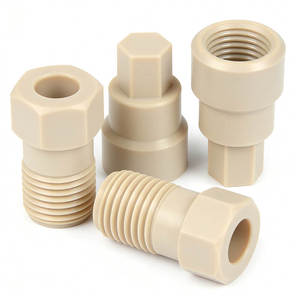
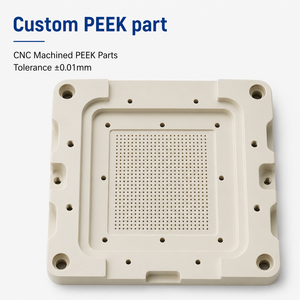
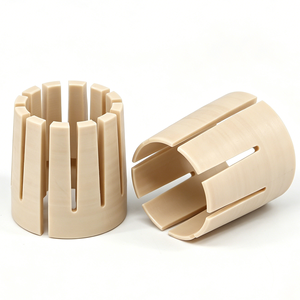
Explore our custom-engineered high-precision medical PEEK components, surgical fixtures, micro-hole arrays, and specialized sensor housings crafted for critical diagnostic and therapeutic applications.
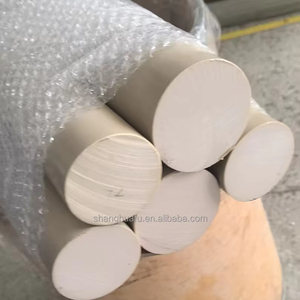
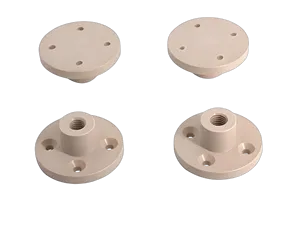
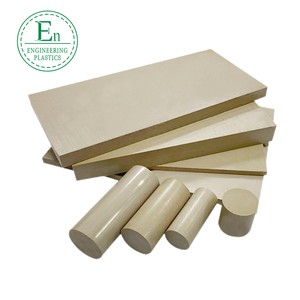
Turnkey OEM/ODM Medical Sensor Manufacturing Ecosystem
Bridging raw sensor elements and biocompatible polymer housing into monolithic, sterilizable, sub-millimeter medical assemblies.
Sub-Millimeter Micro Machining
5-axis CNC swiss milling and micro-drilling of micro-hole arrays (down to 0.05mm) in medical-grade PEEK and titanium to support multi-channel optical, acoustic, and pressure transducers.
Hermetic Packaging & Potting
Advanced USP Class VI epoxy encapsulation, laser welding, and plasma surface preparation to ensure 100% moisture isolation and dielectric integrity during repeated steam autoclaving.
Signal Integrity Validation
Integrated low-noise wiring harness assembly, flex-PCB micro-soldering, and automated 100% pin-to-pin electrical, capacitance, and thermal drift validation prior to cleanroom seal.
Executive Technical Report: The Next Generation of Medical Sensor Assembly & Contract Manufacturing
In modern clinical medicine, minimally invasive surgical (MIS) procedures, intravascular diagnostics, continuous physiological monitoring, and robotic-assisted surgical platforms demand an unprecedented level of micro-miniaturization, dielectric reliability, and biological safety. Medical sensor assemblies serve as the central nervous system of modern diagnostic instruments. However, building an OEM/ODM medical sensor sub-system involves far more than simply selecting a sensing IC or MEMS element. It requires an integrated material science approach that unites ultra-precision micro-machining, bio-compatible polymer encapsulation, custom micro-fluidic channels, and zero-defect cleanroom packaging.
As a premier OEM/ODM Medical Sensor Assemblies Supplier and Exporter, our contract development and manufacturing organization (CDMO) specializes in transforming complex electronic and mechanical specifications into clinical-grade commercial products. By combining 5-axis high-speed CNC precision milling of high-performance thermoplastic resins like Polyetheretherketone (PEEK) with automated micro-assembly in ISO Class 7 cleanrooms, we empower original equipment manufacturers (OEMs) to accelerate regulatory clearance (FDA 510(k), CE MDR) and achieve superior market positioning.
Core Industry Focus: Medical OEM sensor assemblies must resolve the triple constraint of miniaturization, biocompatibility (ISO 10993/USP Class VI), and harsh cycle sterilization resistance (Autoclave, EtO, VHP, Gamma Radiation). PEEK micro-machined housings provide the definitive engineering solution due to their mechanical rigidity, dielectric strength, and chemical inertness.
1. Material Architecture: Why Medical PEEK Dominates Sensor Enclosures
When designing enclosures, sleeves, adapters, and structural fixtures for surgical sensors, material selection determines both clinical safety and signal stability. While stainless steel and titanium remain popular for structural implants, high-performance engineering plastics—specifically unfilled PEEK (Polyetheretherketone)—have emerged as the material of choice for sensor housings for several decisive engineering reasons:
- Unrivaled Dielectric Performance: Pure virgin PEEK delivers an exceptional dielectric strength (~190 kV/mm) and a low dissipation factor. This prevents electrical interference and signal cross-talk in multi-axis pressure, temperature, and electro-surgical sensor assemblies.
- Autoclave & Steam Sterilization Longevity: PEEK maintains its dimensional stability and tensile strength across thousands of steam sterilization cycles at 134°C (273°F). Unlike polycarbonates or acrylics, it experiences zero hydrolytic degradation or environmental stress cracking.
- Low Specific Weight & Radiolucency: PEEK is radiolucent under X-ray, CT, and fluoroscopic imaging, allowing clinical staff to monitor sensor location and patient anatomy without radiopaque shadowing artifacts caused by metallic housings.
- Chemical Inertness & Bio-Safety: Meeting ISO 10993 and USP Class VI standards, pure medical-grade PEEK displays total resistance to aggressive bodily fluids, enzymatic cleaners, and disinfectant solvents.
Technical Specification Matrix: Medical Grade Polymers for Sensor Integration
Below is a comparative data matrix evaluating high-performance engineering polymers commonly specified in OEM sensor micro-machining and sub-assembly manufacturing:
| Property Parameter | Pure Unfilled PEEK | 30% Glass-Filled PEEK | Medical Grade PPSU | Ultem (PEI) 1000 |
|---|---|---|---|---|
| Tensile Strength (MPa) | 100 - 110 | 160 - 175 | 70 - 75 | 105 - 110 |
| Dielectric Strength (kV/mm) | 190 | 170 | 150 | 140 |
| Continuous Service Temp (°C) | 260°C | 300°C | 180°C | 170°C |
| Steam Autoclave Resistance | Superior (>3000 cycles) | Superior (>3000 cycles) | Excellent (>1000 cycles) | Good (~500 cycles) |
| Machinability & Micro-Drilling | Exceptional (No Burr) | Moderate (Tool Wear) | Good | Good (Prone to Crazing) |
| Biocompatibility Standard | USP Class VI / ISO 10993 | Industrial / Special Med | USP Class VI | USP Class VI |
2. Key Technology & Manufacturing Trends Shaping Medical Sensors (2025–2030)
As global healthcare transitions toward personalized medicine, continuous patient monitoring, and AI-driven robotic surgeries, procurement teams and design engineers must stay ahead of major technological shifts in sensor sub-system manufacturing. Our R&D engineering team has identified four dominant trends shaping the OEM procurement landscape:
A. Micro-Miniaturization and Multi-Sensor Co-Location
Surgical tools are growing smaller to minimize patient trauma. Endoscopic and catheter-based diagnostic tools now require multiple sensing modalities—such as simultaneous optical spectroscopy, piezo-electric pressure measurement, and thermistor temperature sensing—integrated inside a footprint smaller than 2.0 mm in diameter. Achieving this requires precision CNC micro-hole array drilling where spacing between holes is held to tighter than 15 microns without material micro-fracturing.
B. Seamless Integration of Smart IoT & Wireless Transducers
Wearable medical devices and reusable smart surgical instruments are rapidly incorporating BLE (Bluetooth Low Energy), RFID, and NFC chips inside the sensor body. Contract manufacturers must now provide direct chip encapsulation, potting with low-outgassing biocompatible epoxies, and RF-transparent housing fabrication that does not attenuate wireless signal transmission.
C. Transition from Multi-Vendor Sourcing to Single-Source CDMO Alliance
Historically, medical OEMs sourced machined plastic components from one vendor, sensing elements from another, wire harnesses from a third, and relied on a fourth for cleanroom assembly. Today, procurement directors are consolidating supply chains into single-source OEM/ODM partners capable of providing end-to-end service—from DFM (Design for Manufacturability) to prototype milling, cleanroom assembly, testing, and sterile packaging.
D. Additive Manufacturing Hybridized with Precision Swiss CNC Finishing
3D printing of medical polymers and metal powders allows for highly complex internal cooling fluid channels or ultra-lightweight lattice structures. However, additive manufacturing alone cannot achieve the surface roughness (Ra < 0.4 µm) or tight tolerances required for sensor mounting seats. The industry standard has shifted to hybrid manufacturing: 3D printing complex preforms followed by high-precision 5-axis CNC finishing.
3. Strategic Procurement & Sourcing Guidelines for OEM Decision-Makers
Procuring custom medical sensor assemblies involves navigating complex technical, regulatory, and supply chain risks. For global sourcing managers and MedTech VP of Supply Chain, evaluating potential suppliers requires a rigorous audit across key operational domains:
- Full Traceability & Raw Material Provenance: Ensure your supplier utilizes 100% pure, resin-certified virgin medical PEEK (such as Victrex PEEK or Solvay KetaSpire) with complete lot traceability, melt flow index certification, and raw material COA accompanying every shipment.
- Design for Manufacturability (DFM) Early Engagement: A true ODM partner provides early DFM feedback during prototype stage—identifying wall thickness limitations, thread engagement risks in soft/hard polymer transitions, and micro-burr generation areas before tooling lock-in.
- Cleanroom Quality Infrastructure: Sensor assembly must take place in an ISO Class 7 or Class 8 certified cleanroom to prevent airborne particulate contamination on optical lenses, micro-fluidic channels, and sensitive MEMS diaphragms.
- Risk Mitigation & Change Control (FDA 21 CFR 820): Verify that the supplier enforces strict engineering change order (ECO) protocols. No material grade, machine tool, or process parameter should be altered without formal customer notification and re-validation.
Enterprise Strengths & Global Manufacturing Footprint
We combine global manufacturing scale with boutique engineering precision to safeguard your medical device launch.
Operating under stringent quality management systems validated for medical device component manufacturing, guaranteeing 100% regulatory compliance for global markets.
State-of-the-art ISO Class 7 controlled environments equipped with automated optical inspection (AOI), micro-soldering, leak testing, and custom sterile barrier packaging.
High-speed Swiss CNC turning centers and 5-axis machining dedicated to engineering polymers (PEEK, PPSU, PEI) achieving dimensional tolerances down to ±0.002mm.
Dedicated Innovation Centers for New Product Introduction (NPI) accelerating time-to-market from initial CAD drawing to functional clinical prototypes in as little as 10 business days.
Guaranteed 100% virgin PEEK resins with zero regrind content. Full material certification, biological safety reports, and chemical compliance provided with every production lot.
Multi-site manufacturing infrastructure with robust integrated business planning (IBP), dual-sourcing options, and complete global export/import regulatory compliance.
Frequently Asked Questions (FAQ) for OEM Sourcing
Get immediate answers to common technical, quality, and commercial inquiries regarding custom medical sensor assembly procurement.
Ready to Accelerate Your Medical Sensor OEM Program?
Connect with our senior engineering team for DFM reviews, material selection guidance, or custom RFQ support. Get our complete high-precision medical component catalog today.