
Latest Medical Device Manufacturing Articles
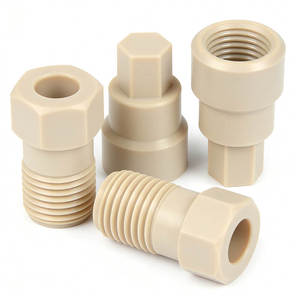
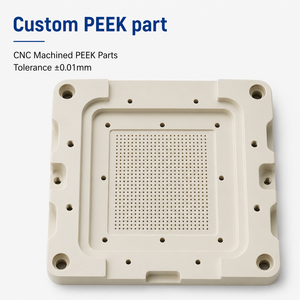
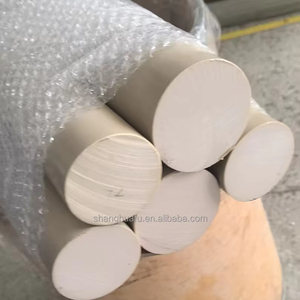
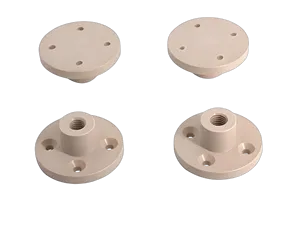
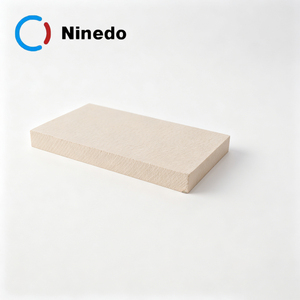
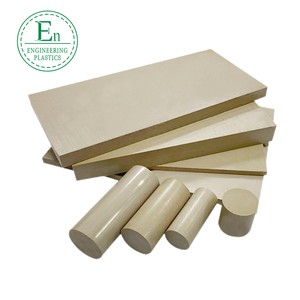
Featured Precision Medical & PEEK Micro-Machined Components
Explore our engineering-grade polymer solutions, high-precision PEEK filter adapters, micro-hole surgical fixtures, and certified raw materials designed for high-stress medical device and laser-welded structural applications.
Enterprise Capabilities: Engineering Excellence in Medical CDMO Manufacturing
In the highly regulated healthcare sector, original equipment manufacturers (OEMs) require CDMO partners capable of seamless design-to-commercialization support. Operating over 1.2 million square feet of state-of-the-art manufacturing space globally, our facilities combine certified micro-machining with high-precision fiber and Nd:YAG laser welding technology. We serve market leaders across Orthopedics, Minimally Invasive Surgery (MIS), Robotic-Assisted Surgery, Drug Delivery Systems, and Implantable Devices.
End-to-End CDMO Ecosystem & Quality Compliance
From initial design for manufacturability (DFM) analysis to full-scale cleanroom assembly (ISO Class 7 and Class 8), our operational workflow is structured to satisfy rigorous global standards, including ISO 13485:2016, AS9100D, and FDA 21 CFR Part 820 regulations. Our laser processing cells feature automated machine vision systems, live melt-pool pyrometry, and real-time beam diagnostic tools to ensure every weld line meets structural integrity and hermetic seal standards without heat degradation to sensitive internal components.
Medical Laser Welding & High-Performance Polymer Trends (2026–2030)
The global medical component manufacturing market is undergoing a seismic shift driven by the rapid growth of minimally invasive surgical devices and bio-compatible implantable sensors. As medical devices shrink in size while increasing in electronic functional density, conventional mechanical joining processes (riveting, crimping, adhesive bonding) are being systematically replaced by advanced micro-laser welding and laser transmission polymer joining techniques.
1. Femtosecond & Ultra-Short Pulse (USP) Lasers
Transitioning from millisecond and nanosecond fiber lasers to femtosecond laser sources eliminates thermal damage to sub-surface medical electronics. This "cold processing" methodology guarantees zero thermal distortion in micro-sensors, neuro-stimulators, and endo-luminal instruments.
2. Laser Transmission Welding of PEEK & Bio-Plastics
Polyetheretherketone (PEEK) is replacing titanium in spine, orthopedic, and dental implants due to its elastic modulus similarity to human cortical bone. Laser transmission welding enables direct bonding of clear-to-opaque PEEK parts without chemical solvents or adhesives, eliminating outgassing risks in long-term implantable components.
3. AI-Driven In-Line Melt Pool Monitoring
Next-generation suppliers are integrating high-speed optical coherence tomography (OCT) into laser heads. This provides real-time 3D topographical inspection of weld seams, identifying keyhole instabilities or porosity voids instantaneously to guarantee 100% inline Quality Assurance (QA).
Future Procurement Trends for Medical Laser-Welded Components
Strategic sourcing directors in top-tier MedTech firms are consolidating their supplier bases, moving away from fragmented vendors toward tier-1 integrated CDMO partners. The key factors shaping procurement strategies include:
- Risk Mitigation via Dual-Site Tooling & Redundancy: Global supply disruptions have made single-source component manufacturing high-risk. Sourcing teams prioritize vendors with dual-continent manufacturing footprints and standardized ISO 13485 quality systems.
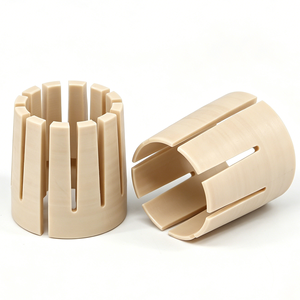
- Total Cost of Ownership (TCO) Optimization: Procuring sub-assemblies that integrate CNC precision milling (e.g., PEEK slotted bushings or micro-hole arrays) directly with laser welding and cleanroom packaging drastically cuts lead times and logistics overhead.
- Design-for-Manufacturability (DFM) Early Engagement: Involving manufacturing engineers during early prototyping phases reduces engineering change orders (ECOs) by up to 40% during commercial scale-up.
Industry Benchmarking: Top 10 Laser Welding Medical Component Criteria
To help strategic procurement managers evaluate potential manufacturing partners, the table below highlights the core technical capabilities, quality certifications, and structural parameters required for tier-1 medical component supply chains.
| Evaluation Dimension | Standard Sourcing Requirements | Advanced Tier-1 Supplier Capability | Primary Medical Applications |
|---|---|---|---|
| Laser Precision & Beam Spot | 50μm – 100μm beam diameter | <15μm micro-spot fiber laser focus | Endoscopic staplers, pacemaker cans, micro-catheters |
| Hermeticity Verification | Bubble testing / visual check | Helium leak rate < 10⁻⁹ mbar·l/s (ASTM F2391) | Implantable drug pumps, cardiac rhythm devices |
| Polymer Joining (PEEK) | Ultrasonic / Mechanical solvent bond | Laser transmission bonding (No adhesives) | Spinal cages, structural surgical housings, fluid adapters |
| Cleanroom Environment | Standard controlled environment | ISO Class 7 (Class 10,000) automated cell | Surgical delivery systems, sterile disposable instruments |
| Quality Certification | ISO 9001 standard | ISO 13485:2016, AS9100D, FDA Registered | Orthopedic, Aerospace Medical, Spinal & Cardiovascular |
Frequently Asked Questions (FAQ) for Medical Laser Welding Sourcing
? Q1: Why is laser welding preferred over TIG welding or micro-soldering for surgical components?
Laser welding delivers a extremely localized heat input, resulting in an exceptionally narrow Heat-Affected Zone (HAZ). This prevents thermal distortion of micro-machined features (such as PEEK micro-hole arrays or delicate internal electronics) and creates clean, non-porous welds that eliminate bacterial harborage sites essential for surgical instrument sterilization protocols.
? Q2: How do you prevent degradation when laser welding PEEK and other high-performance polymers?
Thermal degradation in PEEK is avoided by using specialized laser wavelengths (typically 980nm to 1070nm) combined with precise power modulation. Laser transmission welding involves passing the beam through a laser-transparent upper polymer layer to heat an absorbing lower layer. Controlled clamping pressure and real-time infrared temperature feedback guarantee a molecular bond without charring or polymer chain degradation.
? Q3: What documentation is mandatory for custom laser-welded medical implants?
A comprehensive regulatory documentation package must include Device History Records (DHR), Material Certificates of Conformance (CoC) establishing raw material traceability (e.g., medical-grade PEEK per ASTM F2026), Laser Weld IQ/OQ/PQ process validation protocols, Metallurgical Grain Boundary/HAZ Inspection reports, and Non-Destructive Testing (NDT) results such as X-ray computed tomography or Helium leak rates.
? Q4: What material combinations can be joined using advanced medical laser micro-welding?
Common material pairings include Titanium-to-Titanium (Grades 2, 5, 23), Stainless Steel 316LVM to Nitinol, Platinum-Iridium to Stainless Steel for sensor leads, as well as dissimilar polymer welding such as PEEK-to-PEEK and PFA/PTFE sub-assemblies. Specialty optical coatings and beam shaping optics allow for reliable joining of reflective metals like gold and copper in micro-electronics.
? Q5: How does your quality control handle micro-porosity and joint fatigue strength?
We employ 100% automated optical inspection (AOI), micro-CT scan analysis during first-article inspection (FAI), dynamic tensile fatigue testing, and destructive metallurgical cross-sectioning. By maintaining strict shielding gas purity (Argon 99.999%) during the welding process, surface oxidation and interstitial embrittlement are eliminated.
? Q6: Can custom PEEK CNC machined fixtures withstand repeated autoclave sterilization?
Yes. Unfilled and filled medical-grade PEEK (Polyetheretherketone) exhibits exceptional hydrolytic stability. It retains its mechanical strength, dimensional tolerances, and structural integrity across thousands of steam autoclave sterilization cycles at 134°C (273°F), as well as exposure to harsh chemical disinfectants and gamma radiation.
? Q7: How do early-stage engineering teams transition from low-volume prototypes to commercial mass production?
By utilizing an integrated CDMO platform, initial prototypes are produced using the exact same multi-axis CNC machines and robotic laser cells planned for full-scale production. This avoids process requalification delays during phase-gate transitions, allowing rapid ramp-up from initial pilot batches to hundreds of thousands of units per year under validated manufacturing parameters.
? Q8: How do I request custom quotation and engineering DFM review for proprietary designs?
Simply click the "Get Catalog" CTA link to submit your STEP/IGES CAD files and drawing specifications. Our application engineering team will conduct a comprehensive DFM audit, evaluating laser access joint geometry, thermal sinks, micro-machining tolerances, and material callouts under strict Non-Disclosure Agreements (NDA).