
Latest Medical Device Manufacturing Articles
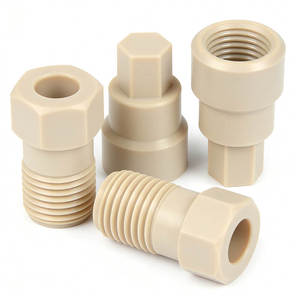
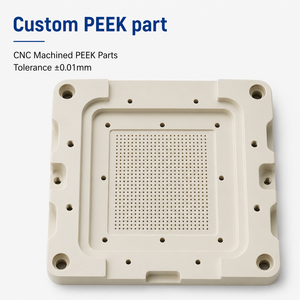
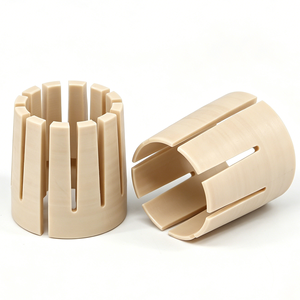
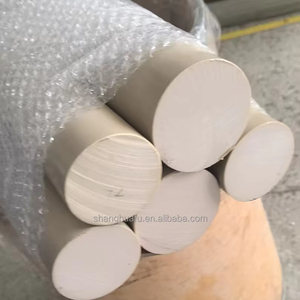
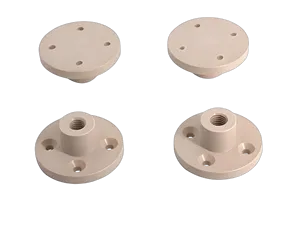
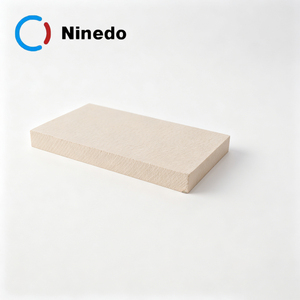
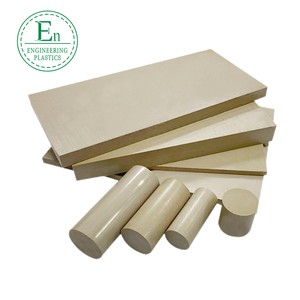
Featured High-Precision PEEK & Active Implantable Components
Engineered to sub-micron tolerances utilizing 100% pure biocompatible PEEK resins. ISO 13485 certified micro-machining and cleanroom processing for surgical assemblies and implantable device architectures.
Architecting Next-Generation Active Implantable Medical Devices (AIMD): The Role of China's CDMO Ecosystem
Active Implantable Medical Devices (AIMDs)—including neurostimulators, cardiac pacemakers, implantable cardioverter-defibrillators (ICDs), active drug delivery pumps, and cochlear implants—represent the pinnacle of biomedical engineering. Unlike passive implants, AIMDs rely on electrical energy or micro-fluidic power sources to interact continuously with human tissue. Consequently, the structural encapsulation, feedthrough headers, micro-channel arrays, and dielectric housings demand non-negotiable biocompatibility, mechanical endurance, and biostability.
Over the past decade, China has evolved from a component component manufacturer into a sophisticated Contract Development and Manufacturing Organization (CDMO) hub for global MedTech original equipment manufacturers (OEMs). By integrating ultra-precision Swiss CNC machining, high-purity Polyetheretherketone (PEEK / Implantation-grade PEEK-OPTIMA®), cleanroom sub-assembly, and comprehensive regulatory Master Files, premier Chinese manufacturers deliver critical cost-to-performance advantages while strictly adhering to international regulatory benchmarks set by the US FDA, EU MDR (2017/745), and NMPA.
Why Implant-Grade PEEK Dominates Active Implantable Architecture
Polyetheretherketone (PEEK) is a semi-crystalline thermoplastic exhibiting exceptional thermal stability, chemical inertness, and biological neutrality. In active implantable electronics, PEEK serves as the primary structural polymer for insulating electronic feedthroughs, retaining battery housings, and routing micro-electrode arrays. Key material highlights include:
- Biocompatibility & Tissue Integration: Fully compliant with ISO 10993-1 and USP Class VI systemic toxicity standards. PEEK induces zero cytotoxic response, cell lysis, or chronic inflammatory reactions upon long-term (>30 days) subcutaneous or intrathecal implantation.
- Radiolucency & MRI Compatibility: Unlike metallic enclosures (Titanium Gr. 5 or Stainless Steel 316LVM), PEEK is fully radiolucent under X-ray, CT, and MRI modalities. It produces zero metallic artifacts, permitting precise post-operative artifact-free imaging of surrounding neural or cardiac tissue.
- Dielectric Strength & Electrical Insulation: PEEK maintains high volume resistivity (>1016 Ω·cm) and dielectric breakdown strength, preventing unintended electrical leakage between high-density neurostimulation channels.
- Sterilization Resilience: Withstands repeated cycles of steam autoclaving (260°C continuous heat resistance), Ethylene Oxide (EtO), Gamma Radiation (up to 75 kGy), and Vaporized Hydrogen Peroxide (VHP) without polymer chain degradation or micro-cracking.
Core Manufacturing Capabilities & Enterprise Advantages
As a leading Chinese precision supplier for global medical device OEMs, our manufacturing infrastructure combines multi-axis CNC Swiss turning, high-speed micro-milling, and rigorous quality assurance protocols validated under ISO 13485 and AS9100D systems.
Micro-Hole Array Precision
Ultra-precision CNC drilling capable of producing micro-channel arrays with hole diameters down to 0.05 mm and positional tolerances within ±0.002 mm for electrode guiding fixtures.
100% Virgin Pure Materials
Strict material segregation. We utilize only 100% pure raw PEEK resins (unfilled, glass-filled, or carbon-fiber-reinforced) with full lot traceability, material test reports (MTR), and FDA Master Files.
ISO Class 7 Cleanroom
Controlled environmental manufacturing, ultrasonic cleaning with deionized water systems, and pouch sealing inside ISO Class 7 cleanrooms to minimize bioburden and particulate contamination.
DFM & Rapid Prototyping
In-house Design for Manufacturability (DFM) engineering team assisting global OEMs with toolpath optimization, strain relief integration, and prototype turnarounds in under 5 business days.
Hermetic & Structural Integrity
Engineering specialized slotted PEEK bushings, high-pressure filter adapters, and custom electrical insulator bodies that maintain sealing integrity under physiological stress.
Full Traceability & Compliance
Complete documentation packages including CMM dimensional inspection reports, CoC (Certificate of Conformance), heat lot numbers, and UDI barcode marking integration.
Material Performance Matrix for Implantable & Surgical Components
Selecting the optimal polymer or alloy for active implantable housing sub-components requires balancing density, tensile strength, dielectric constant, and biocompatibility. The table below outlines key engineering metrics comparing Medical-Grade PEEK with standard implant materials.
| Property Parameter | Medical-Grade PEEK (Unfilled) | 30% Carbon Fiber PEEK | Titanium Grade 5 (Ti-6Al-4V) | Medical PTFE |
|---|---|---|---|---|
| Density (g/cm³) | 1.30 | 1.41 | 4.43 | 2.15 |
| Tensile Strength (MPa) | 95 - 105 | 210 - 230 | 860 - 930 | 25 - 40 |
| Flexural Modulus (GPa) | 3.7 (Matches Bone) | 18.0 | 114.0 | 0.5 |
| Dielectric Strength (kV/mm) | 20 - 24 (Excellent Insulator) | Conductive / Semi-conductive | N/A (Conductor) | 60 - 80 |
| Radiolucency (X-ray / CT) | Transparent (No Artifacts) | Transparent | Opaque (Severe Artifacts) | Transparent |
| Continuous Service Temp | 260 °C | 260 °C | 400 °C | 260 °C |
| Biocompatibility Standard | ISO 10993 / USP Class VI | ISO 10993 / USP Class VI | ISO 10993 / ASTM F136 | ISO 10993 / USP Class VI |
Future Procurement & Development Trends in Active Implantable Devices (2025–2035)
As the global market for active implantable medical devices accelerates toward a projected CAGR of 8.5%, medical device procurement executives and lead design engineers face evolving technology vectors and regulatory landscapes. Strategic procurement in China is shifting from low-cost sourcing toward high-value co-development and technological integration.
Trend 1: Transition toward Wireless Energy Transfer & Transcutaneous RF Transparency
Next-generation neurostimulators and total artificial heart pumps are discarding transcutaneous wires in favor of resonant inductive wireless charging coils. Metallic housings attenuate high-frequency RF signals and induce parasitic eddy current heating. Consequently, OEMs are rapidly transitioning to high-precision PEEK sub-assemblies and ceramic-to-PEEK composite headers that offer seamless electromagnetic wave transmission while protecting internal micro-batteries.
Trend 2: Ultra-Miniaturization & High-Density Micro-Contact Arrays
Deep Brain Stimulation (DBS) and vagus nerve stimulation (VNS) systems demand micro-electrode headers with contact pitch distances below 0.2 mm. Precision Swiss CNC machining of custom PEEK micro-fixtures (as highlighted in our product portfolio) enables sub-micron geometric feature retention without micro-burrs, guaranteeing absolute electrical isolation across multi-channel lead connection ports.
Trend 3: Hybrid Additive Manufacturing Combined with Precision CNC Milling
While 3D printing of PEEK polymers allows for patient-specific anatomical matching, 3D printed surfaces often exhibit porosity and anisotropic mechanical properties. The emerging procurement standard utilizes 3D printed PEEK blanks subjected to multi-axis CNC secondary micro-milling. This hybrid approach ensures critical sealing surfaces achieve surface roughness values of $R_a < 0.2\ \mu\text{m}$, essential for long-term hermetic integrity.
Trend 4: Regulatory Harmonization & Dual-Sourcing Supply Chain Resilience
Global MedTech leaders are actively establishing redundant, high-reliability supply chain networks. Chinese CDMO partners who maintain active FDA Device Master Files (DMF), complete material batch traceability, and audited ISO 13485 quality management systems provide crucial supply chain security, mitigating geopolitical disruptions while delivering substantial cost savings.
Procurement & Engineering FAQ
Direct engineering answers to common procurement, compliance, and micro-machining queries regarding PEEK active implantable components.
Accelerate Your Active Implantable Medical Device Development
Partner with China's premier ISO 13485 certified micro-machining specialist. Request custom DFM analysis, material validation packages, or a competitive quote today.