
Latest Medical Device Manufacturing Articles
Featured Medical Electronics & High-Precision PEEK Structural Components
Explore OEM/ODM custom-engineered components manufactured under strict ISO 13485 standards. Built for high-frequency biosensor housing, wearable surgical assemblies, and sub-millimeter surgical fixtures.
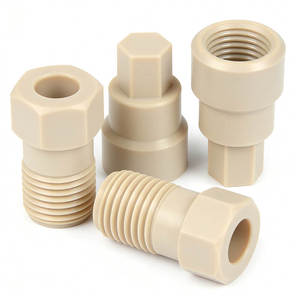
Custom High-Precision Medical PEEK Filter Adapter Component Made Plastic Parts CNC Machining Service
Tolerance: ±0.005mm | 5-Axis CNC
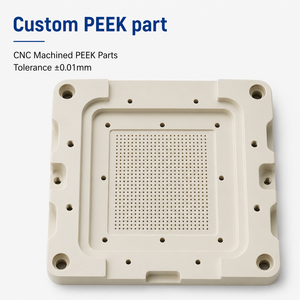
Custom CNC Machined PEEK Medical Fixture With Precision Micro-hole Array For Surgical Component Assembly
Application: Surgical Robotics & Biosensors
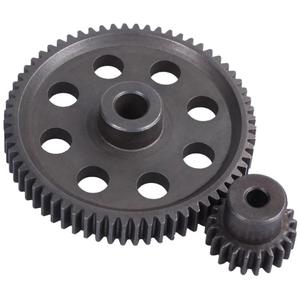
High Precision PEEK CNC Machined Parts AS9100D Certified Engineering Plastic Milling Components
Process: Ultra-Precision Plastic Milling
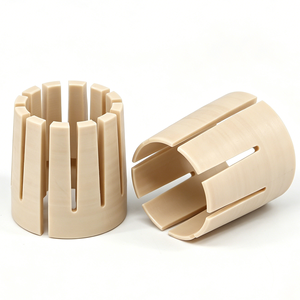
Customized Slotted PEEK Bushing Machining CNC Plastic Part High Performance PEEK Components
Temp Rating: Continuous 260°C Resistance
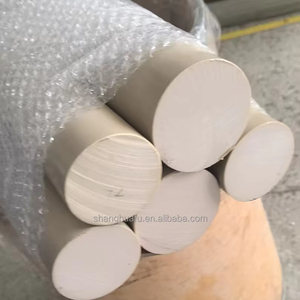
High-Performance Pure PEEK Unfilled Rod Bar Custom Diameter 6-250mm 260C Heat Resistant
Compliance: USP Class VI, ISO 10993
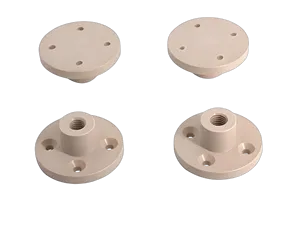
Customization Electronic Electrical Structural Parts Polymer PEEK Custom-shaped Parts
Customization: Complex Geometry Milling
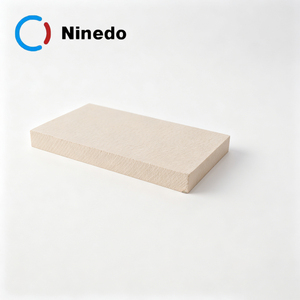
Custom Size High Temperature Resistant PEEK Sheet Polyetheretherketone Board for Medical Aerospace
Property: Biocompatible & Chemical Resistant
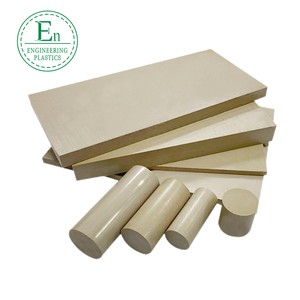
ISO 9001 Certified Precision 100% Pure Raw Materials Heat Resistance Peek Medical Bar Plate
Quality: Zero Recycled Content Polymer
Executive Technical Brief: The Strategic Evolution of Wearable Medical Electronics
The global healthcare landscape is undergoing a systemic paradigm shift from episodic, hospital-bound treatments to continuous, real-time physiological monitoring. At the apex of this revolution are continuous glucose monitors (CGMs), wearable electrocardiogram (ECG) patches, smart insulin delivery pumps, and robotic-assisted surgical accessories. According to recent MedTech market intelligence, the global market for wearable medical devices is projected to surpass $120 Billion by 2030, accelerating at a compound annual growth rate (CAGR) of over 17.8%.
However, miniaturizing diagnostic electronics while upholding rigorous clinical-grade accuracy introduces formidable engineering hurdles. Modern wearable medical devices must maintain sub-millimeter form factors, IP68 ingress protection against body fluids, complete electromagnetic interference (EMI) insulation, and absolute biological compatibility under extended cutaneous or invasive contact. Meeting these multi-physics challenges requires moving beyond conventional consumer plastics toward ultra-high-performance polymers such as Polyetheretherketone (PEEK), supported by advanced Contract Development and Manufacturing Organization (CDMO) infrastructure.
Key Mechanical Advantages of Medical-Grade PEEK
Unfilled and modified PEEK polymers possess an extraordinary yield strength-to-weight ratio, exceptional chemical inertia against aggressive sterilizing agents (autoclaving, Ethylene Oxide, Gamma irradiation), and a dielectric constant that prevents electrical crosstalk between sensitive biosensor arrays and internal power modules.
Micro-Machining Precision Requirements
Integrating optical sensors, electrodes, and microfluidic channels within a wearable housing demands micro-hole arrays with diameters down to 50 microns. Achieving zero micro-burr surfaces and strict dimensional stability requires custom 5-axis CNC high-speed milling spindles operating in climate-controlled environments.
Future Procurement & Sourcing Trends in Wearable Medical Electronics (2026–2030)
As global MedTech OEMs balance cost optimization, regulatory scrutiny, and supply chain fragility, purchasing directors are fundamentally restructuring their vendor qualification criteria.
1. Vertical CDMO Integration
Global buyers are aggressively phasing out fragmented multi-vendor supply chains. Instead of sourcing raw PEEK rods from resin manufacturers, machining components at tier-2 machine shops, and packaging in separate cleanrooms, OEMs now mandate turnkey CDMO partners capable of managing raw material certification, precision CNC milling, ultrasonic cleaning, micro-assembly, and sterile pouching under one roof.
2. Stringent Resin Traceability & Regulatory Auditing
With the European Union Medical Device Regulation (EU MDR 2017/745) and US FDA 21 CFR Part 820 enforcement tightening, procurement teams require 100% virgin raw material certs. Leading Chinese suppliers are adopting blockchain-backed material passports, guaranteeing zero regrind content, resin lot segregation, and continuous biocompatibility testing compliance (ISO 10993-5 / ISO 10993-10).
3. Rapid DFM & Accelerated Prototyping
Time-to-market is the primary determinant of commercial success for next-gen wearable diagnostics. Procurement managers favor suppliers equipped with advanced Design for Manufacturability (DFM) simulation software, rapid 5-axis CNC plastic milling, and additive manufacturing (3D printed PEEK/carbon composite fixtures) capable of delivering clinical-grade prototypes within 5 to 7 business days.
| Procurement Criteria | Legacy Supplier Model | Modern Chinese Precision CDMO Standard | Impact on OEM Supply Chain |
|---|---|---|---|
| Raw Material Origin | Uncertified industrial plastics | 100% Medical-Grade Virgin PEEK (USP Class VI / ISO 10993) | Eliminates bio-incompatibility & regulatory rejection risk |
| Machining Capability | 3-Axis Standard CNC Milling | 5-Axis Swiss Micro-Turning & High-Speed PEEK Milling (±0.003mm) | Enables micro-scale biosensor & wearable component integration |
| Quality Infrastructure | Basic ISO 9001 Inspection | ISO 13485 + AS9100D Dual Certification + CMM Optical Scanning | Zero-defect delivery for critical surgical & wearable devices |
| Assembly Environment | Ambient Shop Floor | ISO Class 7 & Class 8 Certified Cleanroom Packaging Facilities | Prevents particulate contamination prior to terminal sterilization |
Engineering & Manufacturing Development Trends in Medical PEEK Components
Discover how advanced machining methodologies, surface modification tech, and high-performance engineering thermoplastics are shaping the future of wearable medical hardware.
Advanced Micro-Hole Array Milling & Burr Elimination
Precision surgical component assembly and wearable sensing patches often rely on micro-machined fixtures featuring arrays of hundreds of micro-holes with diameters as small as 0.15mm. Machining soft or semi-rigid thermoplastics like PEEK frequently causes micro-burrs that obstruct microfluidic flow or damage sensitive electronic flex circuits.
To overcome this, leading Chinese factories utilize cryogenic CNC machining (using liquid carbon dioxide or nitrogen coolant) alongside high-rpm diamond-coated micro-cutters. This technique keeps the PEEK substrate below its glass transition temperature during milling, yielding pristine, mirror-finish micro-holes without thermal deformation or burr formation.
Conductive & Carbon-Filled PEEK for Smart Wearables
While pure unfilled PEEK provides outstanding electrical insulation, modern wearable electronics requiring integrated structural shielding or grounding benefit from engineered PEEK variants. Compounding PEEK with conductive carbon nanotubes (CNTs) or stainless steel micro-fibers allows manufacturers to produce structural frames that offer EMI shielding while retaining high tensile strength.
Furthermore, for wearable components subject to sliding friction—such as internal gears in automatic insulin delivery devices—custom-formulated PEEK components filled with PTFE and graphite deliver ultra-low friction coefficients without requiring external liquid lubricants that could contaminate electronics.
Frequently Asked Questions (FAQ) for Global Medical Device Buyers
Direct, authoritative answers addressing technical specifications, regulatory compliance, quality control, and supply chain management when sourcing PEEK medical parts from China.
Q1 How do Chinese medical PEEK manufacturers guarantee material biocompatibility for wearable and invasive components?
Reputable medical PEEK suppliers in China source certified raw resins exclusively from globally accredited polymer manufacturers (e.g., Victrex PEEK, Solvay Zeniva, Evonik Vestakeep). Each batch of material is delivered with full Material Safety Data Sheets (MSDS) and certificates of analysis proving compliance with ISO 10993 (systemic toxicity, cytotoxicity, sensitization) and USP Class VI testing. Furthermore, specialized medical machine shops maintain dedicated, lubricant-free CNC equipment specifically reserved for medical plastics to eliminate cross-contamination with industrial oils.
Q2 What dimensional tolerances are achievable for custom CNC machined PEEK medical parts?
Utilizing high-precision 5-axis CNC machining centers (such as DMG MORI or Mikron) operating in temperature-controlled facilities (20°C ± 0.5°C), certified factories can consistently achieve linear machining tolerances down to ±0.005mm (±5 microns) and micro-feature tolerances down to ±0.003mm. Concentricity, flatness, and true position are verified using automated Coordinate Measuring Machines (CMM) and non-contact optical profiling systems.
Q3 Can PEEK structural parts be sanitized using standard hospital sterilization methods?
Yes. PEEK (Polyetheretherketone) is one of the most chemically inert and thermally stable engineering thermoplastics available. It withstands over 3,000 steam autoclaving cycles at 134°C without degradation of mechanical strength or dimensional change. It is also fully compatible with Ethylene Oxide (EtO), Gamma radiation (up to 1,000 kGy), and Hydrogen Peroxide Plasma sterilization, making it ideal for reusable wearable monitor chassis, surgical instrument handles, and filter adapters.
Q4 What quality documentation accompanies each shipment of medical plastic parts?
Standard medical-grade shipping documentation packages include:
• Certificate of Conformance (CoC) & Material Test Reports (MTR)
• Full Dimensional CMM Inspection Reports (including First Article Inspection / FAI per AS9102)
• Raw Material Lot Traceability Certificates
• ISO 13485 / ISO 9001 Quality Inspection Sign-off
• Cleanroom Washing & Particulate Count Certification (if cleanroom packaged).
Q5 How does your manufacturing facility prevent stress cracking during micro-machining of PEEK rods and plates?
Extruded PEEK rods and sheets contain residual internal stresses from the cooling process. Prior to micro-machining, raw PEEK stock undergoes a proprietary multi-stage thermal annealing cycle in nitrogen-purged ovens. For complex geometry parts with heavy material removal, intermediate stress-relief annealing is performed between rough milling and final finish pass. This process eliminates micro-cracking, prevents post-machining warping, and guarantees long-term dimensional stability in wearable environments.
Q6 What is the typical lead time for DFM prototyping versus high-volume commercial production?
For initial engineering prototypes and DFM verification, lead times typically range from 5 to 9 business days from CAD approval. For full-scale production runs involving tens of thousands of components, automated continuous lights-out CNC machining enables delivery within 2 to 4 weeks, backed by flexible stocking agreements and safety buffer inventory management.
Why Global MedTech OEMs Select Our Precision Manufacturing Infrastructure
Combining over a century of manufacturing heritage with state-of-the-art Chinese precision production bases, we offer an unrivaled CDMO ecosystem for medical device leaders worldwide.
1.2 Million Sq. Ft. Operational Footprint
Our expansive manufacturing centers feature hundreds of 5-axis CNC milling centers, Swiss-type high-precision automatic lathes, and dedicated polymer machining bays operating under strict temperature and humidity controls.
Dual ISO 13485 & AS9100D Certification
Quality is built into every step of our process. Our Quality Management System (QMS) is fully accredited to ISO 13485:2016 for medical devices and AS9100D for high-reliability aerospace applications, ensuring flawless execution.
ISO Class 7 Controlled Assembly
To safeguard sensitive medical wearable enclosures against bioburden and particulate contamination, we operate state-of-the-art ISO Class 7 cleanrooms for post-machining ultrasonic washing, sub-assembly, and sterile barrier pouching.
Partner with China's Premier Wearable Medical Components Manufacturer
Whether you are engineering a continuous biosensor, a micro-hole surgical fixture, or high-performance PEEK structural hardware, our CDMO team is ready to accelerate your project from design to commercialization.
Contact Us