
Latest Medical Device Manufacturing Articles
Featured Medical Mesh Products & Sterilization Equipment
Explore top-tier surgical mesh systems, extracellular matrix scaffolds, customized medical drapes, and high-precision stainless steel sterilization trays manufactured under ISO 13485 and FDA-registered quality management protocols.
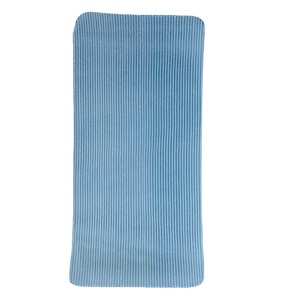
Hospital Composite Polypropylene Surgical Mesh for Hernia Repair
Lightweight monofilament composite mesh engineered with optimized porosity for superior tissue integration, minimal visceral adhesion, and high tensile burst strength in abdominal wall repairs.
Inquire Now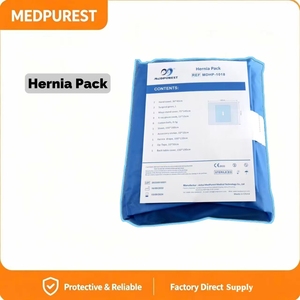
Disposable Hernia Surgical Pack Mesh Customized Sterile Drape for Hospital Blue Class II
Complete OEM Class II medical sterile surgery pack featuring biocompatible hernia mesh, liquid-impermeable drapes, and procedural accessories compliant with ISO 11607 cleanroom standards.
Inquire Now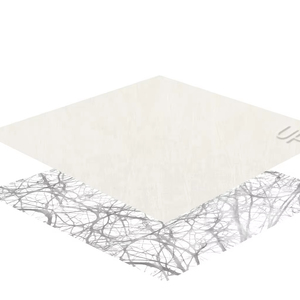
New Technology SIS Biomaterials Collagen Materials for Soft Tissue Regeneration
Advanced Small Intestinal Submucosa (SIS) bio-resorbable extracellular matrix providing an acellular collagen scaffold that accelerates endogenous cell recruitment and vascularized tissue repair.
Inquire Now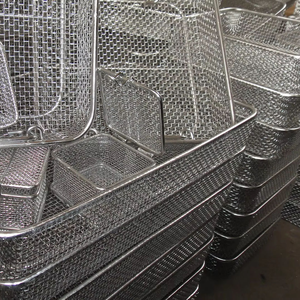
Stainless Steel Operation Sterilization Mesh Basket Perforated Baskets Tray
Heavy-duty perforated 304 stainless steel tray designed for steam autoclave, ethylene oxide (EtO), and plasma sterilization of delicate surgical and dental instrument sets.
Inquire Now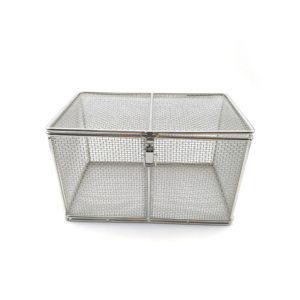
Surgical Stainless Steel Woven Wire Mesh Sterilization Basket Autoclave Tray
Precision wire-woven stainless steel basket with smooth top-frame rims and burr-free micro-welds, optimized for maximum sterilant penetration and ergonomic instrument handling.
Inquire Now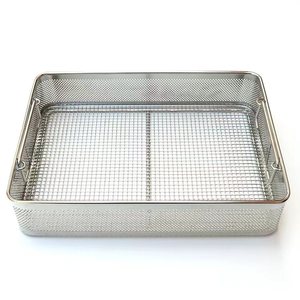
Factory Direct Supply High Quality Surgical Instrument Mesh Tray
OEM-customizable surgical instrument containment tray manufactured with electro-polished medical-grade alloys, resisting corrosion across repeated automated washer-disinfector cycles.
Inquire Now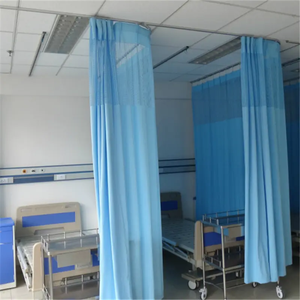
Hospital Fabric Anti Bacterial Inherent Flame Retardant Medical Cubicle Mesh Curtain
Inherent flame-retardant and antimicrobial knitted polyester mesh fabric for hospital ward partitions, engineered for stringent healthcare hygiene and wash durability.
Inquire Now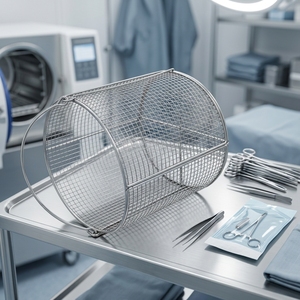
304 Stainless Steel Perforated Mesh Basket for Lab/Operating Room Corrosion-Resistant
Corrosion-resistant perforated metal laboratory and OR basket featuring customizable drop-down handles, burr-free laser-cut openings, and structural stacking ridges.
Inquire NowExecutive Overview: Paradigm Shifts in Biomaterial Surgical Mesh Manufacturing
The global market for surgical implants and soft tissue repair scaffolds is experiencing an unprecedented structural transformation. Driven by aging demographics, increasing laparoscopic hernia repair procedures, and higher clinical expectations for post-operative comfort, leading original equipment manufacturers (OEMs) and hospital procurement networks are re-evaluating their biomaterial sourcing strategies. Modern soft tissue reconstruction demands far more than basic structural reinforcement; it requires biocompatible matrices that actively modulate wound healing, minimize chronic pain, and reduce long-term foreign body reaction (FBR).
Choosing the right biomaterial surgical mesh manufacturer is a critical strategic decision for healthcare systems and MedTech brands. A high-performing surgical mesh must strike a delicate balance between mechanical burst strength, pore architecture, degradation kinetics, and handling characteristics. Furthermore, stringent global regulatory frameworks—such as the European Union’s Medical Device Regulation (EU MDR 2017/745) and US FDA 510(k)/PMA pathways—demand that CDMO (Contract Development and Manufacturing Organization) partners demonstrate comprehensive risk management, ISO 10993 biological evaluation, and full lot-level traceability from raw polymer synthesis to sterilized cleanroom packaging.
Polymer Chemistry
Ultra-pure non-absorbable polypropylene (PP), polyglycolic acid (PGA), poly-L-lactic acid (PLLA), and bio-absorbable extracellular matrices engineered for micro-porous compliance.
Regenerative SIS Biomaterials
Porcine Small Intestinal Submucosa (SIS) collagen scaffolds retaining native growth factors (FGF-2, TGF-β) to drive rapid host tissue remodelling and tissue regeneration.
Sterilization Integrity
Integrated ISO Class 7 cleanroom packaging and electro-polished 304/316L stainless steel autoclave containment systems for zero-defect hospital workflows.
Technical Biomaterial Classification: Synthetic vs. Biological vs. Composite Meshes
To make informed procurement decisions, supply chain executives and biomedical engineers must categorize surgical meshes based on their chemical composition, structural geometry, and biological interaction profile. The search for the ideal biomaterial mesh has evolved from heavy-weight, small-pore synthetic sheets to sophisticated, macro-porous composite matrices and naturally derived acellular biological scaffolds.
| Biomaterial Category | Material Composition | Pore Size & Weight | Biological Response | Primary Clinical Application |
|---|---|---|---|---|
| Heavyweight Synthetic | Monofilament Polypropylene (PP) | Small (< 1.0 mm), ~90–100 g/m² | High scar tissue formation, rigid bridging | Open Lichtenstein inguinal hernia repair |
| Lightweight Composite | PP + Absorbable PGA/Monocryl | Macroporous (> 1.5 mm), ~35–50 g/m² | Flexible integration, reduced foreign body reaction | Laparoscopic TAPP/TEP, ventral hernia repair |
| Biological Matrix (SIS) | Acellular Porcine Submucosa (Collagen I/III) | Native Extracellular Matrix (ECM) | Complete tissue remodelling, bio-resorption | Contaminated fields, maxillofacial, pelvic floor |
| 3D Pre-shaped / Anatomical | Thermo-formed Knitted Polypropylene | Medium-to-Large Porosity | Conformable fit, reduced fixation requirement | Deep inguinal ring reinforcement, groin repair |
1. Non-Absorbable Synthetic Polymer Meshes
Synthetic meshes manufactured from extruded polypropylene (PP) or polytetrafluoroethylene (ePTFE) remain the workhorse of abdominal wall reconstruction. Modern engineering focuses heavily on knitting pattern optimization. Monofilament meshes are preferred over multifilament varieties because multifilament strands harbor micro-interstices (< 10 µm) capable of trapping bacteria while excluding host macrophages (~15–20 µm), thereby increasing infection risks. By expanding effective pore sizes beyond 75 µm—and ideally above 1.5 mm—manufacturers allow rapid infiltration of fibrovascular tissue, converting rigid mesh sheets into compliant tissue-polymer composites.
2. Biological & Regenerative Extracellular Matrices (SIS)
Biological meshes derived from porcine Small Intestinal Submucosa (SIS) or bovine pericardium represent a paradigm shift in regenerative medicine. Unlike synthetic polymers that elicit a permanent encapsulated foreign body reaction, SIS biomaterials act as structural signal transducers. Through standardized decellularization processes, cellular antigens (such as α-gal epitopes) are extracted, leaving behind an intact extracellular matrix rich in Type I and Type III collagen, glycosaminoglycans (GAGs), and bound growth factors. Upon implantation, host macrophages break down the matrix, releasing chemotactic degradation products that recruit endogenous stem cells and endothelial cells, gradually replacing the scaffold with organized, vascularized native tissue.
Future Procurement Trends in Surgical Mesh & CDMO Manufacturing (2025–2030)
Procurement officers and strategic sourcing directors must anticipate technological advancements and regulatory developments when selecting manufacturing partners. Over the next decade, three dominant trends will define the biomaterial surgical mesh ecosystem:
1. Transition toward Bio-Resorbable & Antimicrobial Functionalized Meshes
The clinical community is rapidly moving away from permanent synthetic implants for low-risk hernia repairs. Sourcing demands are shifting toward fully resorbable synthetic biopolymers (such as Poly-4-hydroxybutyrate / P4HB) and hybrid meshes coated with slow-release broad-spectrum antimicrobial agents (e.g., silver nanoparticles or chlorhexidine). These bio-functional coatings drastically reduce surgical site infections (SSIs) without compromising structural burst strength during the critical 6-to-12-week postoperative healing window.
2. Integration of Additive Manufacturing & Patient-Specific Implants
With advancements in 3D bioprinting and medical-grade additive manufacturing, leading CDMO partners are enabling customized, patient-matched surgical implants. Utilizing high-resolution CT and MRI scan data, manufacturers can produce pre-shaped 3D bio-resorbable meshes tailored to complex maxillofacial trauma, chest wall reconstructions, and large pelvic defects. This custom-fit approach significantly reduces operative time, eliminates manual intraoperative trimming, and lowers complication rates.
3. Complete Supply Chain Resiliency & CDMO Consolidation
Global supply chain disruptions have highlighted the risk of multi-tiered supplier reliance. MedTech OEMs are increasingly consolidating vendor bases in favor of end-to-end CDMO partners capable of managing raw polymer synthesis, high-precision warp knitting, laser cutting, ISO Class 7 cleanroom pouch assembly, and sterilizer tray tooling under one roof. Integrated CDMO support guarantees rigorous quality control, reduces lead times, and ensures seamless compliance with global regulatory audits.
Why Top Global Healthcare Brands Partner with Paragon Medical CDMO
As a global premier Contract Development and Manufacturing Organization (CDMO), Paragon Medical provides end-to-end engineering, precision component manufacturing, sterile packaging, and custom surgical tray containment solutions for top-tier OEMs worldwide. With over a century of deep-rooted manufacturing heritage and 1.2 million square feet of operational footprint, our facilities stand at the forefront of medical technology advancement.
End-to-End Co-Development
Our specialized Innovation Centers collaborate directly with OEM design teams to transition raw biomaterial concepts into commercially viable, mass-producible medical devices using robust Design for Manufacturability (DFM) principles.
Advanced Cleanroom & Packaging
State-of-the-art ISO Class 7 and Class 8 controlled environments ensure that sensitive biological meshes and sterile hernia packs are assembled, sealed, and packaged under validated sterile barrier systems compliant with ISO 11607.
Precision Tray & Case Manufacturing
Protecting delicate implantable devices during transport and sterilization requires superior containment. We manufacture electro-polished stainless steel and anodized aluminum instrument trays engineered for maximum steam circulation.
Frequently Asked Questions (FAQ) for Surgical Mesh Sourcing & Engineering
What are the critical quality control standards for biomaterial surgical mesh manufacturing?
Biomaterial surgical mesh production must strictly adhere to ISO 13485 (Quality Management Systems for Medical Devices). Chemical testing includes gas chromatography for residual monomer detection and differential scanning calorimetry (DSC) for polymer crystallinity verification. Mechanical testing includes ball burst strength (ASTM F2054), suture pull-out force (ASTM F2250), and tear resistance. Biocompatibility must be validated according to ISO 10993 guidelines, encompassing cytotoxicity, sensitization, systemic toxicity, and long-term implantation studies.
How does pore size impact post-implantation infection rates and tissue integration?
Pore architecture is one of the most critical factors in surgical mesh design. Meshes with pores smaller than 75 µm prevent host macrophages (~15–20 µm) and granulocytes from entering, while permitting tiny bacteria (~1 µm) to thrive, dramatically increasing the risk of chronic infection. Conversely, macro-porous meshes (pore size > 1.5 mm) promote rapid tissue ingrowth, neo-vascularization, and collagen deposition, yielding a flexible tissue matrix that mimics natural physiological compliance.
Why choose porcine SIS biomaterials over synthetic meshes in maxillofacial surgery?
In maxillofacial and head-and-neck procedures, soft tissue covering is often thin, highly vascularized, and subject to aesthetic scrutiny. Synthetic polypropylene meshes can cause chronic erosion, stiffness, and palpable foreign bodies. Porcine Small Intestinal Submucosa (SIS) offers an acellular collagen scaffold rich in natural matrix proteins that rapidly integrates with host soft tissue, remodels into autologous tissue without encapsulation, and exhibits significantly lower infection susceptibility in mucosal surgical sites.
What specifications are required for stainless steel sterilization mesh baskets?
Sterilization baskets must be fabricated from high-grade 304 or 316L stainless steel to resist repeated high-temperature steam autoclaving (134°C), chemical disinfectants, and automated washing cycles. Crucial manufacturing specifications include electro-polished surfaces to eliminate burrs that could tear surgical gloves or scratch delicate instruments, side-wire pitch optimized for steam penetration and water drainage, and reinforced frame welds for dimensional stability during heavy transport.
Can your manufacturing facility support custom private-label sterile hernia packs?
Yes. As an end-to-end CDMO partner, we offer comprehensive OEM contract manufacturing services. We can customize sterile hernia procedural packs containing biomaterial meshes, sterile drapes, skin staplers, and fixator kits. All components are packaged inside ISO Class 7 cleanrooms using medical-grade Tyvek pouches, pre-sterilized via Ethylene Oxide (EtO) or Gamma irradiation, and labeled in full compliance with global Unique Device Identification (UDI) regulations.
Partner with a Global Leader in Medical Device Manufacturing
Accelerate your product launch, ensure uncompromising quality compliance, and optimize your global supply chain with our integrated CDMO engineering solutions.