
Latest Medical Device Manufacturing Articles
Featured Medical & High-Precision Finished Components
Explore our engineering-grade PEEK, titanium, and stainless steel surgical components manufactured under strict ISO 13485 & FDA quality standards.
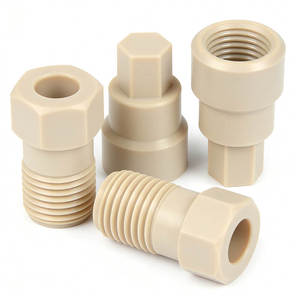
Custom High-Precision Medical PEEK Filter Adapter Component Made Plastic Parts CNC Machining Service
- Material: Medical Grade PEEK (Unfilled/Natural)
- Micro-Roughness: Ra < 0.4 µm
- Biocompatibility: ISO 10993 Certified
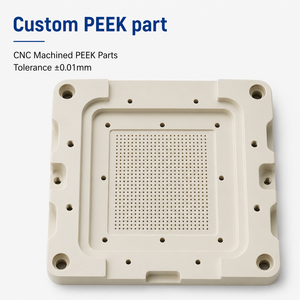
Custom CNC Machined PEEK Medical Fixture With Precision Micro-hole Array For Surgical Component Assembly
- Feature: High-Density Hole Tolerances (±0.005mm)
- Surface Finish: Micro-Deburred Cleanroom Passivated
- Application: Surgical Assembly Fixtures
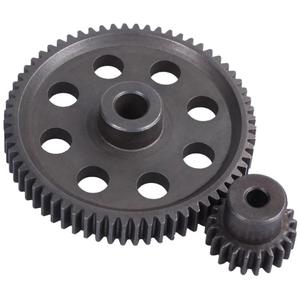
High Precision PEEK CNC Machined Parts AS9100D Certified Engineering Plastic Milling Components for Aerospace & Medical Industry
- Certification: AS9100D & ISO 13485
- Machining: 5-Axis Micro Milling
- Thermal Stability: Up to 260°C
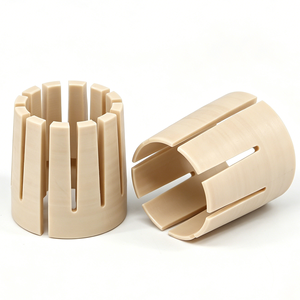
Customized Slotted PEEK Bushing Machining CNC Plastic Part High Performance PEEK Components For Industrial Use
- Design: Precision Slotted Geometry
- Tribological Finish: Low-Friction Wear Surface
- Sterilization: Autoclave & Gamma Compatible
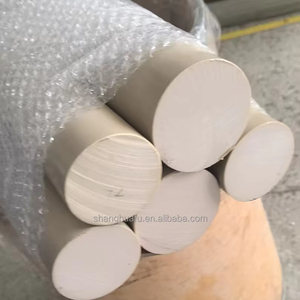
High-Performance Pure PEEK Unfilled Rod Bar Custom Diameter 6-250mm 260C Heat Resistant Aerospace Medical Grade Natural/Black
- Diameter Range: 6mm to 250mm Rods
- Purity: 100% Virgin Implant/Medical Polymer
- Color Options: Natural / Black
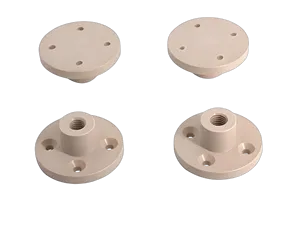
Customization With Multiple Functions And Specifications Electronic Electrical Structural Parts Polymer PEEK Custom-shaped Parts
- Type: Complex Custom Structural Geometry
- Dielectric Strength: High Insulation Performance
- Surface Prep: Ultrasonic Degreased
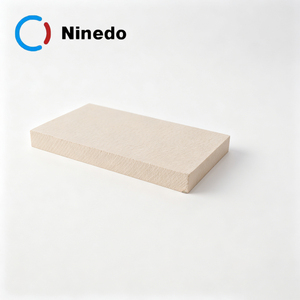
Custom Size High Temperature Resistant PEEK Sheet Polyetheretherketone Board for Medical Aerospace
- Thickness: Custom Calibrated Plates
- Stress Relieved: Zero Internal Residual Stress
- Surface Treatment: Precision Planing & Polishing
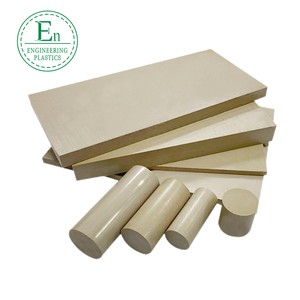
ISO 9001 Certified Precision100% Pure Raw Materials Heat Resistance Peek Medical Peek Bar Plate Poly Ether Ketone Peek Rod Plate
- Traceability: 100% Melt Lot Traceability
- Quality Standard: ISO 9001 / ISO 13485
- Machinability: Ultra-High Dimensional Stability
1. The Critical Role of Precision Surface Finishing in Medical Device CDMO Manufacturing
In modern medical device manufacturing, surface finishing is far more than a cosmetic step—it is a critical engineering domain that directly influences clinical efficacy, patient safety, biocompatibility, and regulatory approval. As OEMs shift toward micro-invasive surgical instruments, active implantable devices, and high-performance polymer components (such as PEEK and Radel), surface topography at the micro- and nanoscale determines cellular response, wear particle generation, and bacterial adhesion.
When producing high-precision medical components—such as orthopedic implant assemblies, endoscope housings, robotic-assisted surgical actuators, and PEEK filter adapters—achieving optimal surface topography requires tight control over surface roughness (Ra, Rz, Rmax), residual stress profiles, and surface chemistry. Improperly treated surgical stainless steel or titanium components risk localized pitting corrosion, fretting wear, and micro-particle release within the human body. Conversely, advanced physical and chemical surface treatments—including electrochemical polishing, type II/III anodization, laser micro-texturing, plasma functionalization, and ultrasonic cleanroom passivization—significantly extend device longevity while mitigating biological host rejection.
As a premier global Contract Development and Manufacturing Organization (CDMO) with over 1.2 million square feet of operational footprint, our facilities integrate advanced CNC micro-machining with full-spectrum chemical, mechanical, and plasma surface treatment processes. By maintaining direct control over raw resin extrusion, 5-axis Swiss precision machining, automated micro-deburring, and ISO Class 7/8 cleanroom packaging, we eliminate supply chain fragmentation for global tier-1 medical OEMs.
2. Advanced Surface Modification Technologies for Medical Polymers & Metals
Medical surface finishing encompasses specialized chemical, electrochemical, thermal, and mechanical sub-processes customized to specific substrate properties. Understanding the metallurgical and polymer behavior under each methodology is essential for medical device procurement teams and quality engineers.
Titanium & Passivation Anodizing
Conforms to ASTM F86 and AMS 2488 (Type II & III). Enhances corrosion resistance, reduces fretting galling in spinal screws, and enables precise color-coding for surgical instrument identification without adding toxic pigments.
Electropolishing & Chemical Passivation
Removes free iron particles and microscopic burrs from stainless steel (316LVM, 17-4PH, Custom 455). Achieves specular mirror finishes (Ra < 0.05 µm) that prevent protein fouling and biofilm accumulation.
PEEK Hydrophilic Surface Activation
Utilizes cold atmospheric gas plasma (O2/Ar) to increase PEEK surface energy from 38 mN/m to >72 mN/m. Promotes cell adhesion and bone osteointegration in implantable orthopedic devices.
Femtosecond Laser Micro-Texturing
Creates hydrophobic or hydrophilic micro-pattern arrays on surgical components without thermal stress or micro-cracking, improving tactile grip on ergonomic handles and controlling fluid flow in microfluidics.
Ultraclean Cleanroom Ultrasonic Wash
Multi-stage deionized water cavitation cleaning combined with total organic carbon (TOC) monitoring. Ensures zero residual machining oils, particulate matter, or pyrogenic contaminants prior to final pouch sealing.
Biocompatible DLC Coating (Diamond-Like)
Applies ultra-hard (up to 3000 HV) low-friction amorphous carbon coatings to minimally invasive cutting instruments and robotic end-effectors, maintaining razor sharpness through hundreds of surgical cycles.
3. Technical Matrix: Surface Finishing Methods vs. Medical Substrates
Choosing the right surface finish requires evaluating material compatibility, target micro-roughness, corrosion prevention requirements, and regulatory standards. Below is a detailed engineering matrix:
| Surface Finishing Process | Compatible Substrates | Target Roughness (Ra) | Primary Clinical Benefit | Applicable Standards |
|---|---|---|---|---|
| Electropolishing | 316LVM, 17-4PH, Nitinol, CoCr | 0.02 – 0.20 µm | Removes surface inclusions, improves corrosion resistance, mirror aesthetic | ASTM B912, ISO 15730 |
| Citric/Nitric Passivation | Stainless Steels (All Grades) | Unchanged | Maximizes chromium oxide passive layer; prevents iron oxidation | ASTM A967, ASTM F86 |
| Titanium Anodizing (Type II/III) | Ti-6Al-4V, Pure Titanium | 0.20 – 0.60 µm | Fretting wear reduction, color coding, non-toxic bio-interface | AMS 2488, ISO 13485 |
| Plasma Surface Modification | PEEK, Radel, PPSU, PTFE | Nanoscale modification | Increases surface energy, optimizes osteoblast attachment | ISO 10993-5, ASTM F2026 |
| Femtosecond Laser Texturing | Titanium, PEEK, Ceramics | Sub-micron arrays | Controlled cell proliferation, glare reduction in laparoscopic tools | ISO 14971, FDA DFM |
4. Future Procurement Trends in Medical Device Surface Finishing (2026–2035)
The global medical device contract manufacturing landscape is undergoing structural changes driven by tighter regulatory oversight, supply chain consolidation, and rapid adoption of robotic surgical platforms. MedTech procurement executives and supply management leaders should anticipate key industry trends:
1. Consolidation into Single-Source CDMO Partners: OEM device companies are actively paring down vendor networks. Moving away from fragmented supply chains—where raw machining, surface finishing, ultrasonic washing, and cleanroom packaging occur at separate facilities—OEMs prefer fully integrated CDMO manufacturers to lower risk, collapse lead times, and simplify FDA/MDR regulatory audits.
2. Elimination of PFAS & Hazardous Process Chemicals: Regulatory mandates in Europe (EU MDR / REACH) and North America (FDA environmental guidelines) are driving the phase-out of traditional fluorinated surfactants and toxic chrome-based anodizing chemistries. Next-generation factories utilize eco-friendly citric acid passivation systems, closed-loop deionized ultrasonic solvent extraction, and zero-VOC plasma activation.
3. Advanced Tribological Enhancements for PEEK Implants: As PEEK (Polyetheretherketone) continues to replace traditional metallic structural components in orthopedic spine cages, trauma plates, and sports medicine anchors, surface finishing has shifted from basic deburring to advanced functional surface texturing. Technologies like porous plasma spray coatings and femtosecond laser microporosity enhance osseointegration while maintaining low particle-wear rates.
4. AI-Powered Automated 3D Optical Surface Metrology: Manual inspection microscope methods are being replaced by automated inline white-light interferometry and 3D optical profilers. Integrated directly into CNC production lines, these optical systems measure 100% of functional component surfaces in real-time, verifying Ra, Rz, micro-hole roundness, and edge radiuses without human error.
5. Enterprise Strengths & Certified Quality Assurance Architecture
As an industry-leading global CDMO partner, our operational backbone is engineered specifically to meet the stringent demands of global tier-1 medical OEMs. We provide comprehensive design, prototyping, high-volume production, surface finishing, cleanroom assembly, and commercialization support.
- Fully Accredited Quality Infrastructure: Certified under ISO 13485:2016, ISO 9001:2015, AS9100D, and registered with the U.S. FDA under 21 CFR Part 820 requirements. Full material heat-lot traceability is guaranteed for every batch.
- Integrated Innovation Centers: Dedicated engineering teams collaborate during Design for Manufacturing (DFM) phases, utilizing advanced finite element analysis (FEA) and mold flow modeling to optimize product geometry prior to tooling.
- Controlled ISO Class 7 & 8 Cleanrooms: Environmental control systems maintain strict air particle counts, humidity levels, and bioburden limits. Final packaging capabilities include sterile barrier thermoformed tray sealing, pouch sealing, and UDI barcode labeling.
- Global Operational Scale: Over 1.2 million square feet of manufacturing space across multiple facilities worldwide ensures operational redundancy, robust supply chain resilience, and localized regional delivery.
6. Frequently Asked Questions (Medical Procurement & Engineering FAQ)
Partner with a World-Class Medical Surface Finishing Manufacturer
Accelerate your device commercialization timeline with an integrated CDMO offering precision micro-machining, advanced surface engineering, and ISO Class 7/8 cleanroom assembly.
Send an Inquiry