
Latest Medical Device Manufacturing Articles
Precision Nitinol Components Portfolio
Engineered to ASTM F2063 & ASTM F136 Standards for Medical Stents, Orthodontic Implants, and Advanced Actuators
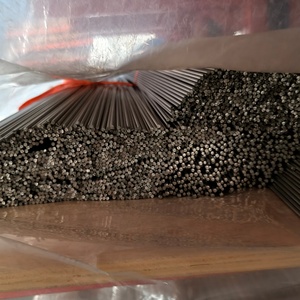
Nitinol Shape Memory Alloy Titanium Wire 0.5-2mm Medical Stent Temperature Control Flexible Elastic Smart Material ASTM F136
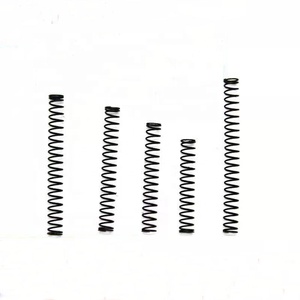
Factory Customized High Quality Cylindrical Shape Memory Nitinol Compression Spring
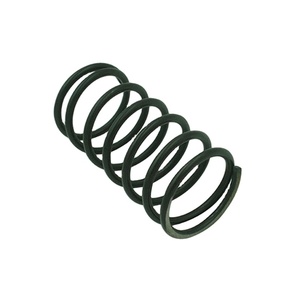
Custom High Quality Shape Memory Alloy Titanium Spring Nitinol Spiral OEM

OEM Superelastic Shape Memory Alloy Nitinol Zebra Guide Wires Cutting & Bending
Medical Grade Nitinol Shape Memory Wire Superelastic for Orthodontic Instruments
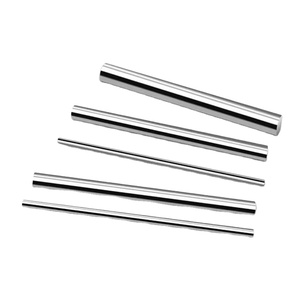
Titanium Nickel Nitinol Superelastic Shape Memory Alloy Bar & Rod Material
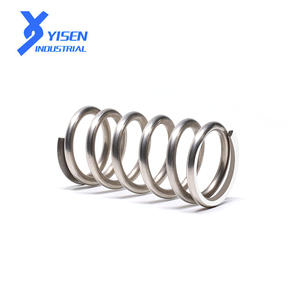
Custom Compression Spring Shape Memory Alloy Titanium Nitinol Precision Springs
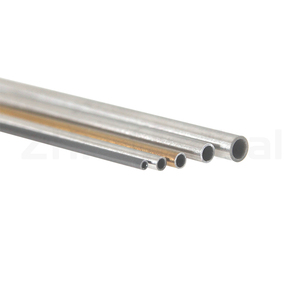
Medical Grade Nitinol Seamless Micro Tubing Shape Memory Alloy (SMA) Components
Understanding Nitinol Metallurgy & Thermomechanical Behavior
A White Paper on Phase Transformation Kinetics, Active Af Temperature Tuning, and Biocompatibility in Medical CDMO Manufacturing
Nickel-Titanium (Nitinol) shape memory alloys (SMA) represent a premier material class within minimally invasive surgery (MIS), cardiovascular interventional devices, and advanced aerospace micro-actuators. Near-equiatomic NiTi alloys (approximately 55.8 wt% to 57.0 wt% Nickel) derive their unique properties from a reversible solid-state phase transformation between a high-symmetry cubic crystal structure (Austenite B2 phase) and a lower-symmetry monoclinic structure (Martensite B19' phase).
As a specialized CDMO and precision manufacturer, controlling the precise transformation temperatures—specifically the Active Austenite Finish Temperature (Active Af)—is fundamental to device safety and performance. When stress is applied to the Austenite phase at human body temperature ($37^\circ\text{C}$), the material converts into Stress-Induced Martensite (SIM), allowing elastic strain deformations up to 8% to recover completely upon strain release. This phenomenon, known as Superelasticity, enables self-expanding vascular stents, kink-resistant guide wires, and flexible endoscopic instruments to navigate tortuous anatomical structures without permanent deformation.
Superelasticity (Pseudoelasticity)
Operates at temperatures above Active $A_f$. Stress causes a reversible phase change from B2 Austenite to B19' Martensite. Upon unloading, the material reverts to Austenite, providing constant radial force ideal for cardiovascular stents and orthodontic archwires.
Thermal Shape Memory Effect
Deformed in its low-temperature Martensitic state, the component retains its strain until heated above the Austenite finish temperature ($A_f$). The lattice structure realigns to its heat-set memory configuration with substantial actuation force.
Electropolishing & $TiO_2$ Passivation
Continuous surface engineering yields an ultra-thin, uniform Titanium Dioxide ($TiO_2$) oxide layer. This protects against Nickel ion leaching, enhances corrosion resistance in physiological environments, and satisfies stringent ISO 10993 standards.
Biomedical & Engineering Alloy Comparison Data Matrix
Comparative Mechanics: Evaluating Nitinol ASTM F2063 against Traditional Surgical Metals
| Material Grade | Ultimate Tensile Strength (MPa) | Reversible Strain Limit (%) | Modulus of Elasticity (GPa) | Biocompatibility Index | Primary Clinical Application |
|---|---|---|---|---|---|
| Medical Nitinol (ASTM F2063) | 1000 - 1500 | up to 8.0% | 28 - 75 (Phase dependent) | Excellent ($TiO_2$ Passivated) | Self-Expanding Stents, Guide Wires, MIS Actuators |
| Titanium Ti-6Al-4V ELI (ASTM F136) | 860 - 960 | 0.65% | 110 - 114 | Outstanding | Orthopedic Bone Plates, Joint Reconstructions |
| 316L Stainless Steel (ASTM F138) | 500 - 1000 | 0.50% | 193 - 200 | Good | Rigid Surgical Instruments, Balloon Expandable Stents |
| Elgiloy / MP35N Cobalt-Chromium | 1400 - 2000 | 0.80% | 230 | Excellent | High-Stress Pacemaker Leads, Catheter Braids |
Strategic Procurement & Future Technological Trends
Navigating the Global MedTech Landscape for Next-Gen Nitinol Component Sourcing
1. Micro-Tubing & Femtosecond Laser Cutting Integration
The shift toward transcatheter structural heart interventions (such as TAVR and TMVR) requires micro-scale Nitinol seamless tubing with outer diameters under 0.5mm and wall thicknesses below 0.08mm. Global procurement teams are consolidating vendors toward CDMO partners offering zero-heat-affected-zone (HAZ) femtosecond laser micro-machining. This process eliminates micro-cracking and preserves structural fatigue limits under cyclic strain ($N_f > 10^7$ cycles).
2. Additive Manufacturing of Porous Nitinol Implants
Laser Powder Bed Fusion (LPBF) 3D printing of Nitinol enables patient-specific orthopedic bone scaffolds with tailored porosity matching human cancellous bone modulus ($E \approx 3-5\text{ GPa}$). Procurement strategies are increasingly prioritizing factories with integrated atomized NiTi powder control, argon-shielded printing chambers, and downstream post-processing heat treatment capability.
3. Strict Active $A_f$ Verification Protocols
Raw material ingot chemistry alone cannot guarantee finished device performance. Modern procurement contracts require mandatory Bend and Free Recovery (BFR) testing under ASTM F2082 to verify Active $A_f$ on fully processed, heat-set components. This prevents batch-to-batch variability in radial expansion forces during clinical deployment.
4. Supply Chain Risk Mitigation & End-to-End Traceability
Geopolitical shifts and regulatory tightenings (such as EU MDR Regulation 2017/745) demand single-source accountability. Tier-1 MedTech OEMs favor CDMO factories capable of internalizing raw ingot melting (VIM/VAR), centerless grinding, precision wire drawing, cleanroom sub-assembly, and sterile barrier packaging.
Why OEMs Partner With Us: Our Manufacturing Ecosystem
Over 100 Years of Combined Manufacturing Heritage, 1.2M Sq. Ft. of Global Operations, and ISO 13485 Rigor
End-to-End CDMO Scale
From initial Design for Manufacturing (DFM) analysis to full-scale commercial manufacturing, our integrated production network streamlines time-to-market. We maintain dedicated Innovation Centers for rapid prototyping and validation testing.
ISO 13485 & FDA Registered
All production lines operate under strict cGMP protocols. Our controlled ISO Class 7 and Class 8 cleanrooms guarantee zero particulate contamination during sub-assembly, ultrasonic cleaning, and primary pouch sealing.
Custom Heat-Setting Fixtures
Proprietary salt-bath, fluidized-bed, and vacuum furnace heat-treating fixtures ensure shape setting repeatability for intricate geometries, such as coil structures, braided stents, and complex compression springs.
Frequently Asked Questions (FAQ) for Nitinol Component Procurement
Technical Insights into Specifications, Quality Assurance, Lead Times, and Custom Fabrication
What is the difference between Superelastic and Shape Memory Nitinol components?
Superelastic Nitinol components have an Active Austenite Finish temperature ($A_f$) below the operating environment temperature (e.g., $A_f = 15^\circ\text{C}$ to $30^\circ\text{C}$ for human body application at $37^\circ\text{C}$). They exhibit immediate spring-like recovery from large deformations without heating. Thermal Shape Memory Nitinol has an $A_f$ above ambient/body temperature (e.g., $A_f = 45^\circ\text{C}$ to $90^\circ\text{C}$). It remains deformed in its Martensitic state until heated above $A_f$, whereupon it recovers its pre-set geometry with high actuation force.
How do you measure and certify the Active $A_f$ temperature of finished Nitinol components?
We measure Active $A_f$ using the Bend and Free Recovery (BFR) method in accordance with ASTM F2082. The component is cooled below its Martensite finish temperature ($M_f$), deformed to a specified strain level, and gradually heated in a liquid bath. Deflection transducers track recovery as a function of temperature. We supply full EN 10204 3.1 inspection certificates detailing $A_f, A_s, M_s,$ and $M_f$ transition points for every lot.
What dimensional tolerances can your micro-machining and centerless grinding processes achieve?
For fine Nitinol wires (0.025mm to 2.0mm diameter), centerless diamond grinding achieves outer diameter tolerances down to $\pm 0.002\text{mm}$ ($\pm 2\,\mu\text{m}$) with surface roughness $Ra < 0.2\,\mu\text{m}$. For laser-cut micro-tubing, laser slot widths down to $0.015\text{mm}$ with tight concentricity controls ($>90\%$) are routinely produced.
Why is surface oxide layer control critical for medical grade Nitinol components?
An improperly passivated surface can allow Nickel ion release into adjacent tissue, triggering allergic or cytotoxic responses. Our automated electropolishing and chemical passivation processes remove micro-burrs and surface impurities, creating a continuous, corrosion-resistant Titanium Dioxide ($TiO_2$) passivated layer with a Ni/Ti atomic ratio optimized for biocompatibility per ASTM F2129 corrosion testing standard.
What customization parameters are available for Nitinol compression springs and guide wires?
Custom parameters include wire diameter, coil outer diameter, pitch, total active coils, free length, end-style (ground square, closed, open), surface finish (black oxide, light oxide, pickled, bright electropolished), and custom spring rate ($k$) tuned to specific activation temperatures. Guide wires can be ordered with variable stiffness gradients, hydrophilic coatings, and custom tungsten/gold radiopaque markers.
What are your standard manufacturing lead times and prototyping turnarounds?
Rapid prototyping for standard wire sizes and preliminary laser-cut designs takes 10 to 15 business days. Full-scale production lots requiring custom shape-setting tooling, specialized heat treatment fixtures, electropolishing, and ISO Class 7 cleanroom packaging typically require 4 to 6 weeks from DFM approval.
Ready to Accelerate Your Nitinol Component Development?
Partner with an industry-leading medical CDMO. Request detailed material test reports, structural engineering consultations, or custom product catalogs today.