
Latest Medical Device Manufacturing Articles
Featured Ultrasonic Surgical & Precision PEEK Components
Directly sourced from certified cleanroom manufacturing facilities. Engineered for high acoustic energy transfer, continuous 260°C thermal stability, and zero-defect biophysical performance in minimally invasive surgical (MIS) assemblies.
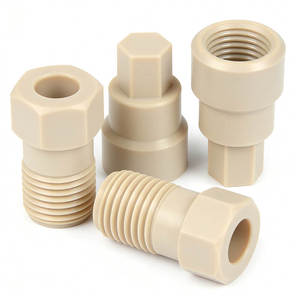
Custom High-Precision Medical PEEK Filter Adapter Component Made Plastic Parts CNC Machining Service
Contact Us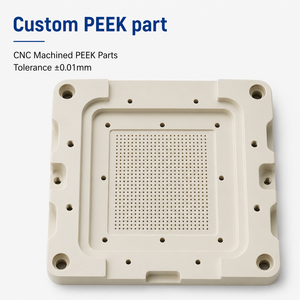
Custom CNC Machined PEEK Medical Fixture With Precision Micro-hole Array For Surgical Component Assembly
Contact Us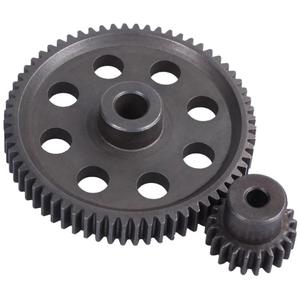
High Precision PEEK CNC Machined Parts AS9100D Certified Engineering Plastic Milling Components for Medical Industry
Contact Us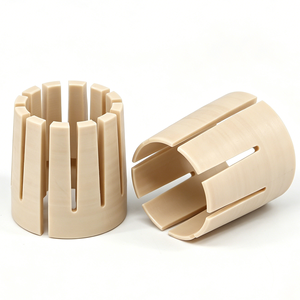
Customized Slotted PEEK Bushing Machining CNC Plastic Part High Performance PEEK Components
Contact Us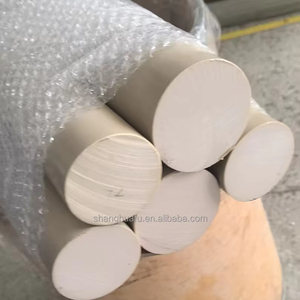
High-Performance Pure PEEK Unfilled Rod Bar Custom Diameter 6-250mm 260C Heat Resistant Medical Grade
Contact Us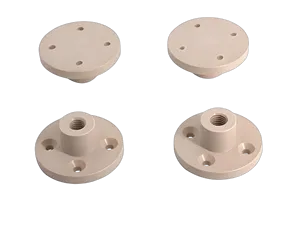
Electronic Electrical Structural Parts Polymer PEEK Custom-shaped Precision Medical Components
Contact Us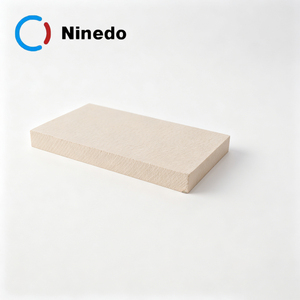
Custom Size High Temperature Resistant PEEK Sheet Polyetheretherketone Board for Surgical Instruments
Contact Us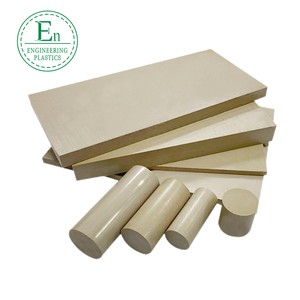
ISO 9001 Certified Precision 100% Pure Raw Materials Heat Resistance Medical PEEK Rod & Plate Stock
Contact Us1. Executive Summary & Technical Landscape of Ultrasonic Surgical Sourcing
The evolution of modern surgical suites is intrinsically linked to advances in ultrasonic energy devices. Ultrasonic scalpels, phacoemulsification handpieces, harmonic bone cutters, and ultrasonic aspirators have revolutionized minimally invasive surgery (MIS) by delivering simultaneous tissue transection, precise dissection, and vessel coagulation (up to 5mm in diameter) with minimal lateral thermal damage (<1mm). However, for Original Equipment Manufacturers (OEMs) and surgical procurement executives, sourcing components for high-frequency acoustic handpieces presents extreme engineering challenges.
Ultrasonic surgical instruments operate on electrostrictive energy conversion. Piezoelectric ceramic transducers convert high-frequency electrical signals (typically operating between 20 kHz and 55.5 kHz) into mechanical longitudinal vibrations. These micro-vibrations are amplified through a metallic acoustic waveguide (titanium alloy horn) and transferred to the active blade tip, vibrating at dynamic amplitudes between 50 and 100 micrometers. At this physical threshold, the contact between the oscillating metal waveguide, the structural housing, and the electrical leads must be insulated against acoustic dampening, dielectric breakdown, and friction-induced thermal degradation.
This technical reality has led premier MedTech suppliers to standardize on specialized high-performance polymers—most notably Polyetheretherketone (PEEK)—for internal isolators, slotted bushings, filter adapters, structural handpiece shells, and micro-hole array fixtures. Sourcing from accredited ultrasonic surgical instrument factories with specialized PEEK CNC milling capabilities is no longer optional; it is a fundamental prerequisite for maintaining biocompatibility, sterilization resilience, and acoustic energy purity.
Acoustic Wave Dampening
Unfilled medical-grade PEEK features low acoustic impedance mismatch, absorbing stray transverse waves without dampening the longitudinal cutting frequency of the ultrasonic horn.
Dielectric & Thermal Isolation
Dielectric strength exceeding 20 kV/mm and continuous thermal endurance up to 260°C prevent electrical arcing and heat transfer to the surgeon's hand during prolonged procedures.
ISO 10993 Biocompatibility
100% pure resin stock certified for USP Class VI, non-cytotoxic, non-hemolytic, and fully resistant to repeated steam autoclave cycles (>3,000 cycles at 134°C).
2. Engineering Precision & Material Selection in Ultrasonic Scalpel Assembly
When evaluating ultrasonic instrument suppliers, medical procurement teams must analyze the strict physical parameters governing acoustic assembly. Unlike standard laparoscopic graspers or electrosurgical monopolar instruments, ultrasonic systems operate under continuous micro-fatigue. A variance of a few micrometers in a PEEK slotted bushing or filter adapter can cause resonant frequency distortion, leading to excessive heat buildup, premature transducer stack failure, or tissue charring.
Sub-Micron Precision via CNC Micro-Machining
Custom PEEK fixtures utilizing precision micro-hole arrays require multi-axis Swiss CNC turning and 5-axis high-speed milling. Because PEEK exhibits a lower modulus of elasticity than titanium or stainless steel, machining requires optimized feed rates, custom diamond-coated cutting tooling, and cryogenic cooling systems to prevent thermal deformation during milling. Premier suppliers maintain strict environmental controls, achieving dimensional tolerances within ±0.002 mm (2 microns) on critical concentricities and thread pitches.
| Material Parameter | Pure Unfilled PEEK (Medical Grade) | Titanium Alloy (Ti-6Al-4V) | 316L Stainless Steel |
|---|---|---|---|
| Density (g/cm³) | 1.30 g/cm³ | 4.43 g/cm³ | 8.00 g/cm³ |
| Continuous Service Temp | 260°C (500°F) | 400°C (752°F) | 800°C (1472°F) |
| Acoustic Impedance Mismatch | Extremely Low (Ideal Dampener) | High (Wave Amplifier) | Very High (Wave Reflector) |
| Autoclave Resistance | 3,000+ Cycles (Zero Hydrolysis) | Indefinite | Subject to surface oxidation |
| Dielectric Strength | 19 - 25 kV/mm | Conductive (N/A) | Conductive (N/A) |
Micro-Hole Arrays and Acoustic Alignment
Surgical handpiece assemblies rely on precision micro-hole array fixtures to support multi-channel fluid irrigation and aspiration pathways alongside the central ultrasonic horn. These micro-cavities (often ranging from 0.15mm to 0.8mm in diameter) must be burr-free. Residual micro-burrs within fluid pathways can induce cavitation erosion under 55.5 kHz acoustic pressure, leading to particle detachment into the surgical field. Leading factories utilize automated optical inspection (AOI) and high-resolution scanning electron microscopy (SEM) validation to guarantee 100% burr-free internal channels.
3. Strategic Procurement & Future Growth Trends (2026–2030)
The global ultrasonic surgical market is undergoing a structural transition driven by the rapid expansion of robotic-assisted surgical (RAS) platforms, ambulatory surgical centers (ASCs), and the demand for single-use or hybrid ultrasonic instruments. MedTech purchasing managers must adapt their contract manufacturing strategies to address key emerging trends:
- Consolidation into Single-Source CDMO Partners: Top OEMs are shifting away from fragmented component suppliers toward vertically integrated Contract Design and Manufacturing Organizations (CDMOs). Partnering with suppliers capable of raw PEEK rod/plate stocking, CNC micro-machining, cleanroom sub-assembly, and ISO 11607 sterile packaging reduces supply chain lead times by up to 35%.
- Miniaturization for Robotic Surgery Integration: As surgical robotics extend into pediatric and neurosurgical domains, ultrasonic end-effectors are scaling down to 3mm and 5mm shaft diameters. Sourcing partners must offer advanced micro-injection molding alongside Swiss CNC turning to produce ultra-small PEEK insulative sleeves.
- Closed-Loop Supply Chain Compliance & Traceability: Regulatory standards under the EU Medical Device Regulation (MDR 2017/745) and US FDA 21 CFR Part 820 require full raw material lot traceability. Procurement contracts now demand 100% pure virgin raw material certifications, eliminating re-ground polymer risks.
- Hybrid Sterilization Compatibility: Next-generation surgical tools must endure diverse sterilization modalities, including Hydrogen Peroxide Gas Plasma (VHP), Gamma Irradiation, and Ethylene Oxide (EtO), without undergoing yellowing, embrittlement, or dimensional drift.
4. Paragon Medical CDMO Capabilities & Enterprise Advantages
As a global medical device CDMO leader with over a century of accumulated manufacturing heritage and over 1.2 million square feet of operational footprint across 8+ manufacturing facilities worldwide, Paragon Medical sets the industry benchmark for precision surgical instrument contract manufacturing.
End-to-End Vertical Integration
From early-stage design feasibility, rapid prototyping, and dynamic acoustic finite element analysis (FEA) to high-speed 5-axis CNC machining, additive manufacturing, ISO Class 7 cleanroom assembly, and sterile packaging validation.
Uncompromised Quality Assurance
Operating under ISO 13485, ISO 9001, and AS9100D quality management certifications, our facilities maintain 99%+ on-time delivery rates with full FDA registered manufacturing protocols and real-time SPC process monitoring.
By integrating state-of-the-art automated cell manufacturing with deep engineering expertise in high-temperature polymers and specialty implantable metals, we empower global OEMs to lower Total Cost of Ownership (TCO), mitigate supply chain vulnerabilities, and launch breakthrough surgical innovations with total clinical confidence.
5. Frequently Asked Sourcing & Technical Questions (FAQ)
Why is unfilled PEEK preferred over filled PEEK for ultrasonic instrument adapters?
Unfilled pure medical-grade PEEK offers uniform isotropic acoustic properties and superior dampening characteristics. Glass-filled or carbon-filled PEEK can introduce abrasive fibers that alter resonant frequency stability, accelerate tool wear during micro-machining, and potentially create micro-fissures under high-frequency ultrasonic stress cycles (20-55.5 kHz).
What dimensional tolerances can be maintained for PEEK surgical components?
Utilizing high-precision Swiss CNC lathes and temperature-controlled 5-axis milling centers, top-tier medical manufacturers consistently achieve tolerances of ±0.002 mm (2 microns) on critical concentricities, step features, and micro-hole array locations.
How do micro-hole array fixtures support ultrasonic surgical handpieces?
Micro-hole array fixtures act as internal mechanical guides and fluid distribution manifolds. They isolate the high-speed vibrating titanium wave-guide from outer electrical wiring while simultaneously directing saline cooling fluid and aspiration suction around the active blade without causing acoustic dampening.
What quality certifications must an ultrasonic component factory possess?
Suppliers must hold ISO 13485 certification for medical device manufacturing, ISO 9001 for quality management, and operate cleanroom assembly environments certified to ISO Class 7 (Class 10,000) or ISO Class 8. FDA registration is mandatory for finished device CDMO partners supplying US markets.
Can custom PEEK components withstand repeated steam autoclaving?
Yes. Medical-grade PEEK demonstrates extraordinary resistance to hydrolysis. It withstands more than 3,000 steam sterilization cycles at 134°C (273°F) without experiencing loss of tensile strength, dimensional distortion, or chemical degradation.
How do CDMO partners ensure zero burr contamination in internal PEEK fluid channels?
Leading suppliers utilize specialized micro-deburring techniques, high-pressure fluid deburring, and cryogenic finishing, followed by 100% automated optical inspection (AOI) and ultrasonic solvent washing in controlled cleanrooms prior to assembly.
What is the standard lead time for prototyping vs. volume manufacturing?
With dedicated Innovation Centers and rapid prototyping cells, initial PEEK sample components and acoustic testing fixtures can be delivered within 1 to 2 weeks. Full-scale commercial manufacturing scaling generally requires 4 to 8 weeks depending on mold tooling, cleanroom assembly validation, and packaging specs.
How can I request a technical DFM (Design for Manufacturability) review for my ultrasonic handpiece?
You can initiate a technical engineering consultation directly by clicking the contact action button below. Our senior medical device engineers will review your CAD models, material requirements, tolerance stack-ups, and acoustic performance targets under full non-disclosure agreement (NDA).
Accelerate Your Ultrasonic Medical Device Development
Partner with an industry-leading CDMO capable of bringing your high-precision PEEK components and ultrasonic surgical instruments from prototype to volume commercialization.