
Global CDMO Strategic Briefing • 2026 Technical Insights

Electromechanical Medical Assemblies: Next-Generation Engineering, Global Procurement Trends & Precision CDMO Manufacturing Solutions

An expert technical and procurement guide for OEM decision-makers, mechatronic engineers, and global supply chain directors seeking high-reliability Electromechanical Medical Assemblies. Learn how integrated CDMO platforms bridge micro-mechatronics, IEC 60601-1 compliance, and scalable ISO Class 7 cleanroom manufacturing to power surgical robotics, wearable drug delivery, and smart diagnostic equipment.

ISO 13485
Certified Mechatronic & Electronics Manufacturing Facilities
IEC 60601-1
Full Medical Electrical Equipment Risk & Safety Compliance
1.2M Sq. Ft.
Global Manufacturing Footprint across 8+ Operational Hubs
IPC-A-610 Class 3
High-Reliability Precision Soldering & Micro-Wiring Standards

The Evolution of Electromechanical Medical Assemblies in Modern Healthcare

The global medical technology landscape is undergoing a systemic paradigm shift. As healthcare moves toward minimally invasive interventions, robotic-assisted surgical platforms, targeted auto-immune drug delivery systems, and real-time intraoperative diagnostics, the demand for sophisticated Electromechanical Medical Assemblies has surged dramatically. Modern medical devices are no longer purely mechanical structures or isolated electronic printed circuit boards (PCBAs); they are highly complex, unified micro-mechatronic systems that demand flawless synchronization between micro-actuators, optical sensors, brushless DC (BLDC) motors, fluidic interconnects, embedded firmware, and biocompatible housing materials.

For global medical device OEMs (Original Equipment Manufacturers), engineering and commercializing these sub-assemblies presents multi-faceted technical challenges. A failure in an electromechanical drive unit during a robotically assisted orthopedic procedure or a volumetric inaccuracy in a smart infusion pump can lead to catastrophic clinical outcomes, costly field recalls, and severe regulatory action by the FDA, EMA, or NMPA. Consequently, procurement officers and engineering executives are transitioning away from fragmented component vendors toward fully integrated, tier-1 Contract Design and Manufacturing Organizations (CDMOs) capable of managing total product lifecycle risk—from early-stage Design for Manufacturability (DFM) and Design for Assembly (DFA) through multi-axis precision machining, SMT electronics integration, cleanroom assembly, and rigorous verification & validation (V&V).

Precision electromechanical medical assemblies manufacturing and metal additive components

High-Precision Mechatronic Modules Engineered for Extreme Clinical Reliability

Paragon Medical specializes in custom-engineered electromechanical medical sub-assemblies built to withstand stringent sterilization cycles, high operating duty cycles, and zero-defect quality mandates:

  • Surgical Robotics Actuation & Articulated Wrist Sub-Assemblies: Multi-DOF (degree-of-freedom) electromechanical joints combining micro-planetary gearboxes, high-torque BLDC motors, absolute magnetic encoders, and tensioned cable drive pulleys.
  • Smart Infusion & Wearable Drug Delivery Drives: Low-power, ultra-compact stepper drive units integrated with optical drop sensors, piezoelectric occlusion detectors, and custom flex-circuit SMT boards.
  • Powered Orthopedic & Neurosurgical Handpiece Drives: Hermetically sealed electromechanical drive trains engineered for autoclavable high-speed reamers, drills, and oscillating saws featuring thermal dissipation channels and dynamic sealing.
  • Diagnostic Imaging & Patient Positioning Drives: Precision linear electromechanical actuators with zero-backlash ball screws, integrated brake modules, and force-feedback load cells for CT, MRI, and C-arm positioning.
  • Minimally Invasive Electro-Mechanical Steering Modules: Micro-scale motorized steering shafts incorporating nitinol pull-wires, sensorized tip deflection encoders, and ergonomic hand-grip interface electronics.
Contact Us

Electromechanical Medical Assemblies: Technical Performance Specification Matrix

Below is a strategic technical breakdown comparing key performance metrics, material configurations, electrical compliance parameters, and cleanroom requirements across primary electromechanical medical sub-assembly categories manufactured within Paragon Medical's global infrastructure:

Sub-Assembly Category Core Mechatronic Components Dimensional & Positional Tolerance Regulatory & Electronics Standards Cleanroom & Environmental Rating
Robotic Surgery Wrist Actuator Frameless BLDC Motor, Harmonic Drive, Optical Encoder, Tension Cables ±0.002 mm shaft runout / <0.05° angular backlash IEC 60601-1-2 EMC Class B, ISO 14971 Risk Mgmt ISO Class 7 Cleanroom Assembly / IP68 Sealed Enclosure
Autoclavable Power Tool Drive Brushless DC Motor, Ceramic Planetary Gears, Hall Sensors, Thermal Cutoff Sub-micron dynamic balance (<0.1 mm/s vibration) IPC-A-610 Class 3 SMT, ISO 10993 Biocompatibility ISO Class 8 Cleanroom / Autoclave Resistant (250+ cycles @ 134°C)
Wearable Infusion Pump Drive Micro Stepper Motor, Custom Lead Screw, Piezo Sensor, Flex PCBA Dosage accuracy ±0.5% volumetric flow control IEC 60601-1-11 Home Healthcare, FDA 21 CFR Part 820 ISO Class 7 Cleanroom Assembly & Sterile Barrier Packaging
Endoscopic Electro-Steering Module Nitinol Pull Wire Actuator, Miniature Gearhead, Tactile Sensor Matrix Outer Diameter ≤2.8 mm, Tip deflection ±180° IEC 60601-2-18 Endoscopic Safety, RoHS 3 & REACH ISO Class 7 Assembly / Gamma & EtO Sterilization Compatible
Diagnostic Gantry Positioner AC Servo Drive, Heavy-Duty Ball Screw, Absolute Magnetic Scale, Electromagnetic Brake Positional repeatability ±0.005 mm over 1.5 m travel IEC 60601-1 3rd Ed., UL 60601-1 Safety Certification Industrial ESD-Controlled Assembly / Heavy Mechanical Hub

How Forward-Thinking OEM Purchasing Executives Are Optimizing Supply Chains

Global supply chain volatility, regulatory tightening, and rapid technological convergence are redefining how MedTech procurement teams evaluate and select contract manufacturing partners for complex electromechanical assemblies:

  • Strategic Tier-1 Supplier Consolidation: OEMs are reducing vendor management overhead by replacing fragmented motor, plastic housing, and PCBA suppliers with single-source CDMO partners capable of providing fully tested, turnkey electromechanical box builds.
  • Nearshoring & Dual-Sourced Global Footprints: Geopolitical risks and freight volatility have made dual-sourcing mandatory. Buyers favor CDMOs with mirrored operational capabilities across North America, Europe, and Asia to guarantee business continuity.
  • Design for Supply Chain (DFSC) Integration: Procurement teams are involving CDMO manufacturing engineers during initial conceptual phases to identify single-source electronic component risks early, substituting long-lead components before tooling freezes.
  • Verifiable ESG & Sustainable Sourcing: Global tenders increasingly mandate full visibility into conflict mineral compliance, energy-efficient manufacturing processes, and recyclable sterile packaging materials.
Contact Us
Integrated electromechanical supply chain and CDMO product development lifecycle illustration

The technological envelope for electromechanical medical assemblies is expanding at an unprecedented rate. To maintain a competitive edge, medical device developers must integrate next-generation mechatronic innovations directly into their sub-assembly designs:

01

Micro-Miniaturization & High Power Density

Advances in high-remanence Neodymium (NdFeB) magnet configurations, slotless BLDC stator windings, and 3D direct-write circuit technology permit gearmotors under 4mm diameter to generate double the torque output of prior generations, enabling smaller surgical access incisions.

02

Integrated Haptic & Smart Sensor Arrays

Electromechanical assemblies are evolving into self-diagnostic systems. Embedded strain gauges, MEMS accelerometers, and fiber-optic torque sensors provide instantaneous haptic feedback to robotically controlled surgical arms while monitoring assembly health in real time.

03

Additive Metal-Polymer Mechatronic Hybrid Housing

Utilizing Direct Metal Laser Sintering (DMLS) alongside high-temperature PEEK molding allows complex internal fluid cooling channels and conductive bus-bars to be printed directly within structural motor housings, eliminating internal wiring harnesses.

Paragon Medical state-of-the-art cleanroom and additive manufacturing facility interior

Enterprise Advantages: Your Global Partner in Electromechanical CDMO Manufacturing

Unmatched Manufacturing Scale, Engineering Depth, and Operational Rigor

Paragon Medical provides a vertically integrated contract manufacturing platform engineered specifically to de-risk complex electromechanical assembly commercialization for world-leading MedTech OEMs:

  • 100+ Years of Combined Manufacturing Heritage: A century of precision engineering experience delivering mission-critical medical components and complex sub-assemblies.
  • 1.2 Million Square Feet of Global Capacity: Over 8 state-of-the-art manufacturing hubs across North America, Europe, and Asia equipped with high-speed multi-axis CNC Swiss turning, additive manufacturing, SMT micro-soldering, and automated assembly cells.
  • ISO Class 7 & Class 8 Cleanroom Operations: Dedicated controlled environment assembly, ultrasonic cleaning, micro-particle monitoring, dynamic balancing, and automated pouch/blister sealing.
  • Dedicated Innovation Centers & DFM Labs: On-site engineering facilities offering rapid prototyping, finite element analysis (FEA), electromagnetic simulation, and quick-turn pre-production iteration.
  • Integrated Business Planning (IBP) & Supply Chain Resilience: Proactive vendor-managed inventory (VMI), dual-plant redundancy, and robust Kanban systems guaranteeing 99%+ on-time delivery metrics.
Contact Us

Design, Prototype, and Validate Under One Unified Quality System

Streamlining Regulatory Submissions and Accelerating Time-to-Market

Bringing an electromechanical medical device from concept to FDA 510(k) or PMA approval requires rigorous verification and validation. Paragon Medical's cross-functional engineering teams seamlessly bridge design phase requirements with high-volume production realities:
  • Comprehensive DFM/DFA Optimization: Reducing part count, eliminating high-risk manual soldering steps, and standardizing hardware to optimize unit cost and automated assembly yields.
  • In-House Verification & Validation (V&V): Full environmental testing including thermal shock, mechanical vibration, ingress protection (IPX7/IPX8), and EMI/EMC pre-compliance scanning.
  • End-to-End Traceability & Device History Records (DHR): Complete digital serialization down to component-level lot numbers, micro-weld parameters, and optical inspection logs.
Contact Us
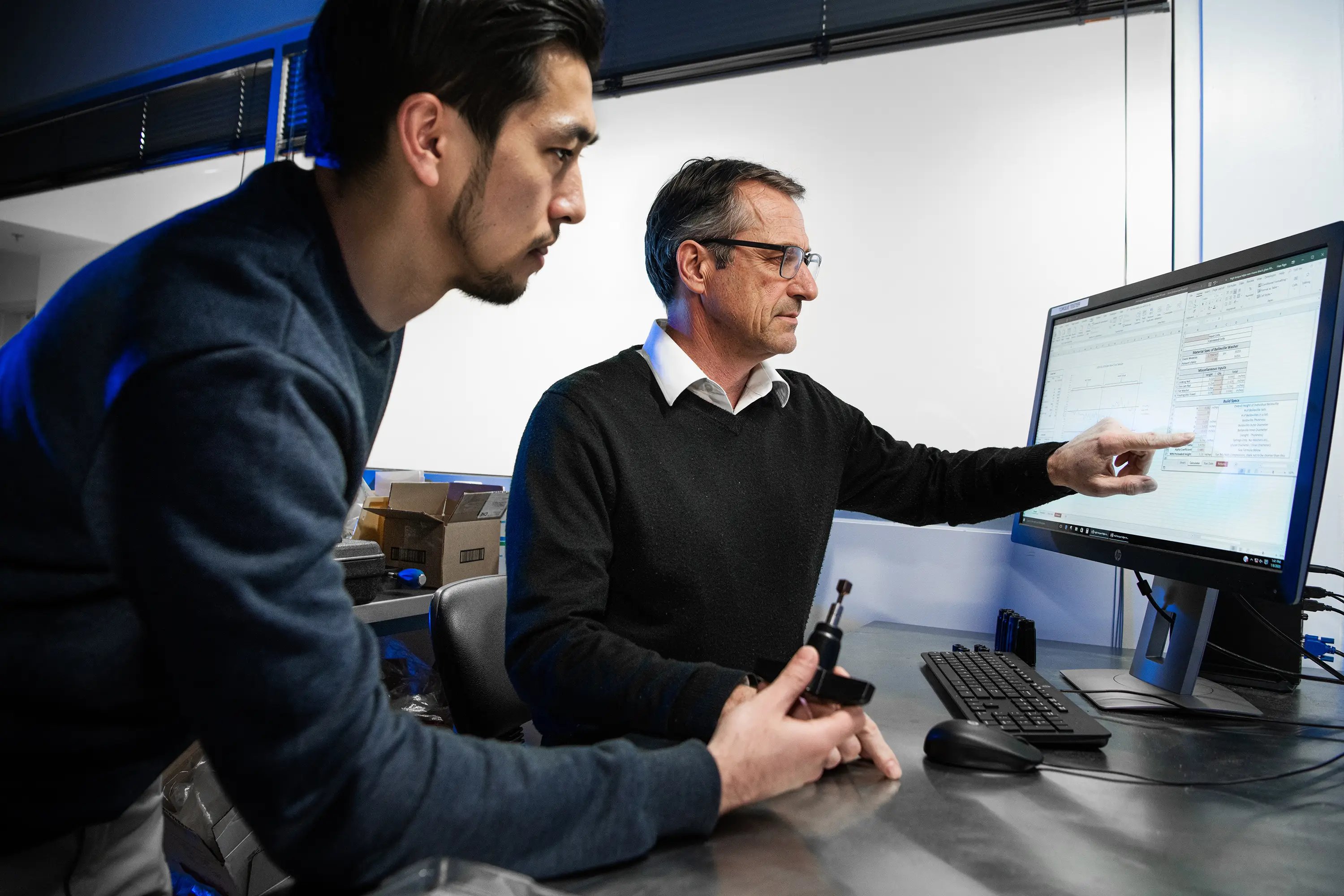
Paragon Medical engineers collaborating on electromechanical medical device design and development
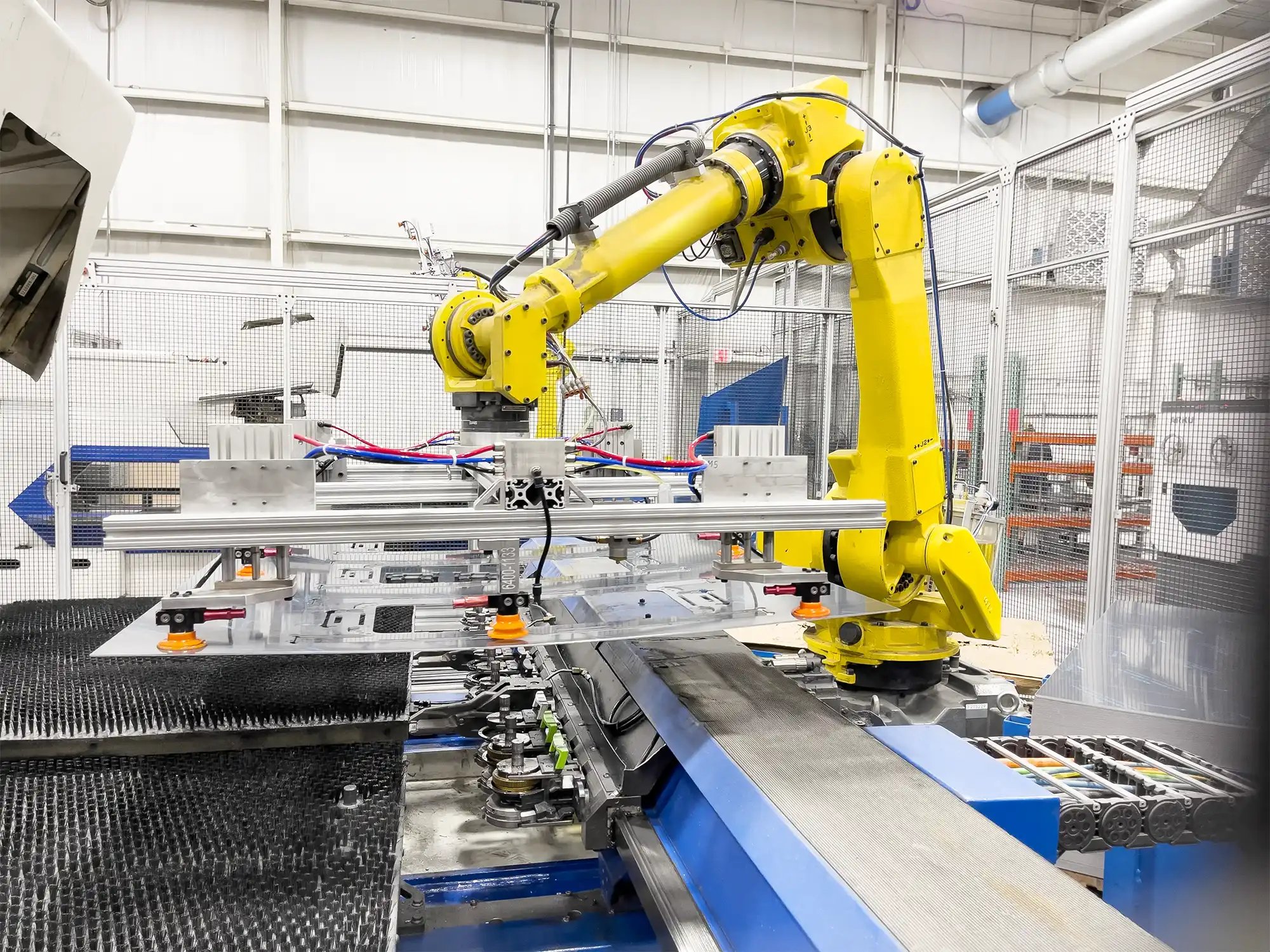
Automated precision manufacturing equipment and cleanroom assembly cells for electromechanical medical sub-assemblies

Automated Manufacturing & ISO Cleanroom Assembly Infrastructure

Controlled Environments to Guarantee Zero Defect and Zero Contamination

Cleanroom precision is non-negotiable when manufacturing electromechanical assemblies destined for sterile operating rooms or long-term therapeutic delivery:

  • Automated Pick-and-Place micro-assembly cells with high-speed AOI (Automated Optical Inspection).
  • Precision laser welding of titanium motor enclosures and hermetic glass-to-metal electrical feedthroughs.
  • ESD-safe ISO Class 7 cleanrooms designed for sensitive PCBAs, optical encoders, and sterile packaging.
  • 100% End-of-Line (EOL) automated test stations verifying dielectric strength, power draw, and gear movement.
Contact Us

Frequently Asked Questions: Electromechanical Medical Assemblies Sourcing & Manufacturing

Below are comprehensive, expert answers to the most frequent inquiries submitted by global medical device buyers, sourcing managers, and mechatronic engineers searching for contract manufacturing partners:

Q1 What regulatory standards govern the design and contract manufacturing of Electromechanical Medical Assemblies?
Electromechanical medical sub-assemblies are subject to stringent global regulatory mandates. The foundational quality management standard is ISO 13485, which defines quality control from design transfer through commercial build. Electrical safety, essential performance, and risk management are mandated by IEC 60601-1 (3rd & 4th Editions), along with collateral standards like IEC 60601-1-2 for Electromagnetic Compatibility (EMC). Additionally, printed circuit board assemblies (PCBAs) integrated into medical devices must adhere to IPC-A-610 Class 3 standards for high-reliability electronics. Paragon Medical maintains FDA-registered, ISO 13485-certified facilities globally, providing full audit support and technical file documentation (DHF/DMR) for seamless regulatory filings.
Q2 How does Paragon Medical mitigate risk during early-stage DFM for micro-electromechanical assemblies?
Our proactive Design for Manufacturability (DFM) and Design for Assembly (DFA) protocol begins during the conceptual phase at our dedicated Innovation Centers. Senior mechatronic engineers perform advanced computer-aided thermal modeling, dynamic stress analysis, and electromagnetic interference (EMI) simulation. We evaluate tolerance stack-ups across micro-gears, shafts, housings, and sensor boards to eliminate assembly interference. By identifying high-risk manufacturing steps—such as delicate hand-soldering or tight-clearance potting—we implement automated robotic soldering and vision-guided placement early, ensuring high production yields and low unit costs when scaling up.
Q3 What cleanroom standards are required for sterile or invasive electromechanical sub-assemblies?
Electromechanical assemblies used in invasive surgical handpieces, robotic catheter steerers, or wearable drug pumps require cleanroom environments to prevent bioburden and particulate contamination. Paragon Medical operates certified ISO Class 7 and ISO Class 8 cleanrooms. Our cleanrooms feature continuous HEPA filtration, positive pressure control, ESD-safe anti-static flooring, and strict gowning protocols. Micro-electronic components are assembled under laminar flow hoods, ultrasonically cleaned using validated bioburden-free processes, and sealed in sterile barrier pouch packaging prior to final sterilization (Gamma, EtO, or Autoclave validation).
Q4 How can OEMs resolve supply chain bottlenecks for custom motors, sensors, and micro-electronics?
Supply chain vulnerability in micro-electronics and specialized brushless motors can severely delay medical device commercialization. Paragon Medical mitigates these risks through Integrated Business Planning (IBP) and established global supply chain relationships. We maintain strategic dual-sourcing agreements for core electronic components, utilize standardized component platforms where possible, and provide long-range demand forecasting with vendor-managed inventory (VMI) buffer stocks. Additionally, our multi-site global footprint in North America, Europe, and Asia allows us to mirror production lines, guaranteeing dual-region manufacturing contingency.
Q5 What automated testing and quality inspection procedures are executed on completed electromechanical units?
Every electromechanical sub-assembly manufactured by Paragon Medical undergoes rigorous 100% End-of-Line (EOL) automated testing. Depending on device specifications, testing routines include dielectric withstand (Hi-Pot) testing, insulation resistance verification, micro-current draw profiling under loaded duty cycles, multi-axis encoder accuracy validation using laser interferometry, acoustic noise emission checking, and dynamic vibration analysis. Test data is automatically compiled into serialized Device History Records (DHR) to provide total digital traceability for every unit shipped.
Q6 Can Paragon Medical integrate embedded firmware, sensor calibration, and software programming during assembly?
Yes. Our manufacturing integration extends beyond mechanical and electronic assembly to include firmware flashing, automated sensor zeroing/calibration, and functional software verification. Within our ESD-controlled cleanrooms, automated programming fixtures load customer-approved firmware onto embedded microcontrollers, perform gain/offset calibration for integrated Hall sensors or optical encoders, and record non-volatile memory parameters directly to our quality tracking databases.
Q7 How does additive manufacturing (3D metal printing) enhance custom electromechanical medical assemblies?
Additive manufacturing (such as Direct Metal Laser Sintering - DMLS in Titanium or Stainless Steel) allows mechatronic engineers to create complex structural housings with internal cooling channels, optimized weight-to-strength ratios, and embedded cable routing passages that are impossible to machine via conventional CNC turning. Paragon Medical leverages additive manufacturing during both rapid prototyping and full-scale commercial production, significantly shortening design iteration cycles and reducing total part count in complex robotic wrist drives and surgical power tools.
Q8 What sterilization processes can Paragon Medical electromechanical assemblies endure?
Sterilization compatibility depends on component selection and sealing technology. Reusable surgical power tool sub-assemblies are designed and validated to endure 250+ steam autoclave cycles (134°C at high pressure) using hermetic laser welding, high-temperature PEEK insulators, and special fluoroelastomer dynamic seals. Single-use sub-assemblies (such as drug delivery pumps or robotic end-effectors) are engineered for Ethylene Oxide (EtO) or Gamma irradiation, using materials selected to prevent polymer degradation or electronic EEPROM memory corruption.
Q9 How does selecting a single CDMO for electromechanical assemblies reduce Total Cost of Ownership (TCO)?
Consolidating sub-assembly manufacturing with a single CDMO eliminates multi-vendor margin stack, drastically reduces shipping fees between specialized component suppliers, minimizes administrative procurement overhead, and lowers risk of cross-vendor dimensional mismatches. Paragon Medical manages raw material sourcing, CNC Swiss machining, SMT board assembly, cleanroom potting, testing, and final packaging under a unified Quality Management System—delivering a fully validated, ready-to-integrate sub-assembly directly to your final box-build line.
Q10 How do I initiate an RFQ or technical feasibility evaluation for a custom electromechanical assembly?
Initiating a partnership is straightforward. Simply click the Contact Us link to connect directly with our engineering and procurement team. You can submit CAD models (STEP/IGES), circuit schematics, expected annual volumes, and regulatory target specifications. Our mechatronic engineering group will conduct a complimentary DFM analysis, component availability audit, and strategic budget estimate to jumpstart your commercialization journey.

Proven Applications Across Global MedTech Sectors

Engineered to Meet the Demands of Operating Rooms and Point-of-Care Environments

Paragon Medical's electromechanical sub-assemblies power critical healthcare platforms across diverse clinical disciplines worldwide:

  • Robotic Assisted Surgery: End-effector arm joints, motorized trocars, and laparoscopic instrument wrist actuators.
  • Orthopedic & Joint Reconstruction: Smart surgical navigation reamers, powered bone saws, and intraoperative tensioning devices.
  • Drug Delivery & Infusion: Wearable insulin pumps, large-volume ambulatory infusion devices, and auto-injectors.
  • Cardiovascular & Neuromodulation: Motorized catheter advancement systems, cardiac assist pump drives, and implantable programmer sub-assemblies.
Contact Us
Surgeons operating advanced surgical robotics and precision electromechanical medical devices

Comprehensive CDMO Engineering & Manufacturing Services

From initial prototyping to scalable high-volume commercial production, explore our end-to-end medical device manufacturing capabilities.

Micro-Mechatronics Assembly

High-density assembly of micro-gearheads, brushless motors, encoders, and precision miniature drive shafts under microscopic vision alignment.

Learn More

Cleanroom Box-Build Integration

ISO Class 7 cleanroom final enclosure assembly, potting, ultrasonic welding, leak testing, and sterile barrier packaging.

Learn More

Metal Additive Manufacturing

Direct Metal Laser Sintering (DMLS) of complex titanium structural components, motor housings, and custom internal cooling geometries.

Learn More

Design & Prototyping

Rapid concept prototyping, FEA analysis, thermal management modeling, and fast-turn verification builds in dedicated Innovation Centers.

Learn More

Accelerate Your Electromechanical Medical Assembly Program

Partner with a global contract manufacturing leader possessing 100+ years of precision experience, 1.2M sq. ft. of manufacturing capacity, and dedicated mechatronic engineering teams ready to de-risk your next project.

Contact Us