
As the healthcare ecosystem across Sri Lanka expands rapidly under National Medicines Regulatory Authority (NMRA) guidelines and regional hospital modernization initiatives, the demand for CE-marked, ISO 11607-compliant medical device sterilization packaging has reached a critical juncture. Medical device original equipment manufacturers (OEMs), surgical instrument importers, and hospital Central Sterile Supply Departments (CSSD) in Colombo, Kandy, and Galle face severe operational risks due to high tropical ambient humidity, microbial contamination, and supply chain volatility.
This whitepaper analyzes technical criteria for selecting CE certified medical device sterilization packaging manufacturers and factories serving Sri Lanka. It examines material science (PEEK polymers, DuPont™ Tyvek® high-density polyethylene, multi-layer thermoforming film barriers), sterilization compatibility (EtO, Steam Autoclave, Gamma Irradiation), and localized procurement strategies to guarantee sterile barrier integrity from manufacturing plant to surgical theater.
1. The Strategic Regulatory & Environmental Landscape in Sri Lanka
Sri Lanka's medical device ecosystem is undergoing a dramatic structural transformation. Governed by the National Medicines Regulatory Authority (NMRA) Act No. 5 of 2015, medical device importers, distributors, and localized assembly partners must demonstrate strict compliance with international benchmarks, specifically European Union CE Marking (under EU MDR 2017/745) and ISO 13485 quality management systems.
Sterilization packaging is no longer viewed as a passive wrapping material; it is regulated as a critical component of a medical device system. According to ISO 11607-1:2019 ("Packaging for terminally sterilized medical devices — Part 1: Requirements for materials, sterile barrier systems, and packaging systems"), packaging must maintain sterility until the point of use while allowing aseptic presentation without generating particulate contamination.
Environmental Challenges in Tropical MedTech Logistics
Manufacturing and distributing medical devices within Sri Lanka’s geographical climate introduces unique physical and biological stress vectors:
- Extreme Relative Humidity (70% – 90% RH): Substandard paper-based pouch packaging degrades rapidly under humid ambient conditions in coastal transit (e.g., Colombo Port entry), leading to fiber swelling, pinhole creation, and loss of tensile burst strength.
- Microbial Ingress Risks: High temperature and moisture accelerate bacterial proliferation. Packaging materials must provide absolute microbial barrier performance while retaining porosity for gaseous sterilants such as Ethylene Oxide (EtO).
- Logistical Mechanical Shock: Transit between domestic distribution hubs and provincial healthcare facilities requires packaging solutions with elevated puncture resistance, tear strength, and seal peel integrity.
| Packaging Material Class | Sterilization Modality Compatibility | Tensile / Puncture Resistance | Shelf Life (Validated) | Ideal Application in Sri Lanka |
|---|---|---|---|---|
| Tyvek® 1073B / Film Pouches | EtO, Gamma, VH2O2 (Plasma) | Exceptionally High (Non-woven HDPE) | 5 to 10 Years | Surgical Kits, Implants, Single-Use Catheters |
| Rigid PEEK Sterilization Trays | Autoclave (134°C), EtO, Dry Heat | Ultra-High Mechanical Rigidity | Indefinite (Reusable Platform) | Orthopedic Surgery, Micro-Surgical Instruments |
| Medical Grade Paper / PE Laminates | Steam Autoclave, EtO | Moderate | 2 to 3 Years | Standard Hospital Consumables, Non-Sharp Devices |
| Thermoformed PETG / Tyvek Lids | EtO, Gamma Irradiation | High Dimensional Stability | 5 Years | Complex Surgical Assemblies & Diagnostic Kits |
2. Engineering Material Science: Why PEEK & High-Barrier Polymers Dominate
In high-precision surgical applications—such as orthopedic implant delivery, spinal fixation instrumentation, and minimally invasive surgical (MIS) assemblies—standard flexible packaging fails to prevent sharp edges from breaching the sterile barrier. This is where advanced engineered polymers like Polyetheretherketone (PEEK) play a vital structural role.
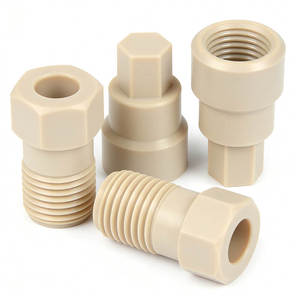
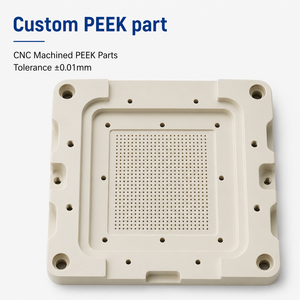
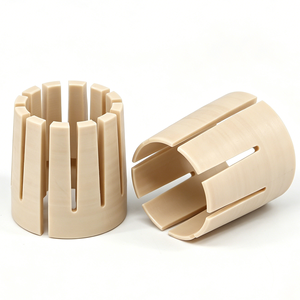
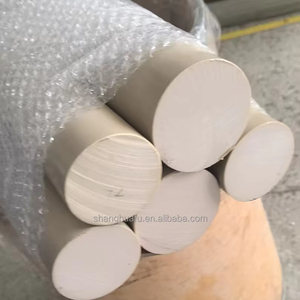
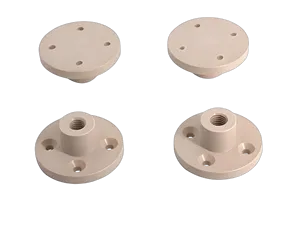
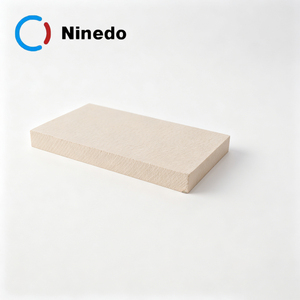
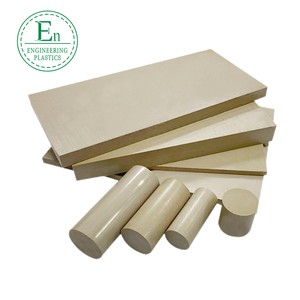
PEEK is an ultra-high performance thermoplastic characterized by outstanding mechanical strength, chemical resistance, and thermal stability (continuous operating temperature up to 260°C). When integrated into custom sterilization packaging trays, brackets, micro-hole fixtures, and component adapters (as detailed in our featured product line), PEEK offers unparalleled technical advantages:
- Repeated Autoclave Endurance: PEEK maintains dimensional stability over thousands of steam sterilization cycles (134°C at high pressure) without micro-cracking, hydrolytic degradation, or toxic leaching.
- Precision Micro-Hole Arrays: CNC machined PEEK fixtures allow optimized steam penetration and condensate drainage, ensuring complete sterilization of complex surgical instruments held within rigid cassette packaging.
- Biocompatibility & ISO 10993 Compliance: PEEK is chemically inert, non-cytotoxic, and resistant to aggressive enzymatic cleaning solutions commonly utilized in hospital CSSD departments across Sri Lanka.
3. Localized Application Scenarios Across Sri Lanka's MedTech Sectors
Understanding how sterilization packaging and precision components function within local infrastructure is critical for Sri Lankan procurement officers and CDMO partners:
Scenario A: Colombo Public & Private Healthcare Networks
Leading medical centers such as the National Hospital of Sri Lanka (NHSL), Asiri Health Network, Lanka Hospitals, and Nawaloka Hospitals process thousands of surgical procedures weekly. These institutions rely on high-barrier sterile packaging that supports both high-volume steam autoclaving and centralized EtO processing. Utilizing pre-validated CE certified Tyvek pouches and PEEK surgical instrument holding trays eliminates packaging blowout risks during rapid vacuum steam cycles.
Scenario B: Board of Investment (BOI) Export-Oriented Manufacturing Zones
Sri Lanka's BOI industrial zones (e.g., Katunayake, Biyagama, Mirigama) house an increasing number of medical device export assemblers producing gloves, catheters, diagnostic kits, and custom surgical instruments for European and North American OEMs. For these factories, partnering with a certified packaging manufacturer offering ISO 11607 Part 2 process validation (Installation Qualification, Operational Qualification, Performance Qualification — IQ/OQ/PQ) ensures seamless regulatory customs clearance into the EU under MDR rules.
Scenario C: Provincial Hospital Networks & Emergency Supplies
In regional healthcare centers in Jaffna, Kandy, and Matara, supply chains face long storage durations under non-climate-controlled warehouse environments. High-barrier packaging featuring multi-layer film laminates (PET/PE or PA/PE) with high water vapor transmission rates (WVTR < 0.1 g/m²/24h) guarantees long-term sterility, preventing costly product degradation before patient use.
4. Localized Development Trends in the Sri Lankan Market
Analysis of search intent, regulatory shifts, and commercial trade patterns highlights three major trends shaping the Sri Lankan medical packaging market:
- Transition to Rigid Sterilization Container Systems: Hospitals are progressively moving away from single-use wrapping paper toward reusable aluminum and PEEK-bracketed sterile container systems to cut operational waste and long-term costs.
- Stringent Enforcement of CE Marking Verification: The NMRA has intensified post-market surveillance. Importers are requiring certified factory audit reports, Declaration of Conformity (DoC), and bio-burden testing validation from suppliers prior to issuing purchase orders.
- Demand for Customized OEM Packaging Kits: Local medical device distributors are seeking white-label packaging solutions tailored to specialized surgical sets, requiring rapid prototyping via CNC precision-machined PEEK adapters and custom thermoformed inserts.
5. Enterprise Advantages: Partnering with a Global CDMO Manufacturing Authority
As a premier global Contract Development and Manufacturing Organization (CDMO) with over a century of precision engineering heritage and 1.2 million square feet of operational footprint, our enterprise delivers unmatched manufacturing rigor:
- Class 7 & Class 8 ISO Cleanrooms: All medical components, PEEK fixtures, and sterile barrier packaging systems are processed in controlled environments with continuous particle monitoring to ensure minimal baseline bio-burden.
- AS9100D & ISO 13485 Certifications: Dual certification guarantees aerospace-grade precision CNC machining tolerances (down to ±0.005mm) alongside stringent medical quality risk management (ISO 14971).
- End-to-End Validation Protocols: We provide full technical documentation dossiers including accelerated aging data (ASTM F1980), dye penetration testing (ASTM F1929), bubble emission leak testing (ASTM F2096), and burst strength testing (ASTM F1140).
- Robust Global Supply Chain Resilience: With multiple manufacturing facilities globally, we provide Sri Lankan buyers with uninterrupted supply stability, mitigating regional shipping delays and raw material shortages.