
Latest Medical Device Manufacturing Articles
The medical imaging ecosystem in Serbia is undergoing a structural digital transformation. Driven by modernization mandates from the Republic Health Insurance Fund (RFZO / Republički fond za zdravstveno osiguranje) and the strategic expansion of flagship clinical hubs such as the University Clinical Centre of Serbia (UKCS - Univerzitetski klinički centar Srbije) in Belgrade, the Clinical Centre of Vojvodina in Novi Sad, and regional medical complexes in Niš and Kragujevac, demand for next-generation intraoperative diagnostic technologies has reached an unprecedented zenith. As hospitals upgrade legacy image intensifier units to high-definition digital flat-panel detectors (FPD), medical device OEMs and hospital procurement directors face a crucial challenge: securing certified, ultra-reliable fluoroscopy equipment components engineered to withstand intensive clinical workloads while adhering strictly to European CE MDR standards and guidelines issued by the Medicines and Medical Devices Agency of Serbia (ALIMS).
As a globally recognized CDMO and contract manufacturer specializing in high-precision medical components, our organization bridges the critical gap between complex medical physics engineering and real-world clinical application. From ultra-low attenuation carbon fiber operating table tops and skull clamps to high-frequency mobile C-arm X-ray generators, our manufacturing protocols fulfill the rigorous radiation safety thresholds monitored by the Serbian Radiation and Nuclear Safety and Security Directorate (SRBATOM). This industry whitepaper provides an exhaustive technical overview of fluoroscopy component manufacturing, local market deployment scenarios across Serbian healthcare networks, regulatory compliance frameworks, and optimized OEM procurement pathways.
Featured Fluoroscopy Equipment Components & Systems
High-performance replacement modules, radiolucent surgical extensions, motorized positioning tables, and portable fluoroscopic devices optimized for Serbian clinical infrastructure.
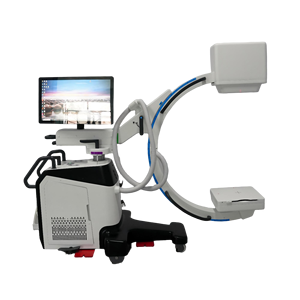
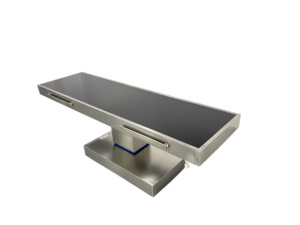
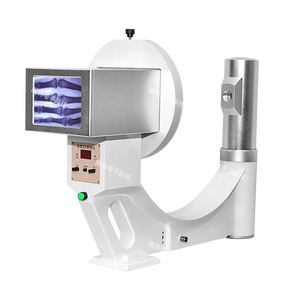
Technical Deep-Dive: Material Science & Engineering Standards in Fluoroscopy
Fluoroscopy is an indispensable intraoperative imaging modality that provides real-time moving X-ray images of internal structures. The precision of surgical guidance in orthopedic trauma reduction, endovascular stenting, and spinal pedicle screw placement relies intrinsically on two physical parameters: X-ray beam attenuation efficiency and signal-to-noise ratio (SNR). As a premier CDMO partner, our factory utilizes state-of-the-art material processing and automated precision machining to manufacture fluoroscopy components that minimize scatter radiation while maximizing spatial resolution.
1. Radiolucent Carbon Fiber Structural Composites
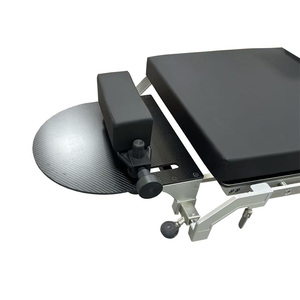
Metallic components within the X-ray beam path induce severe artifacts, scatter radiation, and beam hardening, compromising image clarity and demanding higher radiation doses to penetrate patient tissue. To overcome this limitation, our factory engineers carbon fiber surgical accessories—including operating table extensions, skull clamps for neurosurgery, and thyroid fluoroscopy headrests—using high-modulus, aerospace-grade carbon fiber reinforced polymers (CFRP).
By employing vacuum-assisted resin transfer molding (VARTM) and high-pressure autoclave curing, we achieve a uniform structural density with an aluminum equivalency of less than 0.4 mm Al at 100 kVp. This exceptional radiolucency allows surgical teams in Belgrade and Novi Sad operating rooms to obtain crystal-clear fluoroscopic images without shadow artifacts, while simultaneously reducing skin entrance dose for patients and occupational exposure for surgical staff.
2. High-Frequency X-Ray Generator Modules & C-Arm Integration
The X-ray generator serves as the heartbeat of any mobile C-arm or fixed fluoroscopy system. Modules such as the Fluorostar MaxiPlus 3000 (P/N 00-453810-04 / 0-453810-04) represent high-voltage power conversion technology capable of delivering ultra-short exposure pulses. High-frequency inverter topology operating at 40 kHz to 100 kHz ensures negligible voltage ripple, delivering consistent photon output and preventing soft-radiation emission that contributes solely to patient dose without adding diagnostic value.
Our manufacturing facility subjects all replacement generator components and high-voltage tanks to 100% dielectric strength testing in insulating oil baths, simulating continuous pulsed fluoroscopy cycles under extreme thermal load. This guarantees seamless drop-in compatibility and long-term operating stability for bio-engineers servicing medical imaging fleets in Serbian municipal and private health centers.
| Component Classification | Core Material / Technology | X-Ray Attenuation / Performance | Regulatory & Clinical Standard |
|---|---|---|---|
| Surgical Head Frames & Headrests | 3D Woven Carbon Fiber / Epoxy Resin | ≤ 0.35 mm Al Eq. @ 80 kVp | ISO 10993 Biocompatible / CE MDR Class I |
| C-Arm High-Voltage Generators | High-Frequency Inverter (40-100 kHz) | Peak Power 3.0 kW to 15 kW; <1% Ripple | IEC 60601-2-54 / SRBATOM Radiation Norms |
| Electric Fluoroscopy Tables | Carbon Fiber Top / 4-Way Motorized Drive | 360° Free Imaging Length > 1200 mm | Safe Working Load 250 kg / EN 60601-1 |
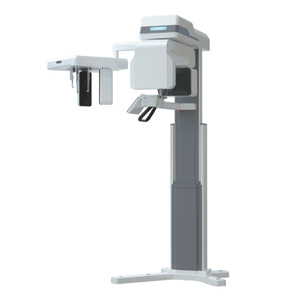
| 3D Dental CBCT / Fluoroscopy Systems | CMOS Flat Panel + Laser Positioning Guide | Voxel Resolution down to 75 μm | CE / ALIMS Registered Diagnostic Device |
| Portable Handheld X-Ray Scanners | Micro-focus Tube + Shielded Lead Alloy Body | 220V / Battery Dual Power; Low Leakage | IEC 60601-1-3 Scatter Radiation Shielded |
Localized Application Scenarios across Serbia's Healthcare Sector
The Serbian medical device market exhibits unique regional procurement patterns and operational demands. Understanding where and how fluoroscopy equipment components are deployed locally ensures optimal equipment selection and uninterrupted patient care.
At facilities like the UKCS in Belgrade and VMA (Military Medical Academy), high-volume emergency trauma centers require heavy-duty electric photography beds with 4-direction motorized sliding movements. Carbon fiber tops allow continuous longitudinal panning from C-spine to lower extremities without repositioning the patient.
Leading private healthcare groups such as MediGroup and Acibadem Bel Medic invest heavily in compact, low-dose portable C-arms and dental 3D CBCT systems. These clinics prioritize high spatial resolution, low power consumption, and ergonomic, laser-guided positioning for quick patient turnaround.
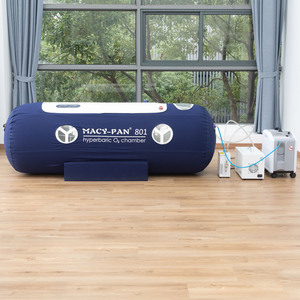
University veterinary hospitals in Belgrade and specialized animal surgery centers utilize veterinary fluoroscopy units and hyperbaric oxygen chambers (-Pan ST801) made of TPU materials. These systems support non-invasive orthopedic research and soft-tissue fluoroscopic guidance in animal medicine.
Strategic Market Trends in Serbia’s Medical Imaging Sector (2025–2030)
Navigating the medical device market in Serbia demands foresight into local regulatory evolution and healthcare spending trajectories. Based on public tender insights and health sector investment programs, several macro trends are defining the future of fluoroscopy components procurement:
To optimize capital expenditure, regional public hospitals across Vojvodina and Southern Serbia are retrofitting functional C-arm chassis with modern high-frequency X-ray generators and digital flat-panel detectors rather than acquiring completely new units. This creates strong demand for drop-in generator modules and compatible carbon tables.
Serbian regulatory authorities have tightened dosimetric monitoring for interventional cardiologists and orthopedic surgeons. Components featuring integrated DAP (Dose Area Product) meters, low-attenuation carbon fiber materials, and pulsed fluoroscopy algorithms are favored in competitive public tenders.
Major hospital expansions in Belgrade are integrating hybrid ORs that combine fluoroscopy, CT, and surgical navigation. Operating tables with multi-axis motorized sliding and total carbon fiber radiolucency are critical prerequisites for these multi-disciplinary suites.
Our Enterprise Capabilities & OEM Contract Manufacturing Advantage
As a global medical device CDMO (Contract Development and Manufacturing Organization) with over 100 years of collective manufacturing expertise and 1.2 million square feet of advanced production space, we partner with leading medical imaging OEMs and healthcare distributors serving Serbia.
Our comprehensive ecosystem spans concept design, precision CNC machining, additive manufacturing (metal & polymer), ISO Class 7 cleanroom assembly, and rigorous verification & validation (V&V). Whether your facility requires custom carbon fiber headrest clamps, specialized C-arm generator modules, or complete OEM imaging beds, our global manufacturing footprint ensures operational excellence, robust supply chain resilience, and 99%+ on-time delivery performance.
Frequently Asked Questions (FAQ) for Procurement in Serbia
Key answers to regulatory, technical, and logistical queries commonly raised by hospital procurement boards, biomedical engineers, and medical equipment distributors across Serbia.
Request Technical Specifications & Serbia Commercial Catalog
Partner with an established global medical device contract manufacturer. Contact our engineering team today to receive detailed CAD drawings, attenuation test reports, or tender specification support.