
Latest Medical Device Manufacturing Articles
Precision Medical Components & Custom Cable Assemblies
Engineered for seamless integration into catheter systems, electrosurgical instruments, surgical robotics, and diagnostic devices across Melbourne healthcare institutions.
Technical Whitepaper: Engineering Next-Generation Medical Cable Assemblies for Melbourne’s MedTech Innovation Ecosystem
As Victoria solidifies its reputation as the southern hemisphere's leading biomedical powerhouse, Melbourne’s medical device Original Equipment Manufacturers (OEMs), clinical research institutes, and hospital networks demand unprecedented levels of performance from custom interconnect solutions. The modern medical cable assembly is no longer a passive electrical conduit; it is an integrated, high-reliability component designed to convey high-bandwidth analog signals, digital telemetry, high-frequency radiofrequency (RF) energy, and sterile fluids under stringent mechanical and environmental constraints.
From the world-renowned Parkville Biomedical Precinct housing institutions such as The Royal Melbourne Hospital, Peter MacCallum Cancer Centre, and the Victorian Comprehensive Cancer Centre (VCCC), to the rapid-growth tech corridor of the Monash Innovation Precinct in Clayton, local design engineers require medical cable suppliers who understand both the clinical utility and micro-engineering demands of patient-contact systems.
1. Material Science & Dielectric Integrity in Surgical Cable Assemblies
The mechanical and dielectric environment inside an operating theater demands raw materials engineered for continuous flex life, biocompatibility, and chemical inertia. Standard industrial cabling fails rapidly when subjected to repeated steam sterilization (autoclaving at 134°C), harsh disinfectant wipe-downs (such as Cidex OPA, isopropyl alcohol, and quaternary ammonium compounds), and sharp flex cycles associated with surgical movement.
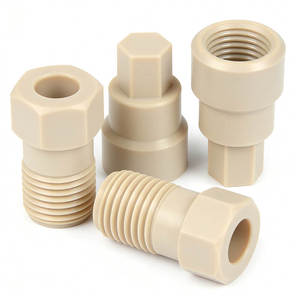
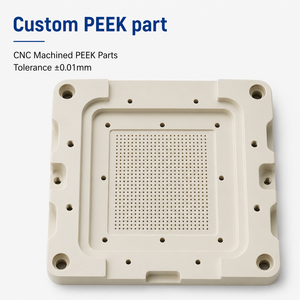
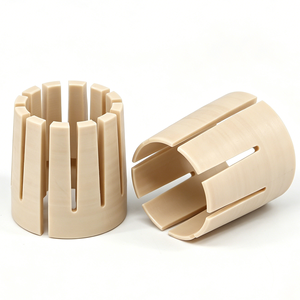
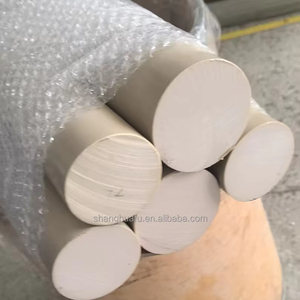
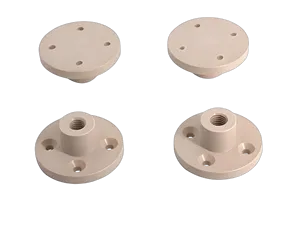
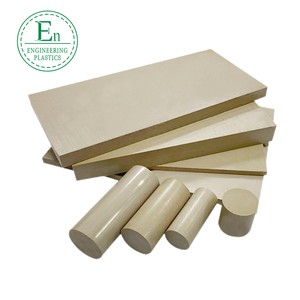
Our custom medical cable assemblies utilize medical-grade thermoplastic elastomers (TPE), medical silicone, liquid crystal polymers (LCP), and polyetheretherketone (PEEK). PEEK, in particular, serves as the premier material for micro-machined connector shells, strain-relief backshells, and multi-pin contact inserts due to its extraordinary mechanical properties:
- Thermal Resistance: Continuous operating temperatures up to 260°C with exceptional dimensional stability during thermal shock testing.
- Dielectric Strength: Over 19 kV/mm, preventing dielectric breakdown in high-voltage electrosurgical units (ESU) operating in monopolar or bipolar modes.
- Chemical Inertness: Complete resistance to hydrolytic degradation during repeated saturated steam autoclave cycles without micro-fissuring or mechanical embrittlement.
- Biocompatibility Compliance: Rigorously tested under ISO 10993-5 (Cytotoxicity), ISO 10993-10 (Irritation and Skin Sensitization), and ISO 10993-11 (Systemic Toxicity).
Comparative Technical Matrix: Medical Cable Insulation & Housing Materials
To guide procurement specialists and electromechanical engineers across Melbourne, the following performance matrix contrasts key material parameters critical for device longevity and TGA/FDA regulatory clearance.
| Material Type | Autoclave Life (Cycles) | Dielectric Constant (1 MHz) | Flex Life (Cycles) | Biocompatibility (ISO 10993) | Primary Clinical Application |
|---|---|---|---|---|---|
| Virgin PEEK (Unfilled) | 50,000+ | 3.2 | 100,000+ | Class VI / ISO 10993 Compliant | Robotic End-Effectors, Micro Connectors, ESU Assemblies |
| Medical Grade Silicone | 5,000+ | 2.8 - 3.4 | 1,000,000+ | Class VI / ISO 10993 Compliant | Patient Monitoring Leads, Endoscopic Umbilicals |
| Medical TPE / TPU | 500 - 1,500 | 6.0 - 7.5 | 500,000+ | ISO 10993 Compliant | Diagnostic ECG Leads, Wearable Biosensor Wires |
| Fluorinated Ethylene Propylene (FEP) | 10,000+ | 2.1 | 250,000+ | Class VI / ISO 10993 Compliant | Intracardiac Catheters, Ultra-Fine Coaxial Bundles |
Advanced Engineering Capabilities for Melbourne Healthcare Manufacturers
End-to-end design, precision CNC micro-machining, and cleanroom overmolding customized to specific medical device specifications.
Micro-Coaxial & Hybrid Bundling
Integration of ultra-fine 44 AWG to 50 AWG micro-coaxial conductors with pneumatic fluid tubes, fiber-optic cores, and high-voltage power lines inside a single flexible outer jacket with zero cross-talk.
EMI / RFI Shielding Excellence
Custom double-braided tinned copper, silver-plated copper, and conductive aluminum foil shielding ensuring high signal integrity and compliance with IEC 60601-1-2 EMC testing standards.
Cleanroom Overmolding & Strain Relief
Class 7 (ISO 14644-1) cleanroom injection overmolding utilizing bio-compatible silicones and TPEs. Engineered flex relief boots prevent wire strand breakage under severe torsional shear.
Localized Application Scenarios Across Melbourne’s Medical & Clinical Ecosystem
Victoria's medical technology sector is characterized by intense specialization across clinical research, surgical device manufacturing, and acute hospital services. Our custom cable assemblies and precision micro-machined PEEK components are deployed directly into key local clinical applications:
1. Minimally Invasive Electrosurgical Instruments (Parkville Biomedical Precinct)
Surgeons at Melbourne’s top-tier surgical facilities rely on monopolar and bipolar electrosurgical instruments that deliver precisely modulated high-frequency electrical currents to cut tissue and achieve hemostasis. Our custom cable assemblies feature high-dielectric PEEK bushings and low-capacitance silicone insulated wires capable of withstanding peak RF voltages exceeding 3,000V without arc tracking or thermal leakage.
2. Diagnostic Ultrasound & Transducer Umbilicals (Clayton Innovation Corridor)
Ultrasound imaging units developed in Victoria’s R&D centers require ultra-high conductor density—often housing 128 to 256 individual micro-coaxial lines in an umbilical cable measuring less than 8mm in diameter. Through precision impedance matching and ultra-flexible braid shielding, our cable systems deliver high signal-to-noise ratios required for high-resolution cardiac and fetal imaging.
3. Surgical Robotics & Articulating End-Effectors (Monash Health & Alfred Health)
Next-generation robotic surgical platforms deployed across Melbourne’s teaching hospitals utilize multi-axis articulated arms. Our AS9100D certified micro-machined PEEK fixtures and continuous-flex cable assemblies endure over 1,000,000 torsional flex cycles within tight bending radii, eliminating wire fatigue and ensuring fail-safe control during complex laparoscopy.
4. Intensive Care Patient Monitoring & Telemetry (Victorian Hospital Networks)
In high-acuity environments like the ICU and Emergency Departments, patient monitoring leads undergo frequent cleaning with aggressive hospital disinfectants. Our chemical-resistant TPE overmolded trunk cables and push-pull self-latching connectors guarantee reliable contact resistance and zero signal dropout during continuous multiparameter (ECG, SpO2, NIBP) monitoring.
Melbourne & Victorian MedTech Trends: Regulatory Alignment with TGA & Global Standards
The Australian Therapeutic Goods Administration (TGA) has increasingly aligned its regulatory framework with the EU Medical Device Regulation (MDR 2017/745) and FDA 21 CFR Part 820. For Melbourne-based medical device innovators exporting to North America and Europe, component-level traceability is paramount.
Key Trends Shaping Victoria's Medical Interconnect Market:
- Shift Toward Reusable-to-Single-Use Hybrid Systems: OEM design teams are balancing sustainability goals with infection control by designing reusable, sterilizable main trunk cables paired with low-cost, bio-compatible disposable catheter interface leads.
- Miniaturization & High-Density Pin Configurations: As surgical devices become smaller, conventional metal connector housings are being replaced by custom micro-machined PEEK shells housing multi-pin contact arrays with pitch spacings down to 0.5mm.
- Demand for ISO 13485 Certified CDMO Supply Chains: Local manufacturers are actively reducing supply chain vulnerability by partnering with established CDMOs capable of providing complete device history records (DHR), full material certificates of analysis (CoA), and lot-level raw material traceability.
Frequently Asked Questions (FAQ) for Melbourne Medical Procurement & Engineering Teams
Clear, technical insights to help hardware designers, quality managers, and procurement officers streamline their custom cable projects.
Why Melbourne MedTech Manufacturers Choose Paragon Medical / Vitel as Their Preferred CDMO Partner
With over a century of collective medical manufacturing heritage, over 1.2 million square feet of global operation space, and dedicated cleanroom environments, our contract design and manufacturing organization (CDMO) delivers unmatched technical capability and operational security to Australian medical device developers.
Vertical Manufacturing Integration
From raw material compounding of engineering polymers (PEEK, Radel, ULTEM) to 5-axis CNC machining, micro-wire termination, automated overmolding, and final cleanroom pouch packaging, every step is executed under rigorous ISO 13485 quality control.
Design for Manufacturability (DFM) Support
Our global team of senior biomedical and electromechanical engineers collaborates directly with Melbourne R&D teams during early-stage prototyping to optimize conductor layouts, strain relief geometry, and material selection for seamless commercial scaling.