
Latest Medical Device Manufacturing Articles
Medical & Industrial Nitinol Components Showcase
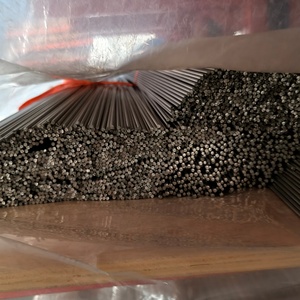
Nitinol Shape Memory Alloy Titanium Wire 0.5-2mm Medical Stent Temperature Control Flexible Elastic Smart Material ASTM F136
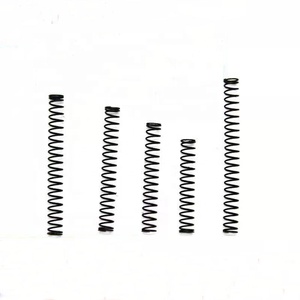
Factory Customized High Quality Cylindrical Shape Memory Nitinol Compression Spring
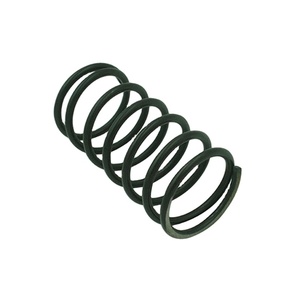
Custom High Quality Cheap Shape Memory Alloy Spring, Titanium Spring Manufacturer, Nitinol Spiral CN;GUA Within 20 Days LML OEM

OEM Superelastic Shape Memory Alloy Nitinol Zebra Guide Wires Cutting Bending for Medical Device Components (Custom Sizes)
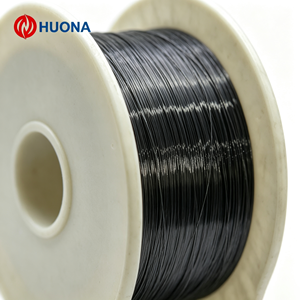
Medical Grade Nitinol Shape Memory Wire Superelastic for Orthodontic Dental Instruments
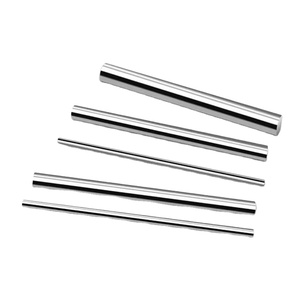
China Manufacturer Selling Titanium Nickel Nitinol Superelastic Shape Memory Alloy bar
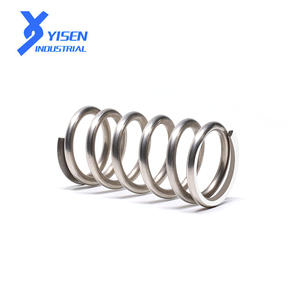
Custom Compression Spring Shape Memory Alloy Titanium Nitinol Spring
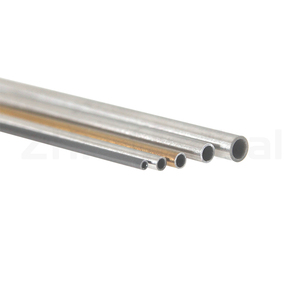
Medical Grade Nitinol Tube New Products Shape Memory Alloy SMA
Engineering Superior Nitinol Components for Seattle’s Next-Gen MedTech & Aerospace Innovations
A comprehensive technical report on metallurgy, thermal phase transformation dynamics, surface passivation, and local supply chain optimization in the Pacific Northwest.
1. Executive Summary & Metallurgical Overview of Nitinol (NiTi) Alloys
Nickel-Titanium (Nitinol) shape memory alloys (SMAs) represent one of the most critical material technologies in modern precision engineering, particularly within medical device Contract Development and Manufacturing Organizations (CDMO) and high-reliability aerospace applications. Characterized by two distinct, temperature- and stress-dependent phenomena—Thermal Shape Memory Effect (SME) and Superelasticity (Pseudoelasticity)—Nitinol enables device designers in the Greater Seattle area to solve complex mechanical constraints that traditional stainless steels (316L, 304V) or titanium alloys (Ti-6Al-4V) cannot address.
In accordance with ASTM F2063 (Standard Specification for Wrought Nickel-Titanium Shape Memory Alloys for Medical Devices and Surgical Implants), medical-grade Nitinol typically comprises approximately 54.5 to 57.0 wt% Nickel with the balance being Titanium. Micro-alloying and trace element management (controlling Carbon, Oxygen, Nitrogen, and Hydrogen levels to parts-per-million thresholds) are essential to prevent brittle intermetallic precipitates such as Ti4Ni2O inclusions. These inclusions can act as localized stress risers, reducing low-cycle and high-cycle fatigue life during mechanical pulsation inside human vasculature or aerospace thermal actuators.
Technical Insight for Seattle OEM Engineers: The exact transition temperature—specifically the Austenite Finish temperature ($A_f$)—defines whether a component exhibits superelastic behavior at body temperature ($37^\circ\text{C}$) or thermal shape recovery when heated above a designated activation threshold. Precision heat treating in specialized vacuum or salt-bath furnaces allows us to tune $A_f$ tolerances to within $\pm 1.5^\circ\text{C}$.
2. Phase Transformation Dynamics: Superelasticity vs. Thermal Shape Memory
To fully leverage Nitinol in engineering designs, procurement teams and biomedical developers in Bothell, Lake Washington, and South Lake Union must understand the underlying solid-state phase transformation between the high-symmetry parent phase (Austenite, B2 cubic structure) and the lower-symmetry, highly twinned low-temperature phase (Martensite, B19' monoclinic structure).
| Property Parameter | Superelastic Nitinol (SE) | Thermal Shape Memory Nitinol (SMA) | Stainless Steel 316L (Baseline) |
|---|---|---|---|
| Primary Phase at 37°C | Fully Austenitic (B2 structure) | Martensitic or Mixed Phase | Austenitic (Non-transforming) |
| $A_f$ Temperature Range | Typically $-15^\circ\text{C}$ to $+25^\circ\text{C}$ | Typically $+35^\circ\text{C}$ to $+95^\circ\text{C}$ | N/A (No phase transition) |
| Max Recoverable Strain | Up to $8.5\%$ without permanent deformation | Up to $6.0\%$ via thermal heating | $< 0.5\%$ elastic limit |
| Stress-Strain Characteristic | Hysteretic stress plateau during loading | Thermal recovery force upon heating | Linear Hookean elasticity to yield |
| Typical Applications | Stents, Guide Wires, Steerable Catheters | Thermal Actuators, Surgical Staples, Couplings | Bone Plates, Rigid Surgical Instruments |
When a superelastic Nitinol component experiences external mechanical load above its $A_f$ temperature, it undergoes a Stress-Induced Martensitic (SIM) transformation. This structural shift allows the material to accommodate extreme deformations—up to 8 to 10 times greater than conventional metals—without undergoing dislocation slip or permanent plastic strain. Upon release of the applied stress, the material spontaneously transforms back to Austenite, reverting to its pre-formed geometry along a distinct mechanical hysteresis curve.
3. Localized Application Scenarios Across Seattle’s Industrial Ecosystem
Seattle, Washington, and the broader Puget Sound region host one of the world's most dynamic technology hubs, characterized by a unique convergence of advanced biotechnology, robotic surgical systems, commercial aerospace, and clean-tech innovation. Trusted Nitinol component manufacturing partners must tailor their engineering capabilities to meet these specific regional market drivers:
Vascular & Endovascular MedTech (Bothell Corridor)
Precise Nitinol hypotubes, self-expanding micro-stents, and zebra guide wires designed for minimally invasive neurovascular and peripheral interventional surgeries engineered in Bothell and Redmond medical device centers.
Robotic Assisted Surgery (South Lake Union)
Flexible articulating wrist joints, shape-retaining laparoscopic effectors, and superelastic transmission cables that endure millions of continuous flexural cycles within robotic surgical suites.
Aerospace Actuation (Puget Sound Corridor)
Thermal shape memory springs, space-deployable antenna hinges, non-explosive release mechanisms (HOLD-DOWN actuators), and cryogenic fluid line couplings for defense and aerospace platforms.
Orthodontics & Orthopedics
Constant-force superelastic orthodontic archwires, intramedullary lengthening nails, expandable spinal cages, and active bone fixation staples offering continuous dynamic compression during osteosynthesis.
Clean Energy & Industrial Sensing
Smart thermal safety valves, greenhouse gas flare shut-off actuators, and deep-sea oil/gas thermal bypass valves that automatically trigger mechanical displacement without electrical power inputs.
Rapid R&D & CDMO Prototyping
Dedicated fast-track development services for Seattle startups, offering sub-20-day delivery on custom shape-set springs, cut tubing, and custom wire configurations under full ISO 13485 quality protocols.
4. Manufacturing Process & Technical Capabilities
Fabricating high-performance Nitinol products demands absolute control over raw material selection, heat-setting geometries, precision surface finishing, and destructive/non-destructive validation testing. As a primary global CDMO and specialized manufacturer serving the Seattle market, our engineering infrastructure covers the entire lifecycle of Nitinol processing:
A. Vacuum Induction Melting (VIM) & Vacuum Arc Remelting (VAR)
The chemical homogeneity of Nitinol starts at the ingot phase. Utilizing double-vacuum melting processes ensures ultra-low oxygen ($<0.03\text{ wt}\%$) and carbon contamination ($<0.02\text{ wt}\%$). This purity minimizes the formation of coarse non-metallic inclusions, thereby significantly improving the rotary-beam fatigue strength ($N_f > 10^7$ cycles at $1.5\%$ strain amplitude).
B. Laser Micromachining & Micro-Tubing Fabrication
For endovascular stents, heart valve frames, and steerable catheter hypotubes, precise micro-machining is mandatory. We employ state-of-the-art Femtosecond Ultra-Short Pulse (USP) Laser Cutting systems. Unlike traditional CO2 or YAG lasers, femtosecond lasers evaporate material without thermal transfer, completely eliminating the Heat-Affected Zone (HAZ), micro-cracks, and recast layers. Tubing outer diameters (OD) can be cut down to $0.25\text{ mm}$ with wall thicknesses as thin as $0.03\text{ mm}$.
C. Fixturing & Thermal Shape Setting
Nitinol wires, sheets, and tubes are constrained in custom-machined 3D stainless steel or titanium fixtures and subjected to heat treatment cycles between $480^\circ\text{C}$ and $540^\circ\text{C}$. This step establishes the "memory shape" while adjusting the crystal lattice dislocation density to lock in the target $A_f$ temperature. Fluidized bed furnaces and molten salt bath systems ensure uniform heat transfer, preventing localized $A_f$ gradients across complex 3D stent structures.
D. Electrochemical Polishing & TiO2 Passivation Layer Formation
Raw Nitinol after thermal processing exhibits a dark nickel-rich oxide scale. To achieve high biocompatibility and corrosion resistance inside human blood vessels, components undergo multi-stage chemical etching followed by automated Electropolishing (EP). Electropolishing removes surface micro-burrs, creating a mirror-like finish ($Ra < 0.1 \mu\text{m}$). Subsequently, specialized nitric or citric acid chemical passivation promotes the growth of a uniform, amorphous Titanium Dioxide ($TiO_2$) protective barrier ($10\text{ to }50\text{ nm}$ thick), which effectively seals in Nickel ions and satisfies ISO 10993 cytotoxicity standards.
5. Regional Growth Trends in the Pacific Northwest Nitinol Market
The demand for medical-grade Nitinol components in the Greater Seattle area is undergoing accelerated expansion driven by three primary technological catalysts:
- Miniaturization of Structural Heart Devices: Transcatheter Aortic Valve Replacement (TAVR) and Mitral Valve Repair tools require micro-engineered Nitinol frames capable of being compressed into ultra-low-profile 12-Fr to 14-Fr delivery catheters without experiencing permanent deformation.
- Smart Surgical Robotics Integration: As surgical robotics firms expand throughout Puget Sound, engineers require custom Nitinol springs and push-pull wires that exhibit zero mechanical backlash, superior superelastic hysteresis damping, and high resistance to wear under continuous robotic cycling.
- Localized CDMO Supply Chain Security: Post-pandemic supply chain restructuring has led Seattle MedTech procurement executives to prioritize domestic manufacturing partners who provide full lot traceability, ASTM certification, DFMA (Design for Manufacturability and Assembly) support, and fast turnaround on prototype revisions.
6. Procurement FAQ: Essential Guidance for Seattle Engineers & Buyers
7. Partnering with a Proven Nitinol Manufacturing Leader
Selecting the right Nitinol manufacturing partner requires a team that understands not only precision machining, but also the complex physical metallurgy, phase transformation physics, and regulatory compliance needed for high-stakes medical and aerospace components. By combining deep material science expertise, advanced laser micromachining, automated electropolishing, and rigorous ISO 13485 quality control, we empower OEMs in Seattle and across the globe to bring innovative medical systems to market faster, safer, and more cost-effectively.
Ready to Scale Your Nitinol Component Production?
Connect with our technical engineering team today to review your CAD drawings, discuss target $A_f$ transition specifications, or request a fast quote for custom Nitinol prototypes delivered to your Seattle facility.