
Navigating Complexity in Precision Medical Device Manufacturing
In the rapidly evolving MedTech landscape, Precision Medical Device Manufacturing has expanded far beyond conventional component machining. Today’s global original equipment manufacturers (OEMs) demand comprehensive Contract Development and Manufacturing Organization (CDMO) partners capable of integrating front-end design optimization, advanced metallurgy, additive manufacturing (3D metal printing), micro-precision machining, and sterile ISO cleanroom packaging under a single unified Quality Management System (QMS).
When global procurement leaders and executive engineers evaluate contract manufacturing partners for orthopedic implants, robotic surgical instruments, or drug delivery platforms, the critical inquiry shifts from simple unit-price comparison to long-term risk mitigation, regulatory compliance certainty, and total cost of ownership (TCO) optimization. Paragon Medical serves as a global benchmark in precision manufacturing, bridging complex conceptual engineering with scalable, repeatable commercial production.
Why Global MedTech Leaders Partner with Paragon Medical
Paragon Medical brings more than a century of accumulated precision engineering heritage to the medical device industry. Operating across 1.2 million square feet of state-of-the-art manufacturing space across North America, Europe, and Asia, our global footprint guarantees supply chain continuity and regional manufacturing support for world-leading OEMs.
Our multi-site infrastructure is fully ISO 13485:2016 certified and FDA registered. We maintain dedicated Innovation Centers where multidisciplinary teams of design engineers, metallurgists, and quality specialists collaborate directly with OEM clients to de-risk projects long before full-scale commercialization.

End-to-End Vertical Integration
From initial design de-risking and rapid prototyping to 5-axis micro-machining, finishing, cleanroom assembly, and sterile packaging, we control every touchpoint of the manufacturing supply chain.
Sub-Micron Precision Capabilities
Utilizing high-speed Swiss micro-turning, wire/sinker EDM, and optical CMM inspection, we execute intricate geometries with dimensional tolerances down to ±0.0025 mm (2.5 microns).
Rigorous Regulatory Compliance
Full adherence to FDA 21 CFR Part 820 / QMSR and EU MDR (2017/745) requirements, supported by standardized IQ/OQ/PQ process validation protocols across all global sites.
High-Precision Product Recommendations for OEM Sourcing
Selecting the appropriate product family and manufacturing process is fundamental to clinical success and yield optimization. Paragon Medical specializes in five core precision medical manufacturing domains:

1. Orthopedic & Spinal Implants
Engineered for long-term load-bearing performance and biocompatibility. Our implant manufacturing encompasses hip stems, acetabular cups, knee femoral components, spinal fusion cages, and extremity plates crafted from medical-grade Titanium alloys (Ti-6Al-4V ELI), Cobalt-Chrome (CoCrMo), and PEEK-OPTIMA. Advanced surface treatments including hydroxyapatite (HA) coating, porous plasma spray, and acid etching promote optimal osseointegration.
2. Surgical Instruments & Ergonomic Handpieces
High-durability stainless steel (17-4 PH, Custom 455, 420 SS) reamers, rasps, drills, taps, and handheld retractors designed for repetitive sterilization cycles without degradation. We apply proprietary nitriding and passivation processes to minimize corrosion and maintain cutting-edge sharpness across surgical procedures.
3. Custom Sterile Surgical Cases & Instrument Trays
Protective aluminum and stainless steel cases custom-engineered to optimize operating room workflow and autoclave steam penetration. Featuring anodized color-coded bracketry, silicone retention grommets, and impact-resistant polymer covers, our cases protect expensive surgical instrument sets during global logistics and hospital sterilization processing.
4. Drug Delivery Systems & Wearable Components
Micro-molding and precision metal components for automated autoinjectors, wearable subcutaneous infusion pumps, and pen injectors. Tight-tolerance internal drive screws, fluidic valves, and needle insertion mechanisms manufactured in ISO Class 7 cleanrooms to preserve sterile drug pathway integrity.
5. Minimally Invasive & Robotic Surgery Components
Ultra-fine cannulas, micro-articulating wrist assemblies, and flexible shafts for minimally invasive surgery (MIS) and robotic-assisted surgical platforms. Micro-machined from nitinol shape-memory alloys and high-strength stainless steels with extreme positional repeatabilities.
Future Procurement Trends in Precision Medical Device Manufacturing (2025–2030)
As global regulatory frameworks tighten and supply chain vulnerabilities persist, procurement leaders in top MedTech companies are re-evaluating their sourcing strategies. Key shifts redefining global procurement include:
1. Consolidation from Multi-Vendor Sourcing to Single-Source CDMO Partners
Managing multiple single-process vendors (e.g., machining at vendor A, anodizing at vendor B, cleanroom packaging at vendor C) creates extreme regulatory risk, compound yield loss, and extended lead times. The future of procurement relies on single-source CDMO partnerships where accountability, quality documentation, and end-to-end traceability remain consolidated under one quality agreement.
2. Nearshoring and Geographic Redundancy (Dual-Sourcing Infrastructure)
Geopolitical frictions and global shipping disruptions have exposed the weaknesses of single-region manufacturing. Enterprise procurement executives now mandate dual-sourcing strategies with CDMOs that maintain identical, validated manufacturing equipment across both North American and European operational hubs.
3. Digital Twin Modeling & Closed-Loop Quality Metrology
Procurement decisions are increasingly governed by a supplier’s digital maturity. Integrating real-time SPC (Statistical Process Control), automated in-line CMM laser scanning, and digital twin simulation allows CDMOs to predict tool wear, eliminate dimensional drift, and deliver 100% digital trace data alongside physical shipments.
4. ESG & Sustainable Manufacturing Compliance
Global healthcare systems and European purchasing bodies are incorporating Scope 1, 2, and 3 carbon emissions into vendor scoring criteria. Future-ready CDMOs must implement closed-loop coolant recycling, scrap metal reclaim programs (Ti-6Al-4V chip recycling), and energy-efficient additive manufacturing setups.

Technological Development Trends Shaping Precision Medical Manufacturing
Advancements in manufacturing science are accelerating the transition from traditional subtractive machining to hybrid, automated production eco-systems.
Additive Manufacturing (3D Metal & Polymer Printing)
Direct Metal Laser Sintering (DMLS) and Electron Beam Melting (EBM) have revolutionized orthopedic implant architecture. By printing trabecular lattice structures directly into titanium spinal cages and acetabular cups, additive manufacturing promotes rapid osteoblast attachment and cell ingrowth that traditional coating methods cannot equal.
Furthermore, additive production eliminates complex tooling setup costs, drastically shortening time-to-market for custom, patient-specific orthopedic implants and low-volume complex surgical jigs.

Automation & Robotic Cell Integration
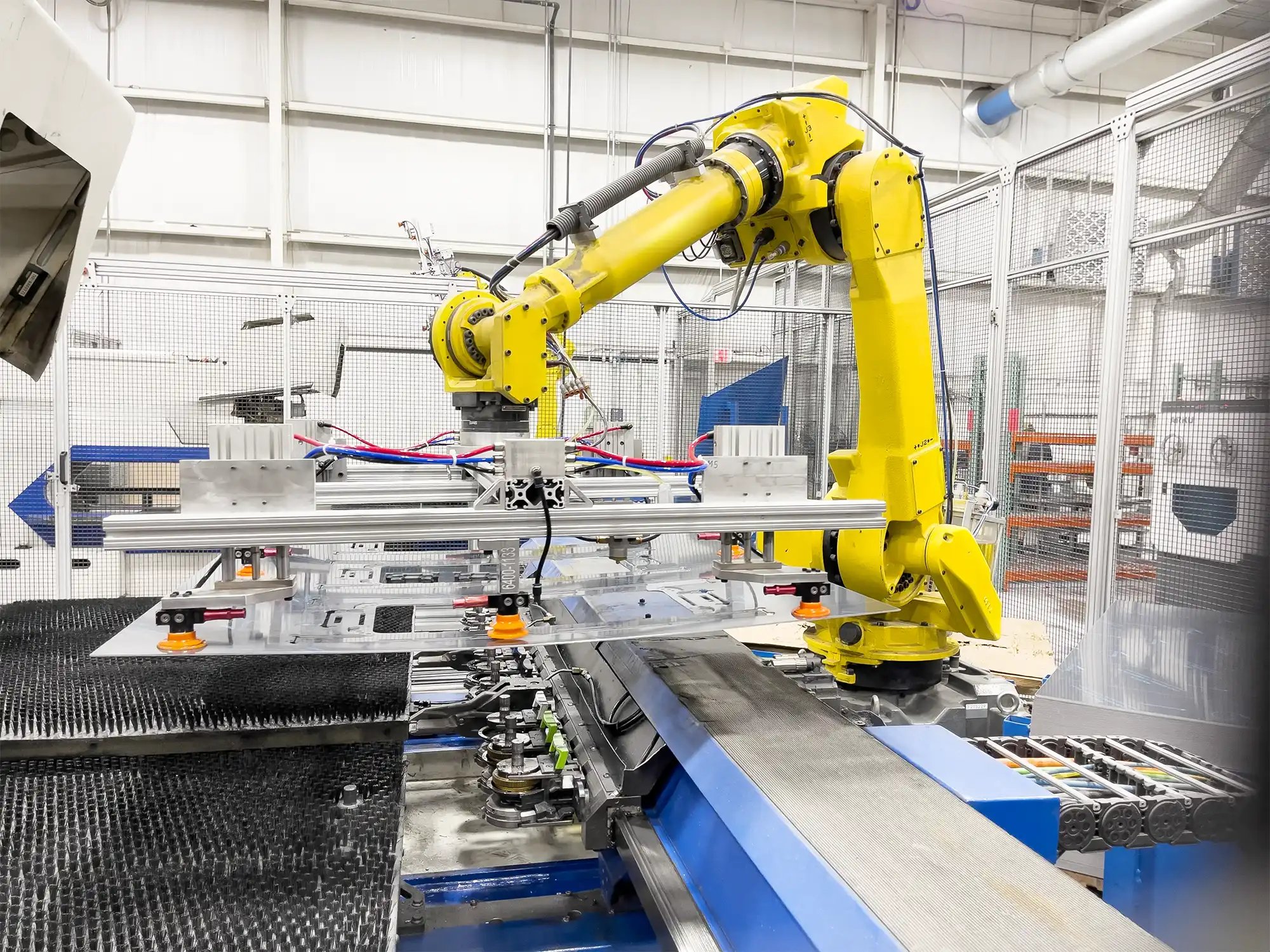
Lights-out manufacturing driven by robotic arm loading, automated multi-axis CNC pallet changers, and integrated vision inspection systems guarantees unmatched part-to-part consistency. By eliminating human variability during machining and polishing, OEMs achieve near-zero defect rates (PPM < 10) across million-part annual volumes.
Cleanroom Assembly & Controlled Environment Packaging
As regulatory scrutiny under EU MDR intensifies around particulate contamination and bioburden levels, post-machining operations must take place in certified cleanroom environments. Modern precision CDMO facilities feature ISO Class 7 (Class 10,000) and ISO Class 8 cleanrooms equipped with multi-stage ultrasonic aqueous cleaning, continuous bioburden monitoring, and automated pouch sealing.
Frequently Asked Questions: Sourcing Precision Medical Device Manufacturing
Below are expert responses to high-intent questions commonly evaluated by global procurement teams, quality directors, and engineering leadership when auditing precision CDMO suppliers:
What dimensional tolerances can Paragon Medical reliably maintain in volume production?
Through multi-axis CNC Swiss turning, high-speed micro-milling, and wire EDM, we reliably achieve tolerances down to ±0.0025 mm (2.5 microns) for complex geometry implantable components and surgical micro-mechanisms. Our multi-sensor non-contact optical CMMs and touch-probe coordinate measuring systems ensure sub-micron inspection repeatability across multi-thousand part production runs.
How does early engagement in Design for Manufacturability (DFM) accelerate commercialization?
Engaging Paragon Medical’s Innovation Center engineers during conceptual CAD modeling allows us to optimize tool access paths, recommend ideal material temper states, standardize internal radii, and simplify assembly stack-ups. DFM eliminates costly engineering change orders (ECOs) post-tooling, reduces cycle times by up to 40%, and ensures smooth passage through IQ/OQ/PQ validation phases.
What certifications and quality standards govern Paragon Medical's global production facilities?
All Paragon Medical sites operate under a unified global Quality Management System certified to ISO 13485:2016. Our facilities are registered with the United States FDA (21 CFR Part 820 compliant / transitioning to QMSR) and maintain full compliance with the European Union Medical Device Regulation (EU MDR 2017/745). Full raw material heat lot traceability, 3.1 material test certificates, and CoCs accompany all shipments.
How does additive metal manufacturing compare with traditional subtractive CNC machining for titanium implants?
Additive manufacturing (DMLS/EBM) excels in producing complex organic geometries, internal cooling channels, and integrated porous trabecular surfaces for bone ingrowth without requiring secondary plasma coatings. Subtractive CNC machining remains superior for high-volume rotational components with flat sealing surfaces and ultra-tight tolerances. Paragon Medical offers hybrid manufacturing—combining 3D metal printing with post-additive 5-axis CNC finishing—to deliver the optimal benefits of both technologies.
What strategies are used to safeguard customer Intellectual Property (IP) during contract design and prototyping?
Intellectual property security is fundamental to our business model as a pure-play CDMO. Paragon Medical does not market proprietary medical devices under its own brand, eliminating any OEM competitive conflict. All customer design files, CAD models, and manufacturing prints are secured within ITAR-compliant, ISO 27001-certified digital vaults with strict role-based access control and strict Non-Disclosure Agreements (NDAs).
What cleanroom assembly and sterile packaging options are available?
We operate state-of-the-art ISO Class 7 (Class 10,000) and ISO Class 8 cleanrooms offering automated multi-stage aqueous ultrasonic cleaning, pass-through passivation, heat sealing of Tyvek® pouches, thermoformed rigid blister packaging, and full sterilization management support (Gamma irradiation, Ethylene Oxide / EtO, and VHP validation).
How does Paragon Medical support global supply chain risk management for multi-national OEMs?
With over 1.2 million square feet of operational footprint spanning 8+ global facilities across North America, Europe, and Asia, we provide genuine dual-sourcing capabilities. We maintain validated secondary tooling, redundant machinery setups, strategic titanium/CoCr/stainless bar stock safety buffers, and integrated Vendor Managed Inventory (VMI) programs to insulate our partners against regional supply disruptions.